

For a club that did not even exist a few years ago, the Portland Hearts of Pine have moved at extraordinary speed.
The Maine-based USL League One club played its first competitive season in 2025, initially calling Fitzpatrick Stadium home. But almost immediately, the limitations of that venue became impossible to ignore.
On August 4, 2026, the club announced an agreement to acquire land at Cassidy Point, on Portland’s waterfront, with plans for a new soccer-specific stadium seating between 9,000 and 11,000 spectators. The project is expected to cost more than $50 million, will be predominantly privately funded, and could open as early as 2029, with construction targeted to begin in 2027.
Why Does a Third-Division Club Need a New Stadium?
Since kicking off play in early 2025, the Hearts of Pine have sold out every home match at Fitzpatrick Stadium, the city-owned ground that holds around 6,000 fans, while racking up national attention as one of the buzziest new franchises in American soccer.
The men’s team now carries a season-ticket base of more than 4,000, with another 8,000 supporters on a waitlist, requiring a $25 deposit just to hold a place in line.
Furthermore, the announcement of a future USL W League women’s team, set to kick off in 2027, saw 5,000 season ticket deposits claimed in under an hour.
Those figures are remarkable for a third-division club in a metro area of under 70,000 people, and they’ve made clear that Fitzpatrick, however beloved and however festive its matchday atmosphere has become, has a ceiling the club has already hit.
Fitzpatrick Stadium: The Beginning of the Hearts’ Story
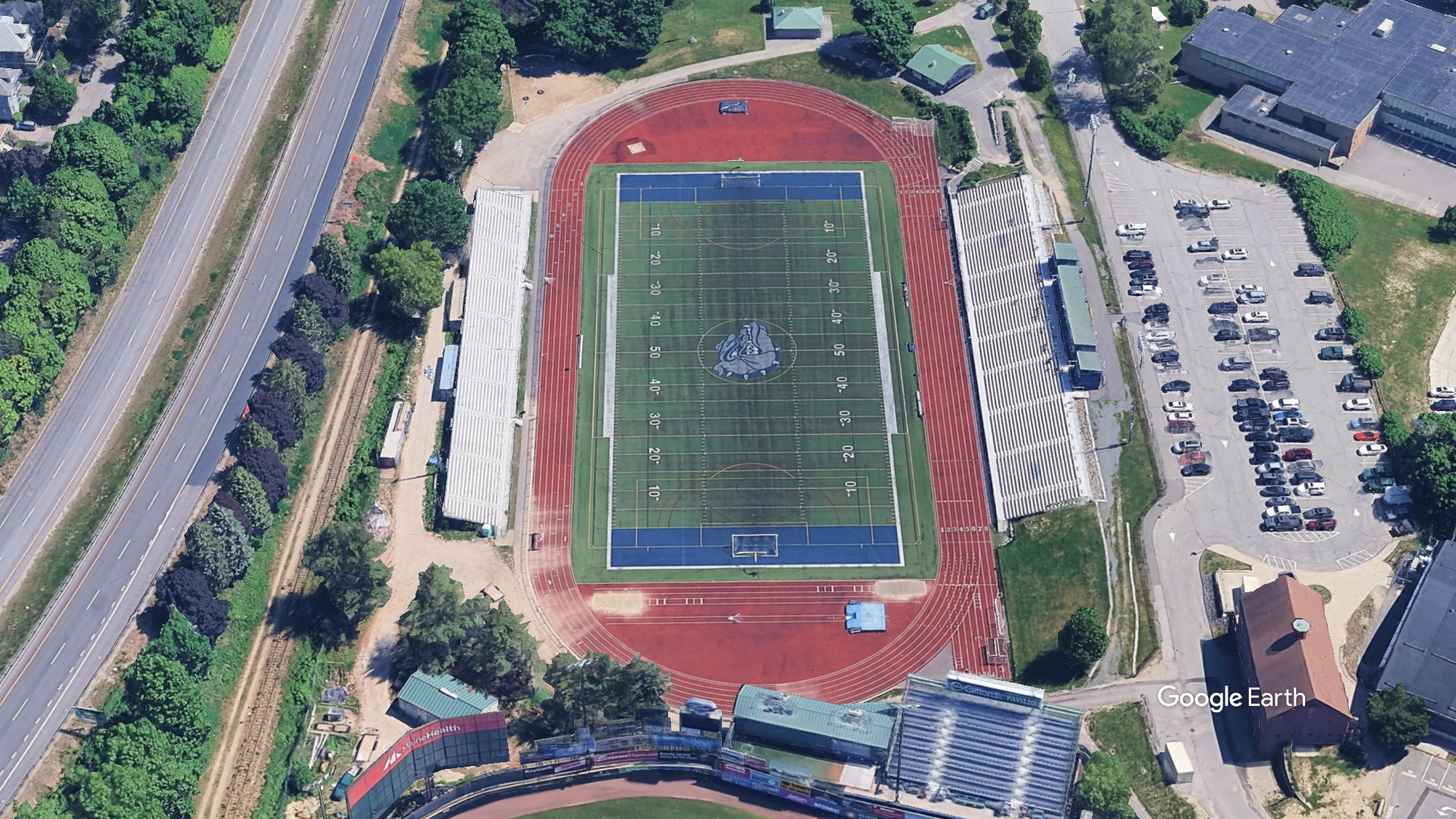
Fitzpatrick Stadium has played an important role in establishing professional soccer in Maine.
The existing municipal venue was upgraded substantially for the arrival of the Hearts. The club invested approximately $3 million in improvements, including a new playing surface, locker rooms, seating upgrades, press-box renovations and other infrastructure.
And the investment clearly worked.
The inaugural 2025 season produced remarkable demand. The Hearts recorded 104,386 spectators across 18 home matches, while establishing league records for attendance and consecutive sell-outs.
Fitzpatrick was transformed into a temporary professional soccer environment, but it remains a multi-use public facility. The club’s soccer infrastructure has to be installed and removed around other users, including Portland Public Schools and community events.
Even after further improvements in 2026, the venue remains fundamentally constrained by its original purpose.
The Search for a Permanent Home
The shared municipal venue simply cannot sustain the long-term, explosive growth of the franchise.
Recognizing this, ownership accelerated their timeline. They evaluated 14 different sites across Greater Portland—including parcels in South Portland, Scarborough, and Westbrook—and ultimately decided that maintaining a presence on the downtown Portland peninsula was vital to the club’s urban identity.
Ultimately, the chosen location is Cassidy Point, which sits along the Fore River beside the Veterans Memorial Bridge.
Cassidy Point: From Coal Yard to Soccer Stadium
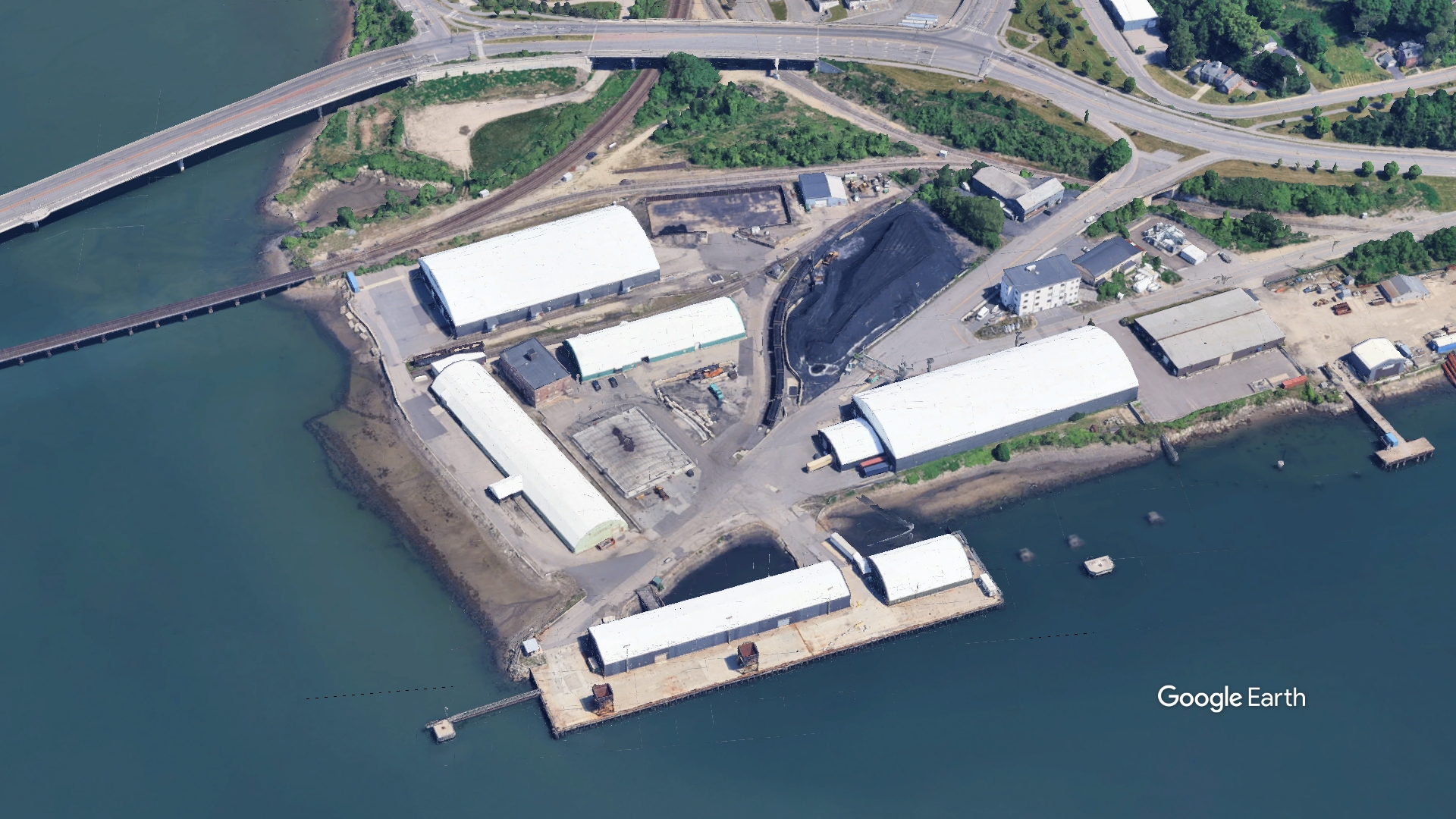
Currently, the property serves as an industrial coal storage facility operated by Sprague Energy.
For years, the towering coal piles have been a point of severe contention for local residents who have raised persistent alarms regarding the public health and environmental impacts of toxic coal dust dispersion and potential groundwater contamination.
In 2025, yielding to public pressure, the Portland City Council unanimously passed an ordinance requiring that all large coal stockpiles within the city limits be fully covered by 2027 and entirely removed by 2030.
By acquiring this specific parcel of land, the Hearts of Pine are acting as a private financial catalyst for a major public environmental good.
More Than Just a Soccer Stadium
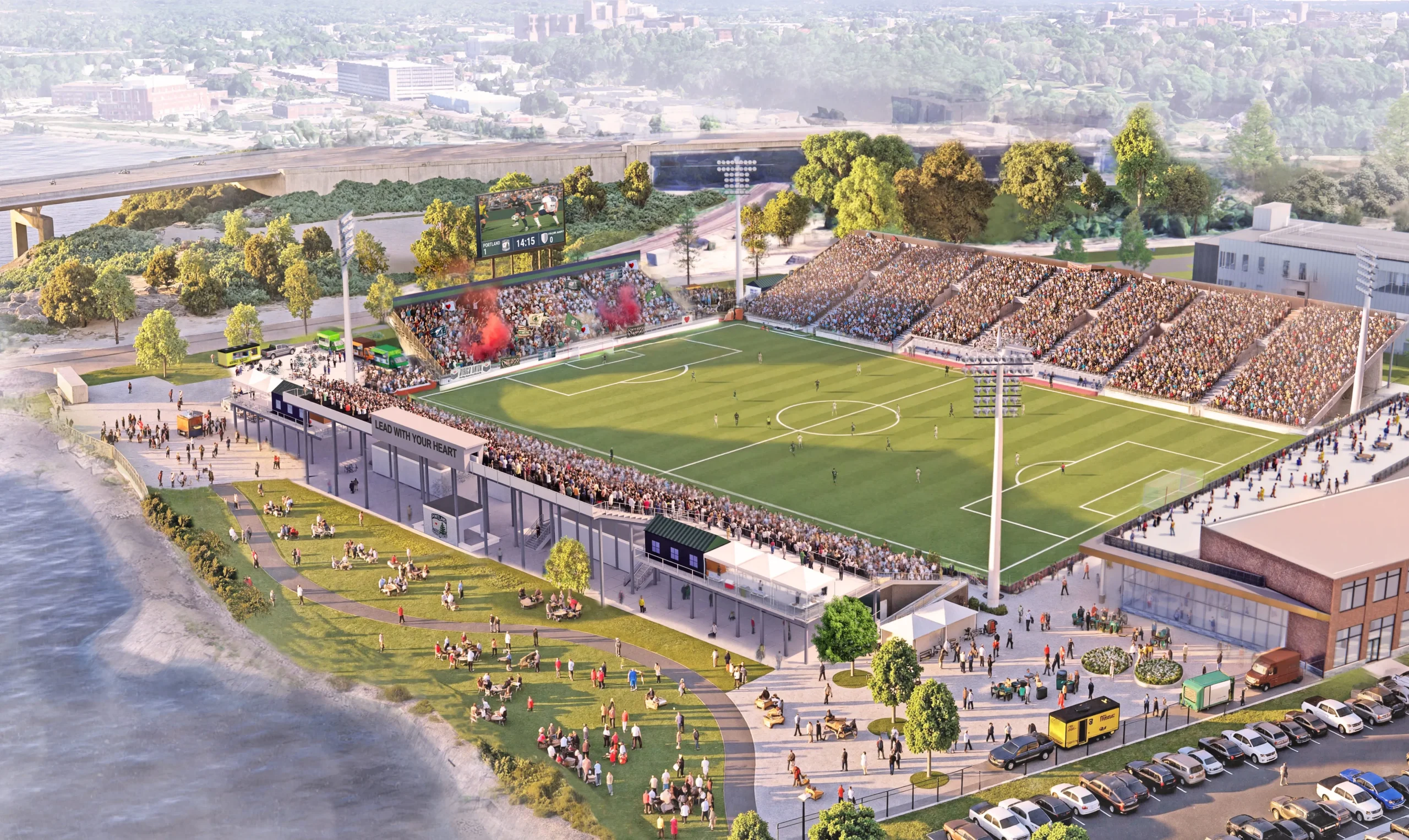 Source: https://www.heartsofpine.com/
As currently conceived, the stadium would seat between 9,000 and 11,000 fans and anchor a broader campus that includes an indoor soccer facility for year-round recreational use, open green space, new pedestrian and cycling connections, and public access to a stretch of waterfront that’s been fenced off from residents for generations.
Conceptual renderings prepared with SMRT Architects & Engineers show a stadium oriented toward the water, though club officials stress that no design or programming decisions are final and that the priority is recreating the festival-like atmosphere fans already associate with Fitzpatrick, just at a larger scale.
The $50 Million Question
There is, however, a major question hanging over the entire project: money.
The Hearts say the development will be predominantly privately funded, with the total cost expected to exceed $50 million.
That is a substantial investment for a USL League One club.
The club is effectively betting that the demand demonstrated during its first seasons is not a temporary phenomenon.
The stadium needs to generate enough long-term value through tickets, hospitality, sponsorships, events, merchandise and other commercial activity to justify the investment.
The waterfront location could help enormously. A stadium with views across the water and a distinctive architectural identity has the potential to become a recognizable Portland landmark rather than simply another sports facility.
What Happens Next?
Despite the excitement, it is important to understand that Cassidy Point is still at the beginning of its journey. The released designs are conceptual.
There will be planning approvals, environmental considerations, transportation questions, infrastructure requirements and community discussions before construction can begin.
And because the project sits on Portland’s waterfront, almost every major decision will carry wider implications for the city.
The Hearts have already indicated that community engagement will be part of the process.
The club’s leadership anticipates a 6-to-12-month public approval timeline. If all regulatory hurdles are cleared, construction at Cassidy Point is slated to commence in late 2027, with the objective of hosting the inaugural matches of both the men’s and women’s teams in the new facility by the spring of 2029.
Can a Third-Division Club Really Pull This Off?
The scale of the proposal reflects the remarkable speed with which the Hearts have established themselves.
In little more than a year of professional competition, they have gone from an ambitious expansion franchise to a club facing demand that its existing stadium cannot satisfy.
But can a 3rd-division club like the Portland Hearts of Pine really make a stadium this ambitious work?
Let me know in the comments below!