

Las Palmas New Stadium: Inside the €206 Million Rebuild for the 2030 World Cup
The Las Palmas new stadium is not on a new site. It is a rebuild of the Estadio de Gran Canaria, home of UD Las Palmas since 2003, under a project called La Nube, Spanish for “the Cloud”. On 28 October 2026, the Cabildo de Gran Canaria, the island council that owns the ground, awarded the construction contract to a joint venture of OHLA and Sando. The contract is worth €206.4 million including tax. The plan puts every seat under one roof and lifts capacity from about 32,400 to about 44,000, so the stadium can host matches at the 2030 World Cup.
There are two complications. The club has pledged up to €60 million towards a stadium it will not own, and the deal that would give it a role in running the ground has not been written. The timetable is also tight. In early 2025, the Cabildo was aiming to finish in 2027. The target is now July 2029, and FIFA wants host stadiums finished a year before the tournament.
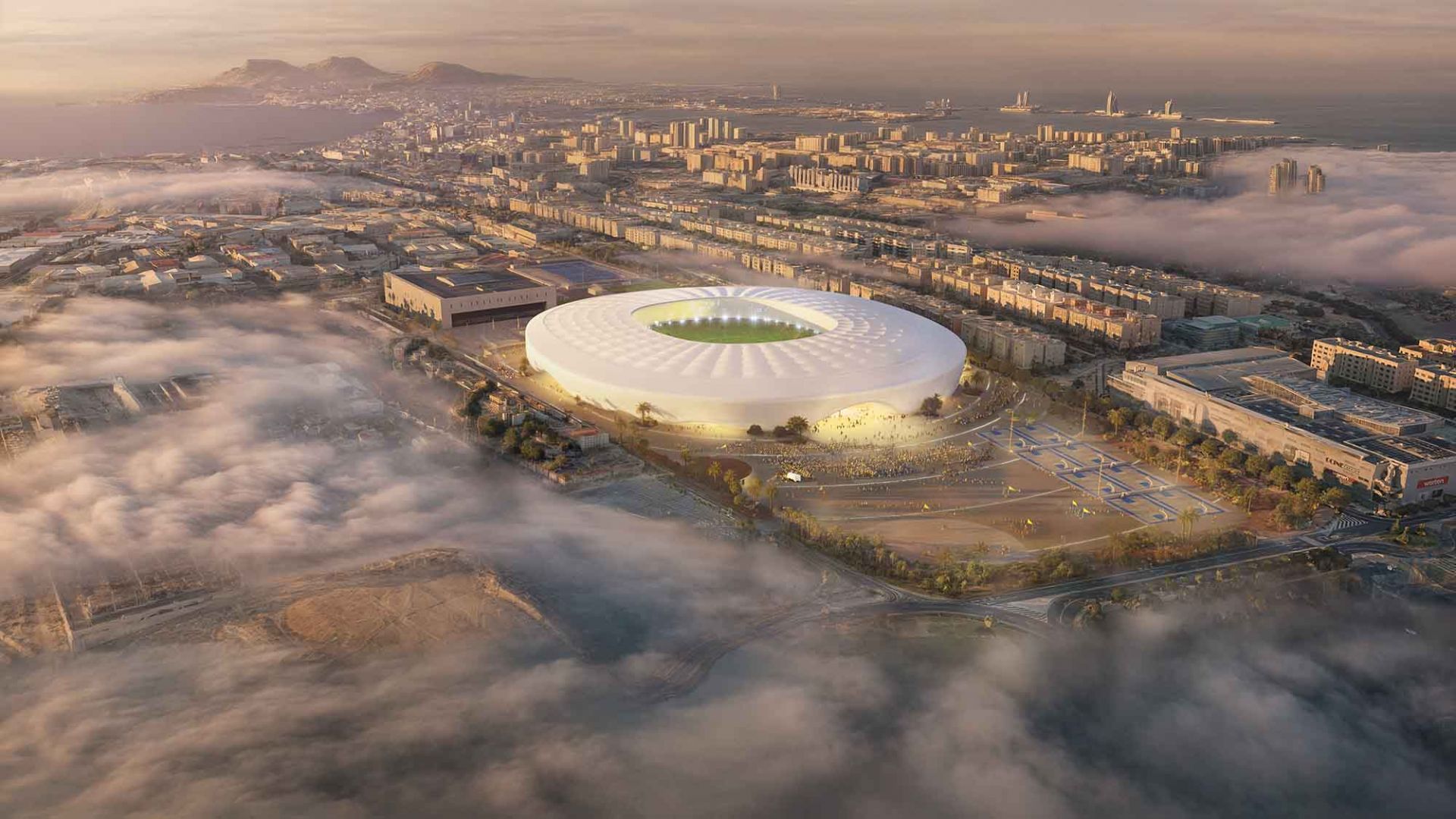 Source: https://www.l35.com/
Las Palmas new stadium at a glance
| Stadium | Estadio de Gran Canaria, Siete Palmas, Las Palmas de Gran Canaria |
| Owner | Cabildo de Gran Canaria (the island council) |
| Main tenant | UD Las Palmas (Segunda División, 2026–27) |
| Project name | La Nube (“the Cloud”) |
| Architect | L35 Arquitectos, winner of the design competition in February 2025 |
| Contractor | OHLA and Sando joint venture, awarded 28 October 2026 |
| Capacity | 32,418 now; about 44,000 after the works, and over 40,000 net for World Cup matches |
| Contract value | €192.9 million before IGIC (the Canary Islands sales tax); €206.4 million including it |
| Tender budget | €234.8 million |
| Funding | Cabildo €134m, Canary Islands government €25m, Las Palmas city council €15m, UD Las Palmas up to €60m |
| Build time | 30 months |
| Completion target | July 2029 |
| World Cup role | One of Spain’s 11 venues, listed for matches up to the quarter-finals |
What is La Nube? The design of the new Estadio de Gran Canaria
La Nube is the winning design from L35 Arquitectos, the firm that also worked on the Santiago Bernabéu remodel. Cabildo president Antonio Morales announced the jury’s choice on 7 February 2025. The engineering firm INES, which worked on the construction design, lists Estudio 0710 as co-architect.
The roof is the centrepiece. An outer metal structure measuring 270 by 217 metres carries a translucent skin of ETFE, a lightweight plastic film. The skin can be lit in UD Las Palmas yellow and blue or used for animations. A 360-degree video scoreboard, 140 by 115 metres, rings the opening above the pitch. The whole roof is turned about ten degrees to line up with Fondos de Segura, the residential street that leads to the ground. The roof is also designed to deal with the damp air of Siete Palmas, collect rainwater and generate solar power.
The bowl changes too. Today the Naciente and Curva stands sit about 40 metres from the pitch. Under the plan they move to about 7 metres, and the Naciente is rebuilt as a new stand raised to the height of the Sur and the Tribuna. Every seat will be covered.
Capacity rises from 32,418 to about 44,000. The 2025 design gave a maximum of 44,484 for LaLiga matches and a net capacity of over 40,000 for the World Cup. The project also adds four entrance plazas, a UD Las Palmas museum, a conference hall, and restaurants, shops and leisure space.
The Cabildo describes the work as a rebuild “from the foundations”. The tender covers demolition, earthworks, new foundations and structures, drainage, electrics, climate control and landscaping around the ground.
How much does the Las Palmas new stadium cost?
The contract is worth €206.4 million including IGIC, the Canary Islands sales tax charged at 7 percent. That is €192.9 million before tax and about 12 percent below the €234.8 million tender budget. The price has more than doubled since the Cabildo first set money aside in 2024.
| When | Figure | What it was |
|---|---|---|
| October 2026 | €206.4m | Winning bid from OHLA and Sando, including IGIC (€192.9m before tax) |
| August 2026 | €234.8m | Second tender budget, 34 percent above the first |
| June 2026 | €174.7m | First tender budget. No company bid by the 7 July deadline. |
| Before March 2026 | €114m | Earlier estimate, before the first tender |
| 2024 | €101.2m | Multi-year spending for 2025–27, approved unanimously by the Cabildo |
Two things pushed the price up. According to RTVC, technical analysis of the ground conditions took the estimate from €114 million to €174.7 million. Then the first tender failed. Steel prices had roughly doubled, aluminium and concrete had risen, and skilled labour had gone from €16–17 an hour to about €25, or up to €30 with extra shifts. Builders also pointed to the difficulty of working while UD Las Palmas kept playing home games.
The roof is the biggest single cost, at €93 million. That is 50.46 percent of the €184.4 million material execution budget, the cost of the works before overheads, profit and tax. Concrete structures come next at €22.3 million, then foundations and walls at €14.8 million. The budget reserves €46.7 million for labour, about one euro in every five.
Three consortia bid in the second round: OHLA with Sando, Ferrovial with San José and Iniciativas Canarias, and Sacyr with Construplan and Bitumex. OHLA–Sando scored 83.01 out of 100 overall. On the technical score it edged Ferrovial’s group 20.75 to 20.50 out of 25, with Sacyr’s on 20.25.
Who is paying for the new stadium?
About three-quarters of the money is public. Four parties agreed to fund the €234.8 million tender budget:
| Funder | Amount | Share of €234.8m |
|---|---|---|
| Cabildo de Gran Canaria (island council, stadium owner) | €134m | 57% |
| UD Las Palmas | up to €60m | 26% |
| Government of the Canary Islands | €25m | 11% |
| Las Palmas de Gran Canaria city council | €15m | 6% |
The three public bodies put in €174 million between them. The Cabildo is also negotiating a contribution from Spain’s central government, but no figure has been published. Nobody has said yet how the split changes now that the winning bid came in below the budget.
What does the club’s €60 million buy?
In March 2026, the deal was reported as UD Las Palmas paying €60 million to co-manage the stadium. The document Morales and club president Miguel Ángel Ramírez signed is narrower than that. It is a protocolo general de actuación, a framework agreement, and it leaves the final legal terms to a later deal.
- The amount is a ceiling. The club pays up to €60 million, progressively, on a schedule still to be agreed.
- It buys no ownership. The protocol says the money is not a concession fee and the stadium stays public property.
- No management model is fixed. It links the payment to the club’s role as main user and to better changing rooms, hospitality, ticketing and media areas. It also notes an expectation of sharing in the benefits of whatever management formula is agreed later.
- There is a deadline. The full agreement must be done by 30 June 2027. If it is not signed by then, either side can walk away.
- The risk sits with the club. It accepts disruption during the works. If a payment runs more than six months late, the Cabildo can end the future agreement without compensation.
The commitment is large next to the club’s own finances. In June 2026, Ramírez put the club’s budget at about €22 million. He said it lost about €5 million last season and expected to lose about €10 million this season. In March, he said he would rather invest in the stadium than in new signings.
Why is the Estadio de Gran Canaria being rebuilt?
The short answer is the 2030 World Cup. FIFA requires World Cup stadiums to hold at least 40,000 people, and the Estadio de Gran Canaria holds 32,418. In July 2024, the Spanish federation named Gran Canaria among its 11 host venues. That December, FIFA’s Extraordinary Congress ratified the joint bid of Spain, Portugal and Morocco, with Gran Canaria listed for matches up to the quarter-finals. FIFA also wants host stadiums ready a year before the tournament.
The ground has other limits. It has never had a full roof, two stands still sit about 40 metres from the pitch, and it has had no complete overhaul since it opened in 2003. There is a contract deadline as well. The club uses and runs part of the stadium under a collaboration agreement dated 13 March 2006, and that agreement expires on 30 June 2027.
From the Estadio Insular to Siete Palmas
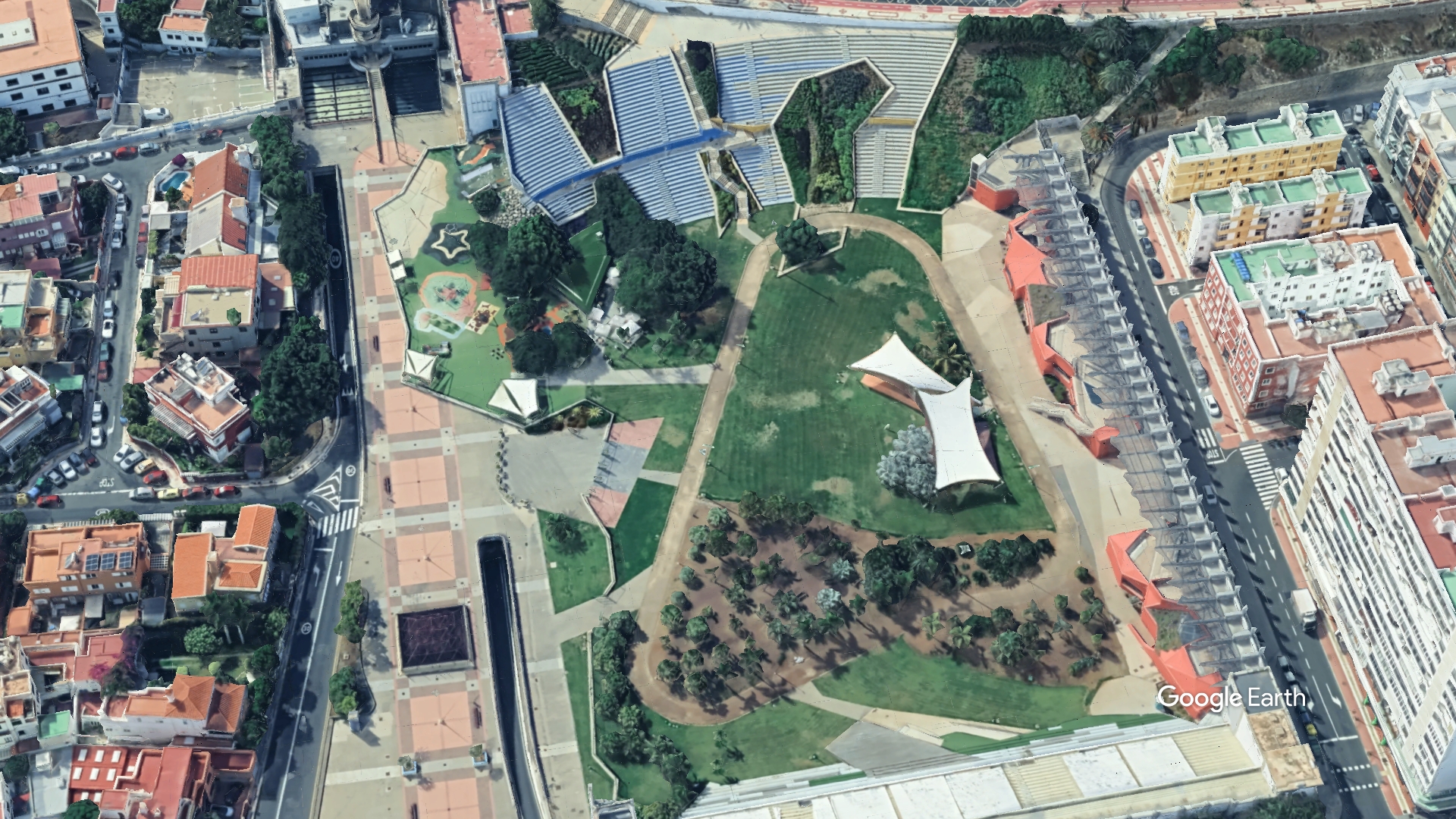
UD Las Palmas has never owned its home. The club’s first ground was the Estadio Insular in Ciudad Jardín, which opened on Christmas Day 1944. Las Palmas played there from the club’s founding in 1949, and the Cabildo bought and expanded it in 1951. It held 21,000 and hosted Spain four times between 1972 and 1996. It was also home in 1968–69, when Las Palmas finished second in La Liga, the club’s best league finish. The Insular closed in 2003 and was partly demolished in 2014. Its original walls now frame the Parque del Estadio Insular.
The Estadio de Gran Canaria opened in Siete Palmas on 8 May 2003, with a 2–1 friendly win over Anderlecht. Rubén Castro scored the first goal. Designed by Pedro Medina and Guillermo Ortego Carretero, it held 30,000 and was built as a multi-sport venue with a running track around the pitch. The timing was poor. Las Palmas had been relegated a year earlier and spent 13 seasons outside the top flight, at one point dropping to Segunda B.
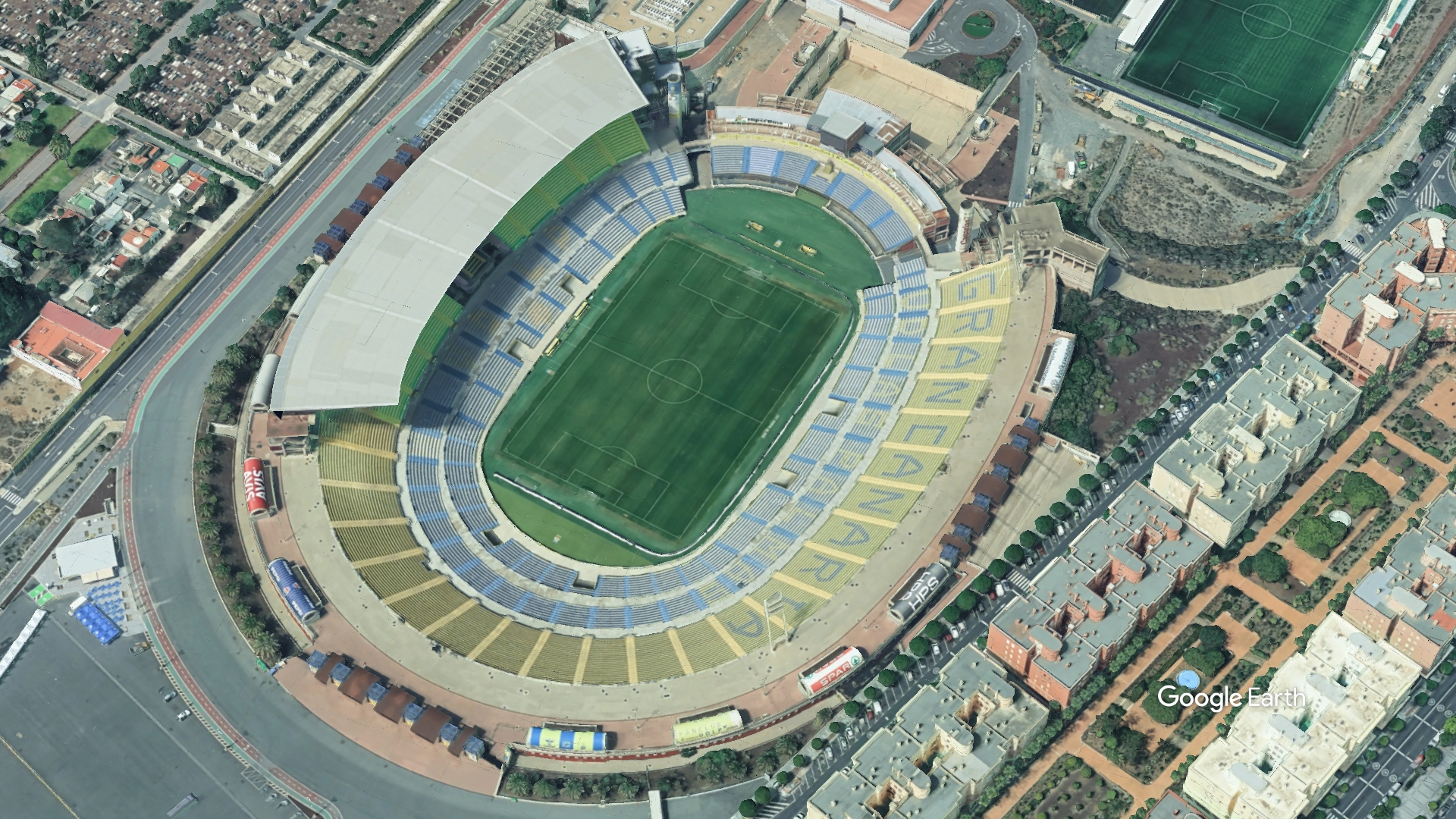
Work to remove the track began on 11 November 2014 and took 16 months. The whole lower tier was rebuilt closer to the pitch, the seats were repainted with “Gran Canaria” and “UD Las Palmas”, and capacity rose to 32,392. Las Palmas won promotion back to La Liga in 2015, before the works finished.
The stadium’s biggest nights show what the extra seats are for:
- 32,037 watched Las Palmas play Real Madrid on 27 January 2024, the official record.
- 31,123 saw the Canary Islands derby on 10 May 2014, the best-attended derby in its history.
- Over 35,000 were reported inside for one free-entry match, with 4,000 more locked out. No official count exists.
- Spain have played there three times. They beat Venezuela 3–2 in 2004, Northern Ireland 1–0 in a Euro 2008 qualifier in 2007, and Bosnia and Herzegovina 1–0 in 2018.
The fight over who runs the stadium
The money deal came out of a long argument about control. UD Las Palmas has wanted to run the Estadio de Gran Canaria for years. In August 2024, Ramírez said the club’s future depended on managing it and that it could not “spend the rest of our lives on loan” there. He raised the idea of building the club’s own stadium if no agreement could be reached. At the time, the Cabildo’s sports councillor, Aridany Romero, said the club running the stadium seemed to make the most sense.
By December 2025, the tone had changed. On 9 December, Romero said a concession would not benefit the club because it would mean very large fees, and that public management was the best way to run public assets. A week later, after the club’s shareholders’ meeting, Ramírez told reporters that if UD Las Palmas were not the stadium’s operator when the time came, it would never play there again. He added that things could change if the government changed at the 2027 elections. Morales replied that the Cabildo would “not accept pressure or blackmail from anyone” (translated from Spanish) and would decide in the general interest.
The two sides agreed the funding protocol three months later, in March 2026. Ramírez called it the most important day of his 21 years leading the club. When the first construction tender failed in July, he said the team was open to playing its home games elsewhere for a while to speed up the works.
The question of who runs the stadium is still open, and two dates matter. Gran Canaria votes in municipal, island and regional elections on 23 May 2027. The deadline for the management agreement, and the expiry of the 2006 agreement, follow on 30 June 2027.
Will the Las Palmas new stadium be ready for the 2030 World Cup?
On the current schedule it will be, with no time to spare. As of mid-November 2026, the contract had been awarded but not signed. The Cabildo first has to lock in its budget allocations for 2027, 2028 and 2029, and it expects to sign at the end of November. Reporting in September put the start of the main works in January 2027. OHLA and Sando have 30 months, which from January 2027 runs to July 2029, the Cabildo’s completion target.
That leaves no slack. The finish date has already moved from 2027 to July 2029, and FIFA wants host stadiums ready a year before the tournament. Any delay to the signing or the start pushes the finish back. Football Ground Guide said in November that the stadium should have enough time if the 30-month schedule holds.
UD Las Palmas is expected to keep playing at the ground during the works. The protocol commits the Cabildo to try to keep enough capacity open for professional football, and the club has accepted the disruption. The first demolitions began in December 2025, under a separate contract that covers the east tower.
Las Palmas new stadium FAQ
Is Las Palmas getting a new stadium?
Not on a new site. The Estadio de Gran Canaria is being rebuilt under the La Nube project. The €206.4 million contract, including tax, was awarded to OHLA and Sando on 28 October 2026.
What will the capacity of the new Estadio de Gran Canaria be?
About 44,000, up from 32,418. The 2026 tender gives 44,020 to 44,022, and the 2025 design gave up to 44,484 for LaLiga. Net capacity for World Cup matches will be over 40,000.
How much does the stadium cost, and who pays?
The winning bid is €206.4 million including tax. Funding was agreed against the €234.8 million tender budget: the Cabildo €134 million, UD Las Palmas up to €60 million, the Canary Islands government €25 million and Las Palmas city council €15 million.
When will the new stadium be finished?
The builders have 30 months, and the Cabildo’s target is July 2029. As of mid-November 2026, the contract was still waiting to be signed.
Will the Estadio de Gran Canaria host 2030 World Cup matches?
Gran Canaria is one of Spain’s 11 venues in the bid FIFA ratified in December 2024, listed for matches up to the quarter-finals. A FIFA committee is due to visit on 26 November 2026.
Who designed La Nube?
L35 Arquitectos, the firm that worked on the Santiago Bernabéu remodel, won the design competition in February 2025. Estudio 0710 is listed as co-architect.
Does UD Las Palmas own the stadium?
No. The Cabildo de Gran Canaria owns it, and the club’s €60 million contribution buys no ownership. The agreement on how the stadium will be run is due by 30 June 2027.