
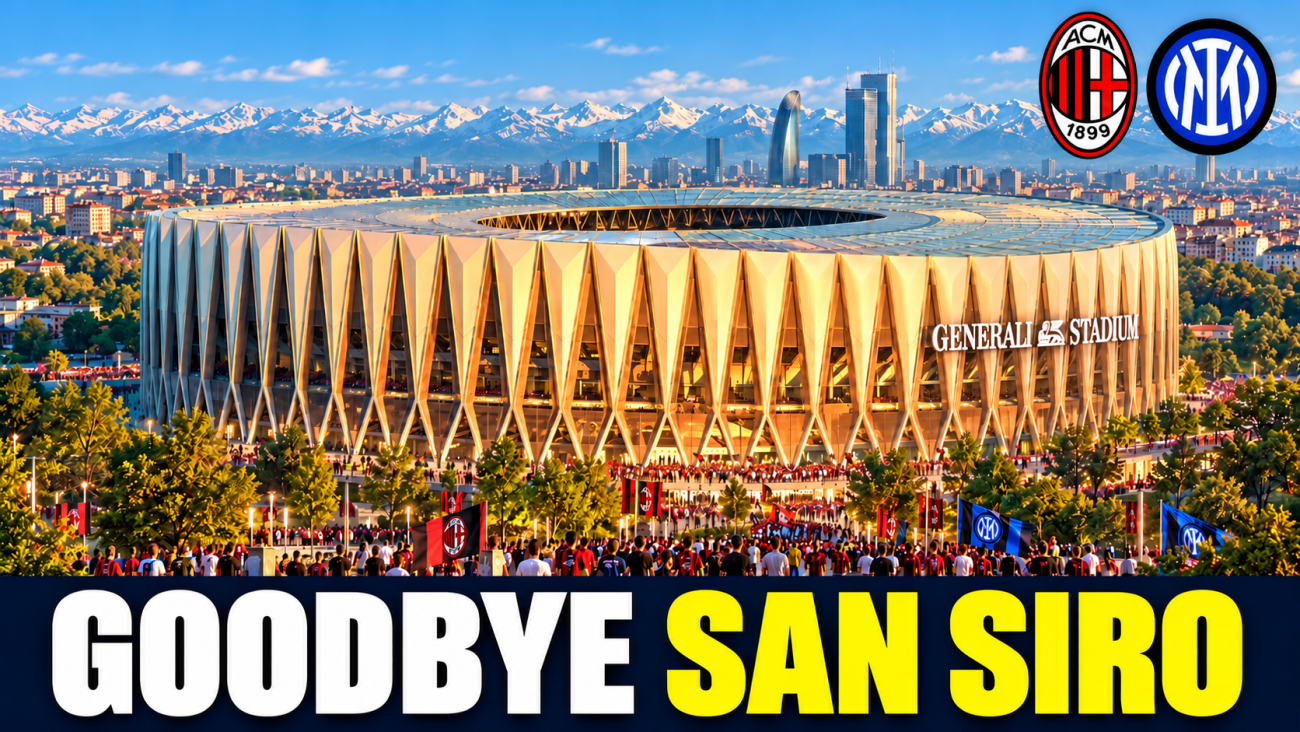
For generations of football fans, San Siro has been one of the most recognisable stadiums in world football. Its towering concrete structures, distinctive red steel beams and enormous stands have provided the backdrop for some of the greatest moments in Italian and European football history. But a new chapter is approaching in Milan. AC Milan and Inter have officially unveiled the Generali Stadium, an ambitious new project that will become the shared home of the two clubs and replace the historic Stadio Giuseppe Meazza.
Presented on 29 October 2026, the new stadium represents a major milestone in a process that has taken years of discussions, planning and uncertainty. With a planned capacity of approximately 71,500 spectators, a striking architectural design and ambitions extending far beyond football, Generali Stadium is intended to become one of the most important sporting and entertainment destinations in Italy.
But can a modern stadium replace the atmosphere and identity of San Siro? And what will the future look like for Milan’s two football giants?
From San Siro to a New Era
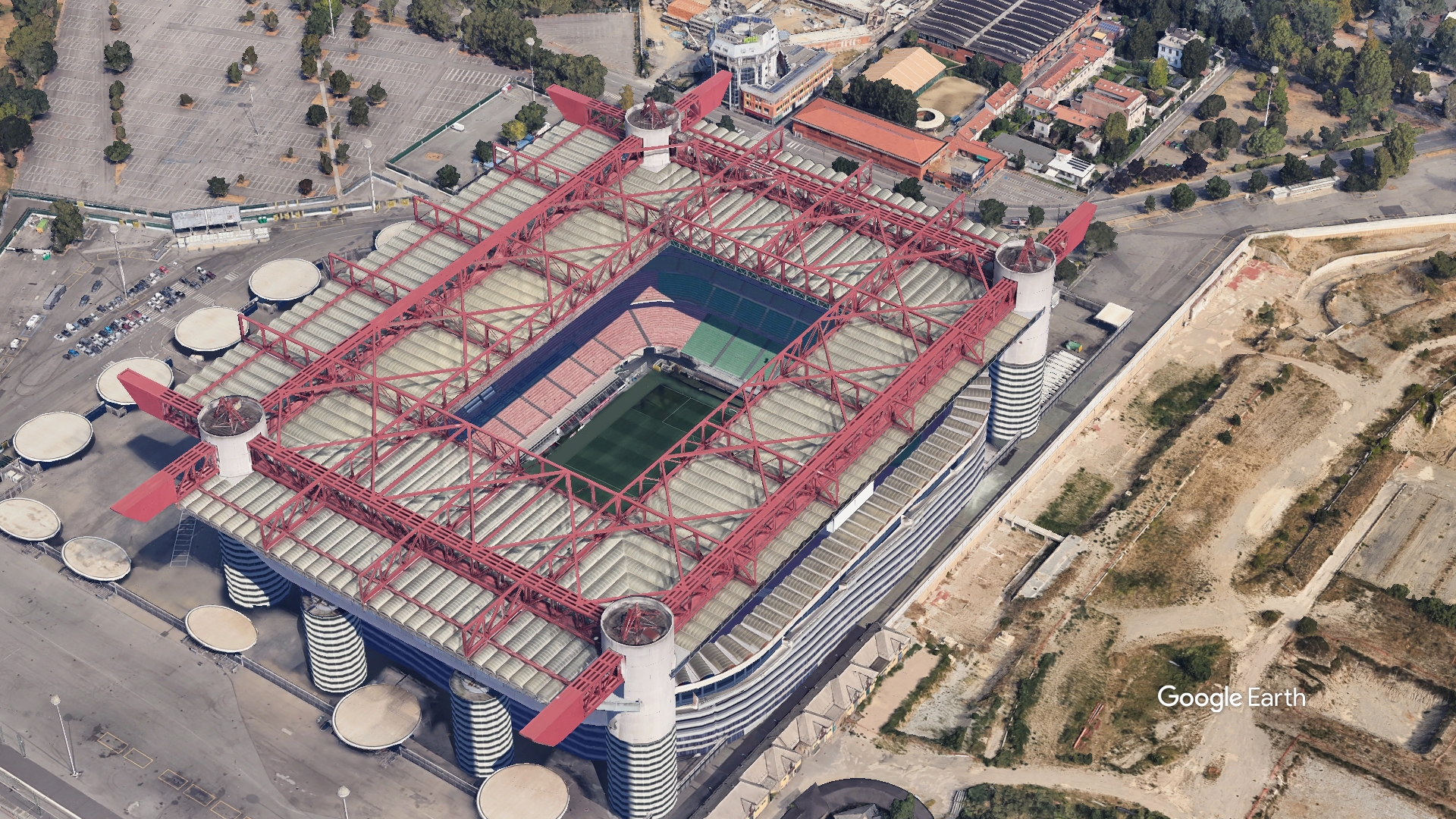
San Siro has been shared by AC Milan and Inter since 1947, making it one of the most famous examples of two major football clubs playing in the same stadium. Originally opened in 1926, the venue has witnessed nearly a century of football history, including domestic title celebrations, European nights and unforgettable matches involving some of the greatest players in the game.
Its distinctive architecture has become closely associated with Milan itself. The stadium’s enormous concrete towers, external ramps and red steel roof structures give it an appearance unlike almost any other football ground in Europe.
However, while San Siro remains an iconic venue, its age and infrastructure have increasingly become an issue for the clubs. Modern football has changed considerably, with stadiums now expected to provide much more than seating and a pitch. Hospitality, commercial facilities, accessibility, energy efficiency and year-round entertainment have become increasingly important sources of revenue.
The existing stadium has limitations in several of these areas. Renovating it to meet the clubs’ long-term ambitions would be a complicated undertaking, particularly given the scale and age of the structure.
AC Milan and Inter therefore decided to pursue a new shared stadium rather than continue relying on the historic venue. The clubs also argued that a modern stadium would help them increase commercial income and strengthen their ability to compete with Europe’s wealthiest teams.
The project moved closer to reality in 2025, when the clubs reached an agreement with the City of Milan concerning the San Siro site. That agreement laid the foundations for the redevelopment of the area and the construction of a new stadium.
The Design: A New Landmark for Milan
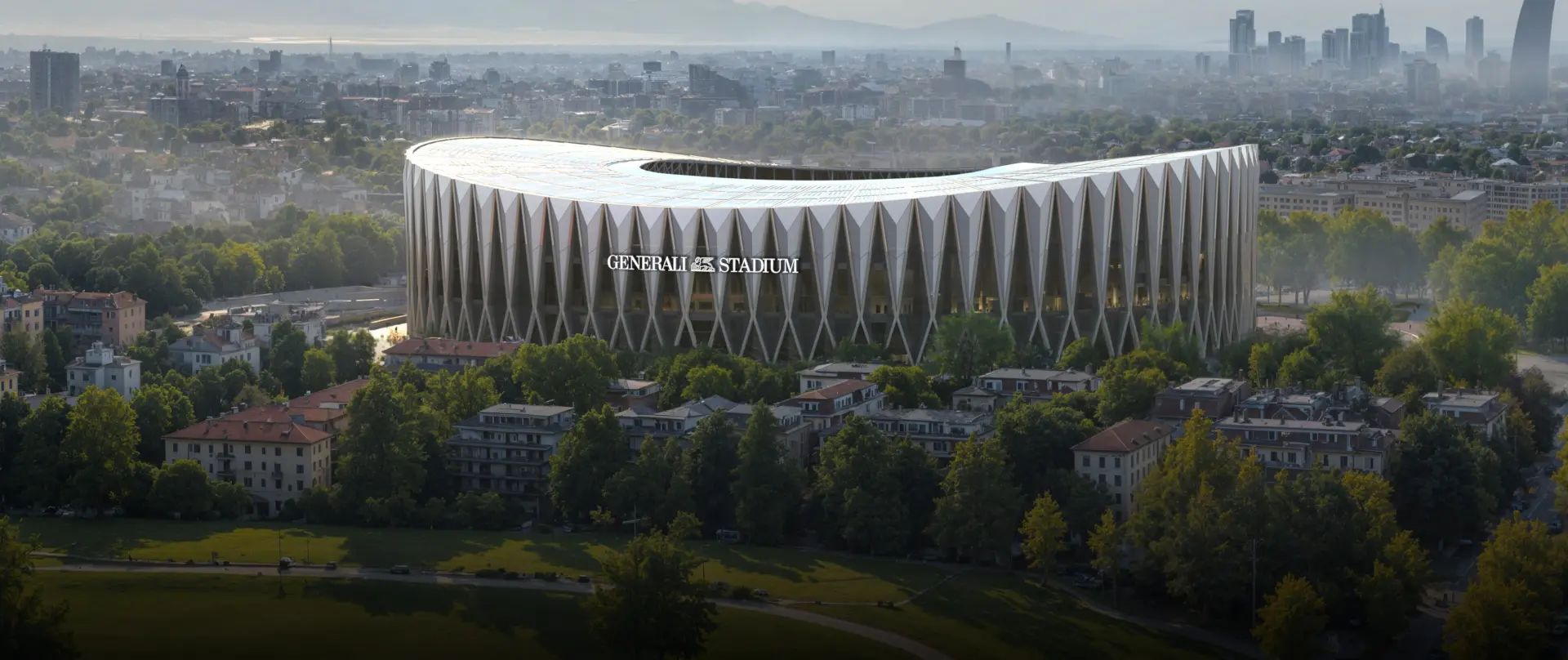 Source: https://www.acmilan.com/
The architectural project has been developed by Foster + Partners and MANICA, bringing together two studios with extensive experience in major international stadium projects.
The collaboration combines the architectural vision of Norman Foster with the stadium-design expertise of David Manica. Both have been involved in the design of major sporting venues, and their partnership previously included work connected with the redevelopment of Wembley Stadium.
The result is a stadium with a very different appearance from the traditional San Siro.
One of its most distinctive features is the external X-frame structure. This structural framework extends around the building, creating a strong architectural identity while supporting the stadium’s roof. Its design takes inspiration from Milan’s architectural heritage, including elements associated with the city’s famous Duomo.
Above the structure, a sweeping double-curved roof gives the stadium its distinctive silhouette. Rather than simply covering the seating areas, the roof has been designed to frame the two Curvas, creating a strong visual connection between the architecture and the stadium’s supporters.
The exterior is intended to become a new landmark in the San Siro district. Diamond-shaped entrance structures will welcome spectators, while the concourses will provide panoramic views and a more open arrival experience.
The design also incorporates lighting and other architectural features intended to give the stadium a distinctive appearance during both matchdays and non-football events.
71,500 Seats and an Atmosphere Inspired by San Siro
Generali Stadium is expected to have a capacity of approximately 71,500 spectators, making it one of the largest football stadiums in Italy.
The seating arrangement will consist of two tiers forming a continuous 360-degree bowl around the pitch. The objective is to bring supporters closer to the action while providing clear sightlines throughout the stadium.
One of the most important elements of the design is the treatment of the Curvas.
At opposite ends of the stadium, the two Curvas will provide dedicated spaces for the passionate supporters of Inter and AC Milan. These sections are central to the identity of both clubs and have played an important role in creating the atmosphere associated with the Derby della Madonnina.
The new stadium aims to preserve that tradition.
The Curvas will feature steep seating sections, with inclinations reaching up to 37 degrees. Their design is intended to create imposing walls of supporters close to the pitch, helping to generate an intense atmosphere during matches.
Acoustics have also been considered as part of the design. The clubs want the structure to capture and amplify the noise generated by supporters, keeping the crowd at the centre of the matchday experience.
This is particularly important because one of the biggest questions surrounding any replacement for San Siro is whether the new venue can recreate its famous atmosphere.
A modern stadium may offer better facilities, improved comfort and more commercial opportunities, but its success will ultimately depend on the experience of the supporters inside it.
Generali Becomes the Stadium’s Naming Partner
The new venue will be known as Generali Stadium, following a major naming-rights partnership with the Italian insurance and asset-management group.
Generali will be the naming partner from the beginning, making the company part of the identity of the new stadium. The agreement is also part of a wider relationship with the two clubs, as Generali will serve as the official insurance partner of both AC Milan and Inter.
The clubs have described the partnership as one of the largest stadium naming-rights agreements in global sport. However, the official announcement did not disclose the financial terms or the full duration of the agreement.
For the two clubs, securing a major commercial partner before the stadium has even been built is an important step. Naming rights can provide a significant source of long-term income, while the association with an internationally recognised Italian brand gives the project a commercial identity from day one.
The name also reflects the ambition to create a venue that will be recognised beyond football.
More Than a Football Stadium
One of the main objectives behind Generali Stadium is to transform the surrounding area into a destination that remains active throughout the year.
The wider development covers approximately 281,000 square metres and is expected to include public spaces, green areas, leisure facilities and retail destinations.
This means that the project is not limited to replacing one football stadium with another. The clubs want to create an environment where supporters, residents and visitors can spend time even when no match is taking place.
The new venue is being designed to host sport, culture and entertainment events. Concerts and other major gatherings could become important parts of its future calendar, helping to generate income beyond the regular football season.
This approach reflects a wider trend in European football. Modern stadiums are increasingly designed as multi-purpose venues, with the aim of generating revenue throughout the year rather than depending almost entirely on home matches.
For AC Milan and Inter, this could create additional commercial opportunities and help them compete financially with clubs that already operate highly profitable modern stadiums.
The surrounding regeneration project could also have a wider impact on Milan, creating new public areas and improving the attractiveness of the San Siro district.
Sustainability and Modern Facilities
Sustainability is another important part of the Generali Stadium project.
The design incorporates natural ventilation, photovoltaic technology and other measures intended to improve energy efficiency and reduce the environmental impact of the venue.
The roof will integrate photovoltaic technology, allowing the stadium to generate part of its own electricity. Natural ventilation is also intended to improve the building’s environmental performance and reduce reliance on energy-intensive systems.
Inside, the stadium will provide modern accessibility facilities, different seating categories and updated hospitality experiences.
The clubs have emphasised that the venue should welcome different generations of supporters, from those looking for premium experiences to fans who simply want an accessible and affordable place to watch football.
This balance will be important. The commercial success of a modern stadium often depends on hospitality and premium seating, but the atmosphere and identity of a football club still come from its supporters.
Generali Stadium will need to deliver both.
When Will Generali Stadium Open?
Although the stadium design has now been officially presented, construction is not expected to begin immediately.
According to the clubs’ announcement, construction is expected to start in 2028, following the next stages of planning and the necessary approvals.
The first match is currently targeted for the 2031/32 season. This remains a target rather than a guaranteed opening date, as the project still needs to progress through the relevant planning and construction stages.
The timeline means that San Siro will remain an important part of Milan’s football landscape for several more years while the new venue moves towards completion.
The clubs’ longer-term plan is to move into their new shared home once it is ready. The future of the existing stadium and the wider site will then form part of the next phase of the area’s transformation.
The schedule is also significant for Italian football more broadly. Italy will co-host Euro 2032 with Turkey, and modernising the country’s stadium infrastructure has become an important issue in preparation for the tournament.
Generali Stadium could become one of the most important new venues in that wider transformation.
The End of San Siro?
For many supporters, the announcement of Generali Stadium is exciting. A new 71,500-seat venue, modern facilities and improved commercial opportunities could help AC Milan and Inter take an important step forward.
But there is also a sense of sadness.
San Siro is not simply an old stadium. It is a symbol of Italian football and a venue associated with generations of memories. Its architecture, its atmosphere and its history cannot simply be recreated through a new design.
That is why the challenge facing Foster + Partners, MANICA and the two clubs is so significant. They are not just building a stadium. They are attempting to create a new home capable of carrying the identity of two historic football institutions.
Generali Stadium certainly has the scale and ambition to become one of Europe’s leading football venues. Its design places the Curvas and the supporters at the heart of the experience, while its wider development aims to make it a destination for the entire city.
Whether it will ever achieve the legendary status of San Siro is a different question.
That will not be decided by architectural renders, capacity figures or commercial partnerships. It will be decided by the matches played there, the trophies lifted, the rivalries renewed and the memories created by the supporters.
One thing is certain: Milan is preparing for a major transformation.
San Siro’s story is approaching its final chapter, and Generali Stadium is set to become the beginning of a new era for AC Milan, Inter and Italian football.