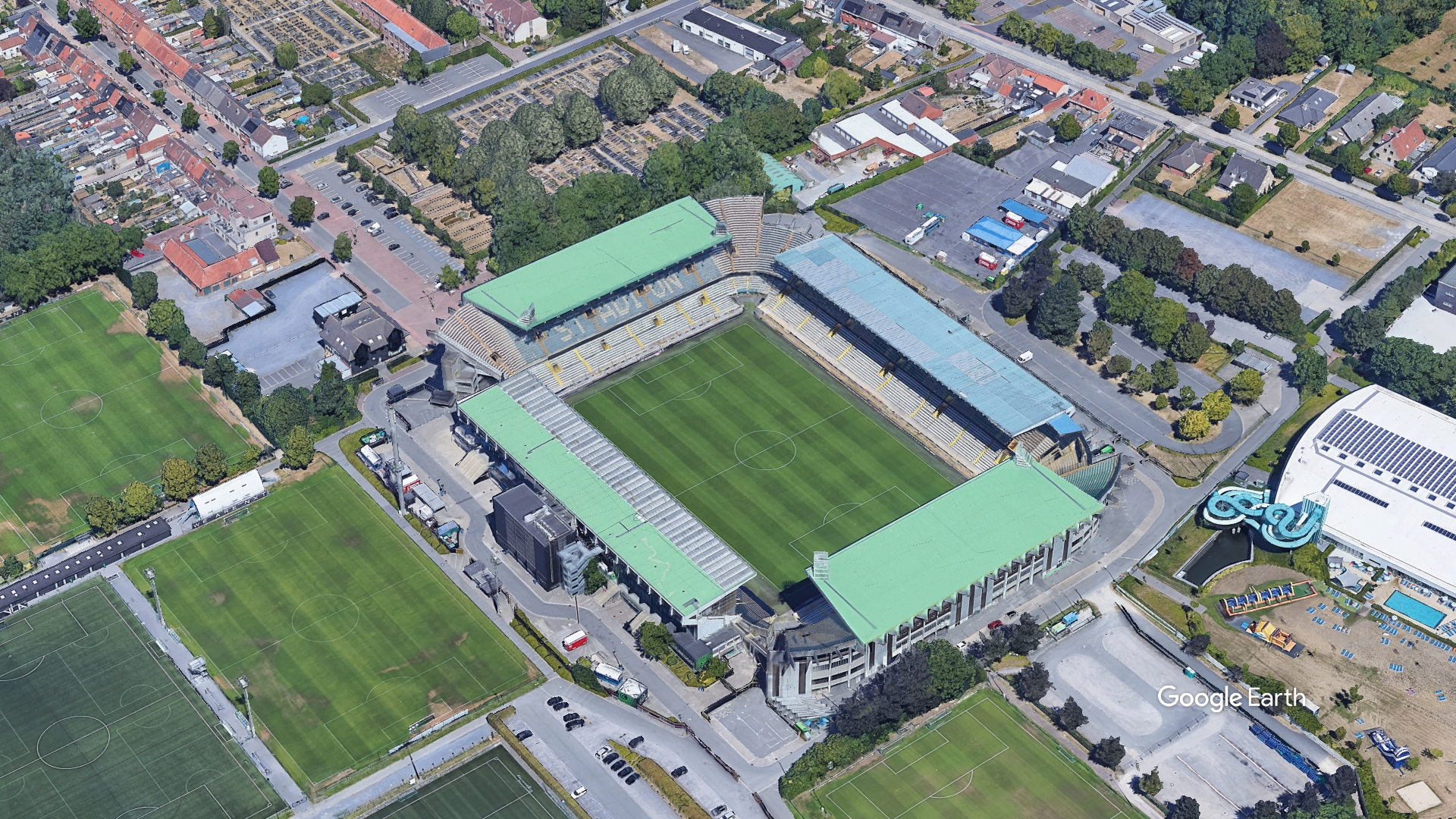
Club Brugge’s new stadium will stand on the Olympia site in Sint-Andries, right next to the Jan Breydel Stadium the club has shared with Cercle Brugge since the 1975–76 season. Getting there has taken nearly two decades. Three earlier plans on three different sites collapsed under objections and court annulments, and the first permit for the current site was annulled in 2023.
The permit finally became definitive and enforceable when the rejection of the residents’ appeal was made public on 9 July 2026. As of late November 2026, preparatory works are under way, the main build is due to start in early 2027, and the target opening is the 2029–30 season.
Why Club Brugge needs a new stadium
The Bruges city council started the stadium project in 1973, and the ground opened in the 1975–76 season. It is still city property, and Club Brugge and Cercle Brugge have always shared it.
Today the Jan Breydel Stadium holds 29,062. According to VRT, it has reached its limits on capacity, ageing infrastructure, accessibility, sustainability and facilities. In 2023, Sporza asked whether concrete rot and leaks could soon end European football there. Chairman Bart Verhaeghe said in September 2026 that keeping it alive costs the club about €1 million a year, and that more than €15 million has already gone into it.
Plan A: Loppem (2006–2008)
At the end of 2006, Club announced that it wanted a new stadium by 2010. The plan, presented at Bruges city hall in early 2007, put a 40,000-seat stadium inside a 45,000 m² shopping and leisure centre at Loppem, on the Oostkampse Baan in the municipality of Zedelgem. The retail was supposed to pay for it, so the stadium would cost the club nothing.
Chairman Michel D’Hooghe and manager Filips Dhondt wanted to build it with developer Bart Verhaeghe, then the club’s business adviser and CEO of Uplace. Verhaeghe is now Club’s chairman. The Bruges council backed the plan in early 2008, but action groups protested against building in a water-buffer area, and the project stalled.
Plan B: Chartreuse (2009–2013)
In April 2009, the Flemish government proposed Chartreuse, on the southern edge of Bruges, a few hundred metres from Loppem but on Bruges territory. An advisory body gave a negative opinion on mobility in summer 2010. The Flemish government still approved a regional zoning plan in December 2010.
Residents and the municipality of Zedelgem appealed. The Council of State ruled against the stadium in September 2013, according to Sporza; VRT’s timeline places the ruling roughly a year earlier.
Plan C: Blankenbergse Steenweg (2013–2020)
From 2013, Club and Cercle planned twin stadiums on the Blankenbergse Steenweg in north Bruges. In 2015, Club went on alone. The zoning plan drew more than 2,000 objections from nature groups, farmers and landowners, and it would have increased the land zoned for football from 21 to 71 hectares.
One objector was Paul Gheysens, CEO of Ghelamco, who owned a farm near the site. Gheysens was also behind the Eurostadium, the failed Brussels project that cost the city its Euro 2020 matches in December 2017. Sporza suggests Verhaeghe’s earlier opposition to that stadium may have fuelled the dispute. StadiumDB adds that the north site fell through partly because investors linked to league rivals owned parts of the land.
Club abandoned the site in January 2020. On 6 October 2020, the Council of State annulled the plan, which by then was meant for Cercle. Bruges mayor Dirk De fauw called it a disaster.
Back to the start: the Olympia site
On Friday 10 January 2020, Club and the City of Bruges announced a new 40,000-seat stadium on the Olympia site, next to Jan Breydel. One stated advantage was that the city owned the whole site, and delivery was targeted for 2024. Verhaeghe had also considered De Spie and Knokke-Heist.
The choice closed a circle. Back in 2007, the city had commissioned a study into whether Jan Breydel itself could be renovated and expanded. Thirteen years and three failed sites later, the club was back on the same land.
The permit battle (2021–2026)
Club applied for an environmental permit in March 2021, and Flemish minister Zuhal Demir granted it in October 2021. On 2 February 2023, the Council for Permit Disputes (Raad voor Vergunningsbetwistingen) annulled it, ruling that the parking and mobility policy was insufficiently worked out. Sporza wrote that, 17 years after its first plan, Club Brugge was back to square one.
A second permit followed on 3 June 2024. A group of neighbours in Sint-Andries, whose spokesman Toon Van Moerbeke said in July 2024 that they represented about 300 families, challenged it. Their documented objections were the 40,000 capacity (they wanted 30,000 at most), the risk of concerts being added later, and the parking plan.
The residents lost twice. On 27 January 2026, the Council of State rejected their appeal against the city’s park-layout decision. On 9 July 2026, the rejection of their permit appeal was made public, making the permit definitive and enforceable.
Six residents then filed a cassation appeal at the Council of State, reported on 19 August 2026. Club’s lawyer, Pieter-Jan Defoort, says that appeal does not suspend the works, and reports put the worst case at a year to a year and a half. Verhaeghe said it concerns a procedural error and does not stop the club from building.
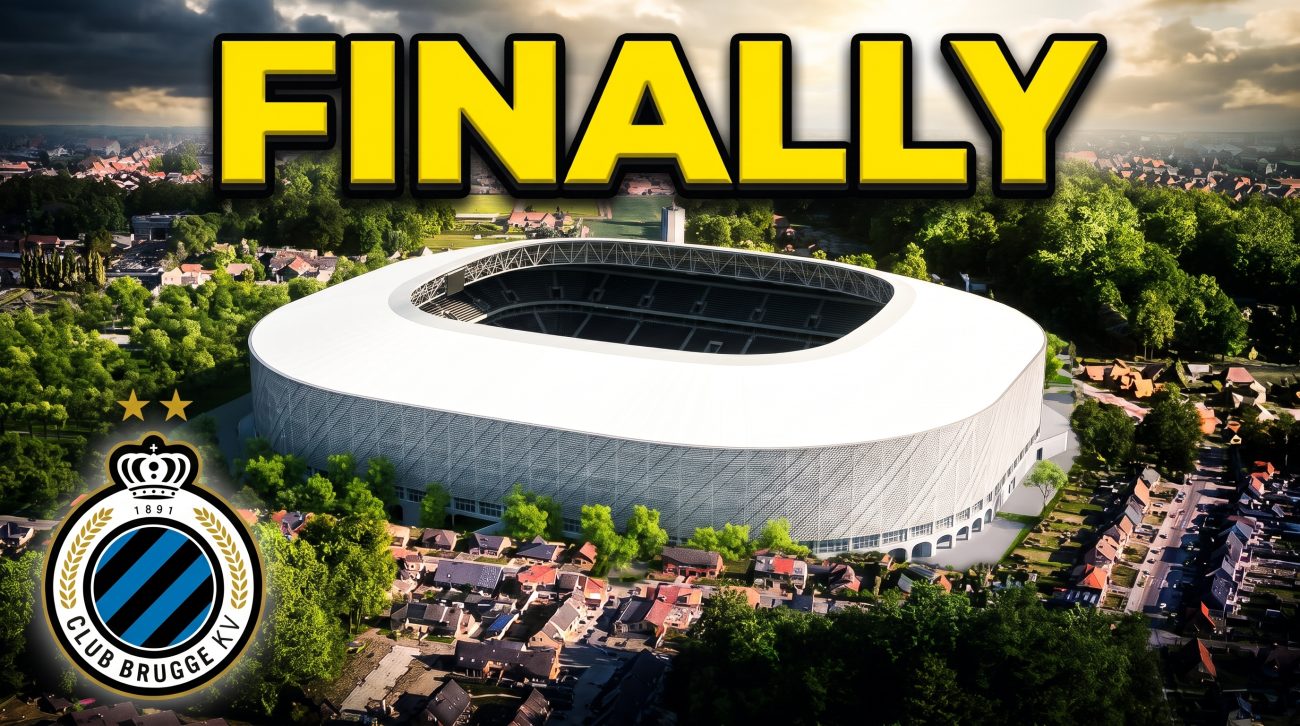
What the new stadium will look like
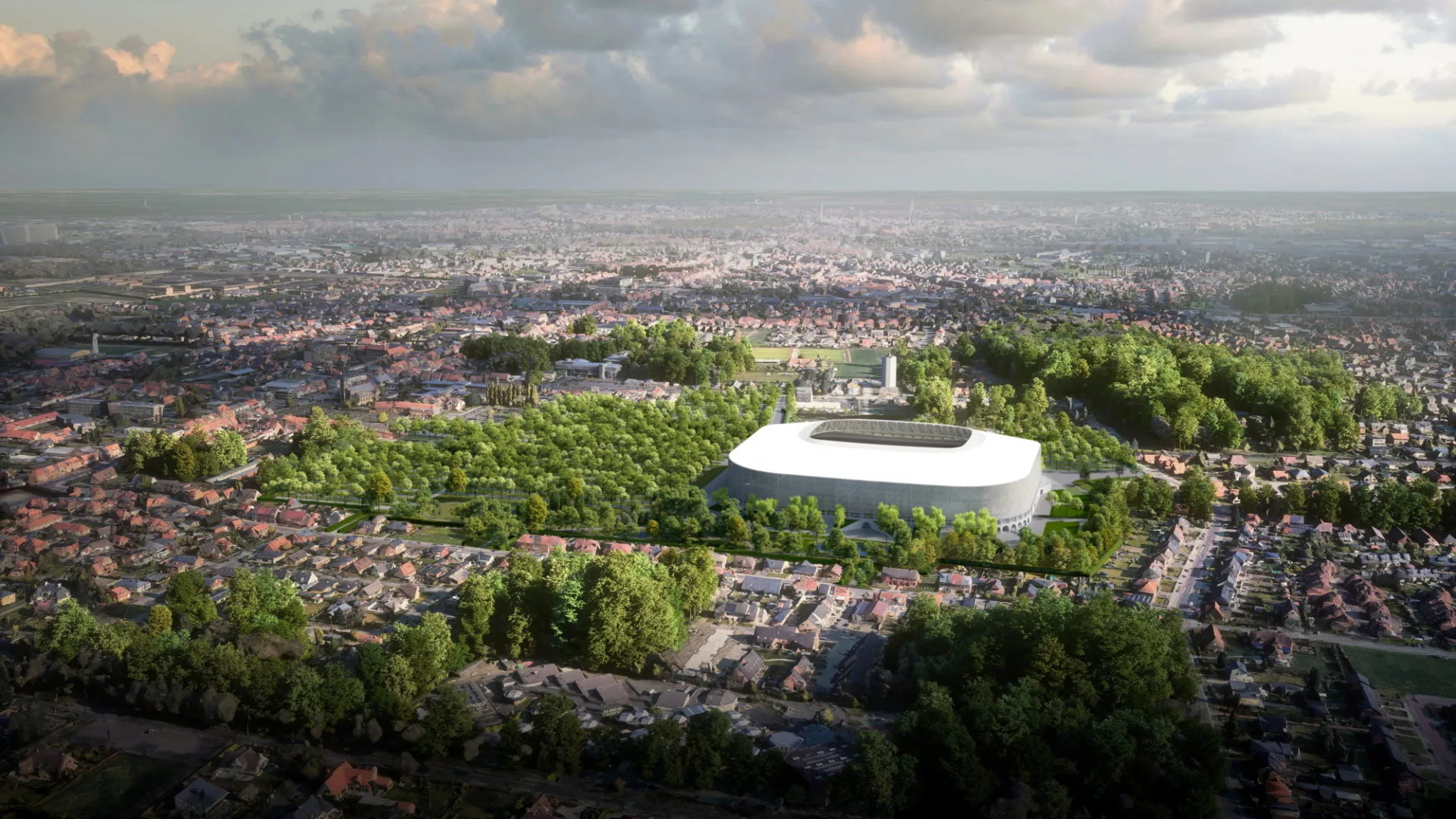 Source: https://stadion.clubbrugge.be/
The permitted stadium has 40,116 seats in a fully enclosed, covered bowl designed to limit noise, with a low roofline and a white fabric façade. In September 2026, Verhaeghe added that the roof will be “floating”, all lighting will hang inside the bowl, and there will be four screens in the middle. The north stand will be slightly higher than the others, and one end will have its first row right against the pitch, “like in England”.
About 5,000 of the seats will be business seats. A third dressing room means Cercle Brugge can rent the stadium until it has its own. Match-day parking drops from 8,000 cars to 3,600 off the street, and the shopping centre from the early plans has been dropped, so the stadium will have no side activities. No naming-rights partner will be sought until at least a year before opening.
How Club Brugge is paying for it
On 25 November 2026, Club reported a record net profit of €44.1 million for 2025–26, its twelfth profitable year in a row. That year included €96 million in transfer gains and €48.8 million in Champions League media rights, which together make up about three-quarters of its revenue.
The financing has been described two ways:
- Own funds: in September 2026, Verhaeghe spoke of €200 million of the club’s own money (Sporza).
- Reserves plus a loan: a 25 November 2026 report citing HLN describes about €200 million made up of €50 million in reserves and a €150 million bank loan, with no government support and financing to be in place by 31 December (Voetbalkrant).
KU Leuven sports economist Trudo Dejonghe calls a new stadium “a financial lever”, while warning that a football stadium on its own is rarely profitable and that the main risk is the project costing more than budgeted.
Club Brugge stadium timeline
| Date | Milestone |
|---|---|
| 1973 | Bruges city council starts the stadium project |
| 1975–76 season | Today’s Jan Breydel Stadium opens |
| End of 2006 | Club announces it wants a new stadium by 2010 (Loppem) |
| Early 2008 | Bruges council backs Loppem; action groups protest and the plan stalls |
| April 2009 | Flemish government proposes the Chartreuse site |
| December 2010 | Chartreuse zoning plan approved |
| September 2013 | Council of State rules against Chartreuse (per Sporza) |
| 2013 | Twin-stadium plan with Cercle on the Blankenbergse Steenweg |
| 2015 | Club continues alone on the north site |
| 10 January 2020 | Olympia-site stadium announced |
| 6 October 2020 | Council of State annuls the north-Bruges plan |
| October 2021 | First Olympia permit granted |
| 2 February 2023 | First permit annulled over parking and mobility |
| 3 June 2024 | Second permit granted |
| 27 January 2026 | Council of State rejects residents’ park-layout appeal |
| 9 July 2026 | Rejection of residents’ permit appeal made public; permit definitive |
| 19 August 2026 | Six residents’ cassation appeal reported |
| 27 October 2026 | Preparatory works begin |
| Around 17 November 2026 | City executive approves the land lease |
| Early 2027 | Main construction due to start |
| 2029–30 season | Target opening |
Where the project stands (November 2026)
Preparatory works began on the southern part of the Olympia site on 27 October 2026, covering archaeology, soil and stability tests, and utility connections. To free the land, Club’s youth side, Club NXT, moved to The Nest in Roeselare. The start of construction has slipped several times, from “this year” in July to “this autumn” in August, and then to early 2027.
The land stays with the City of Bruges, which leases it to the club under an erfpacht agreement. The city’s college of mayor and aldermen approved the lease around 17 November, but on 24 November the definitive agreement was reported as not yet concluded.
The opening target moved from the 2028–29 season to 2029–30, which Verhaeghe called a year later than originally planned. The cranes that build the floating roof must stand inside the bowl, so the pitch can only go in afterwards, and it needs six months to grow. Club will keep playing at Jan Breydel until then, and what happens to the old stadium after the move has not been settled in current reporting.
Cercle Brugge is pursuing its own stadium of at least 8,500 seats. In November, the city was negotiating a plot in Sint-Pieters for a Cercle stadium of about 10,000, reportedly on a 50-year lease.
FAQ
When will Club Brugge’s new stadium open? The target is the 2029–30 season, according to chairman Bart Verhaeghe (September 2026). The main build is due to start in early 2027.
How many seats will the new stadium have? The permitted capacity is 40,116, including about 5,000 business seats. Jan Breydel currently holds 29,062.
Where is the new stadium being built? On the Olympia site in Sint-Andries, Bruges, south-west of the Jan Breydel Stadium. The land is owned by the City of Bruges.
How much will it cost? About €200 million. Verhaeghe has described it as funded from the club’s own money; a November 2026 report citing HLN puts it at €50 million in reserves plus a €150 million bank loan, with no government support.
Why did it take so long? Three earlier sites (Loppem, Chartreuse and the Blankenbergse Steenweg) failed over objections and court rulings, and the first permit for the Olympia site was annulled in February 2023. The permit only became definitive in July 2026.
Will Cercle Brugge play in the new stadium? The plans include a third dressing room so Cercle can rent it until it has its own stadium. Cercle is pursuing a ground of its own, and the city was negotiating a plot in Sint-Pieters in November 2026.
What happens to the Jan Breydel Stadium? Club keeps playing there until the move. Its future after that has not been settled in current reporting.