
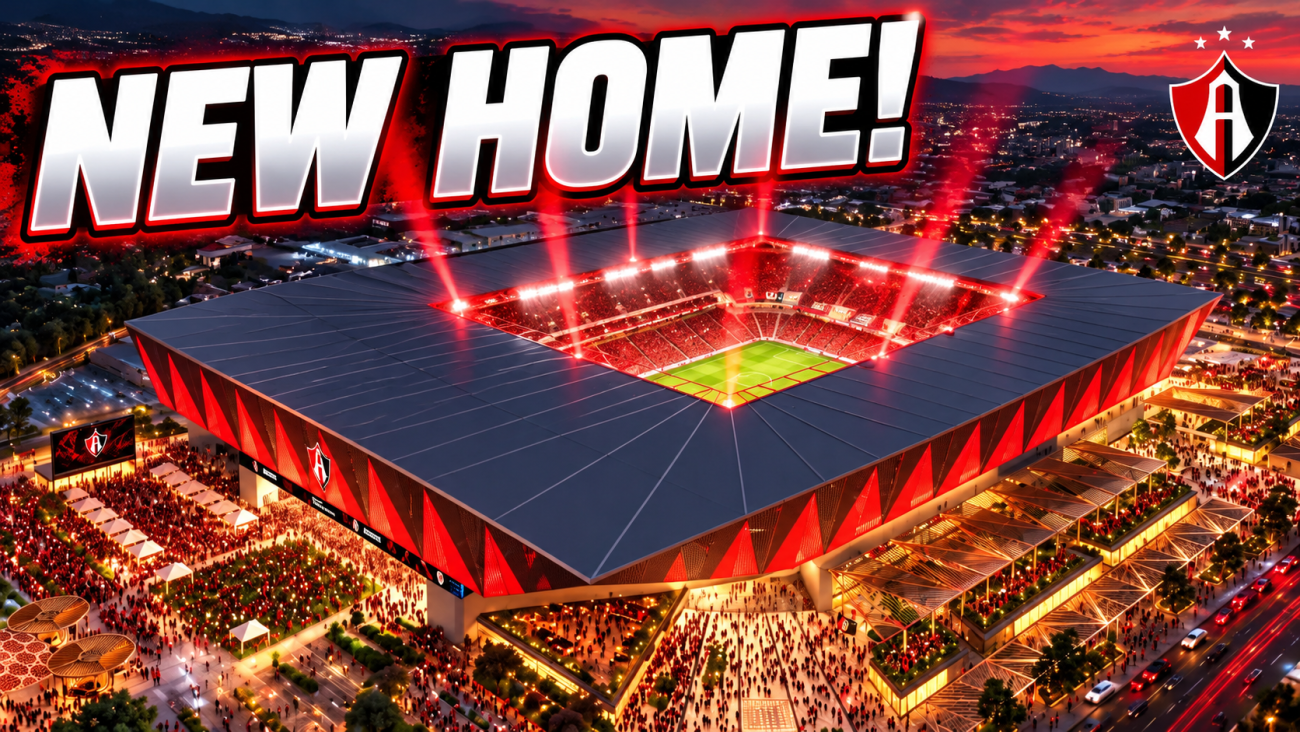
Atlas FC Reveals Spectacular New 40,000-Seat Stadium in Guadalajara, Targeting 2030 Opening
A New Era for Atlas FC
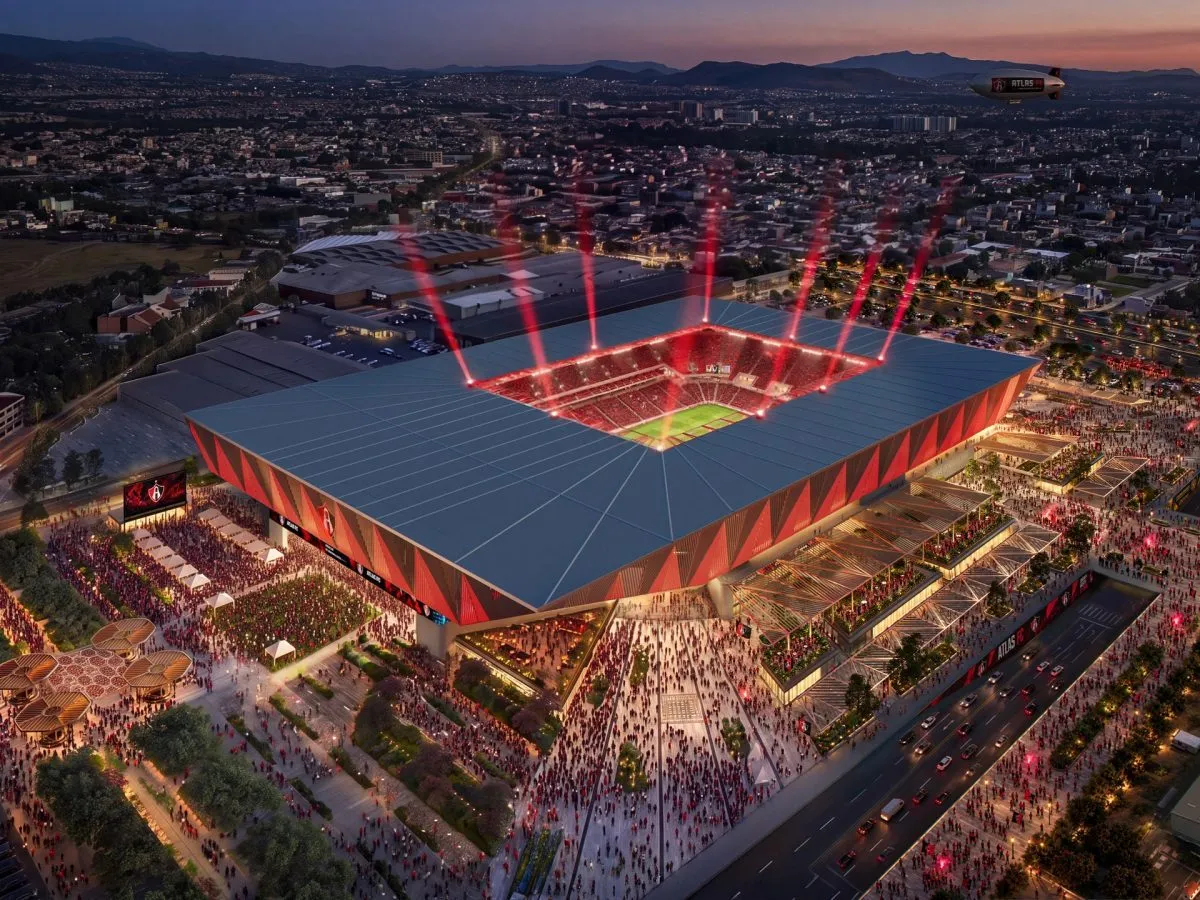 Source: https://populous.com/
One of Mexico’s most historic football clubs is preparing for a potentially transformative chapter. Atlas FC has officially unveiled plans for a spectacular new stadium in the Guadalajara metropolitan area, a project that promises to reshape the club’s future and establish a new benchmark for football infrastructure in Mexico.
Presented on October 7, 2026, the ambitious development will feature a stadium accommodating more than 40,000 spectators, with modern facilities, adaptable seating, and an extensive commercial and entertainment complex.
The proposed venue is expected to become the home of both Atlas FC and Leones Negros of the Universidad de Guadalajara, bringing two established football institutions together under one roof.
With construction targeted to begin in 2027 and the first match planned for 2030, the project represents a major investment in the future of Mexican football.
However, beyond the impressive architectural renderings, questions remain surrounding the final budget, transportation infrastructure, construction approvals, and the future of the legendary Estadio Jalisco.
Where Will the New Stadium Be Located?
The stadium is planned for Los Belenes, in the municipality of Zapopan, within the Guadalajara metropolitan area.
It will form part of Ciudad UdeG, an ambitious development led by the Universidad de Guadalajara in partnership with Grupo PRODI, the new owners of Atlas FC.
The project will occupy approximately 16 hectares of university-owned land near the Centro Cultural Universitario, one of Guadalajara’s most important cultural districts.
Several major attractions already surround the proposed location, including Auditorio Telmex, the Juan José Arreola Library, and Conjunto Santander de Artes Escénicas.
Rather than developing an isolated football stadium, the investors intend to create a destination combining sport, education, culture, recreation, and commercial activity.
The location also places Atlas within the same municipality as its historic rival, Chivas Guadalajara, whose modern Estadio Akron opened in 2010.
Designed by World-Renowned Architects Populous
Perhaps the most impressive aspect of the project is its architectural pedigree.
The stadium is being designed by Populous, one of the world’s leading sports architecture firms.
Populous has worked on internationally recognized venues including Wembley Stadium, Tottenham Hotspur Stadium, Yankee Stadium, and several major stadiums across Mexico.
For Atlas FC, the architects are emphasizing atmosphere, proximity to the playing surface, and a distinctive identity.
The proposed stadium will have a capacity of approximately 40,000 spectators, with some reports specifying 40,070 seats.
Unlike traditional multi-purpose stadiums, the new venue is designed primarily around football, using a compact seating bowl and steeply inclined stands to bring supporters closer to the action.
The first rows of seating are planned to sit less than nine metres from the pitch.
An extensive roof structure will cover the grandstands and help contain crowd noise, creating an intense atmosphere for visiting teams.
This design philosophy is especially significant for Atlas supporters, famously known as La Fiel, whose passionate backing has become one of the club’s defining characteristics.
The stadium will also incorporate premium hospitality facilities, including 56 luxury suites, 16 specialized boxes, and more than 3,600 premium seats.
An illuminated exterior facade is intended to allow the stadium to display different colors and visual identities depending on the team or event taking place.
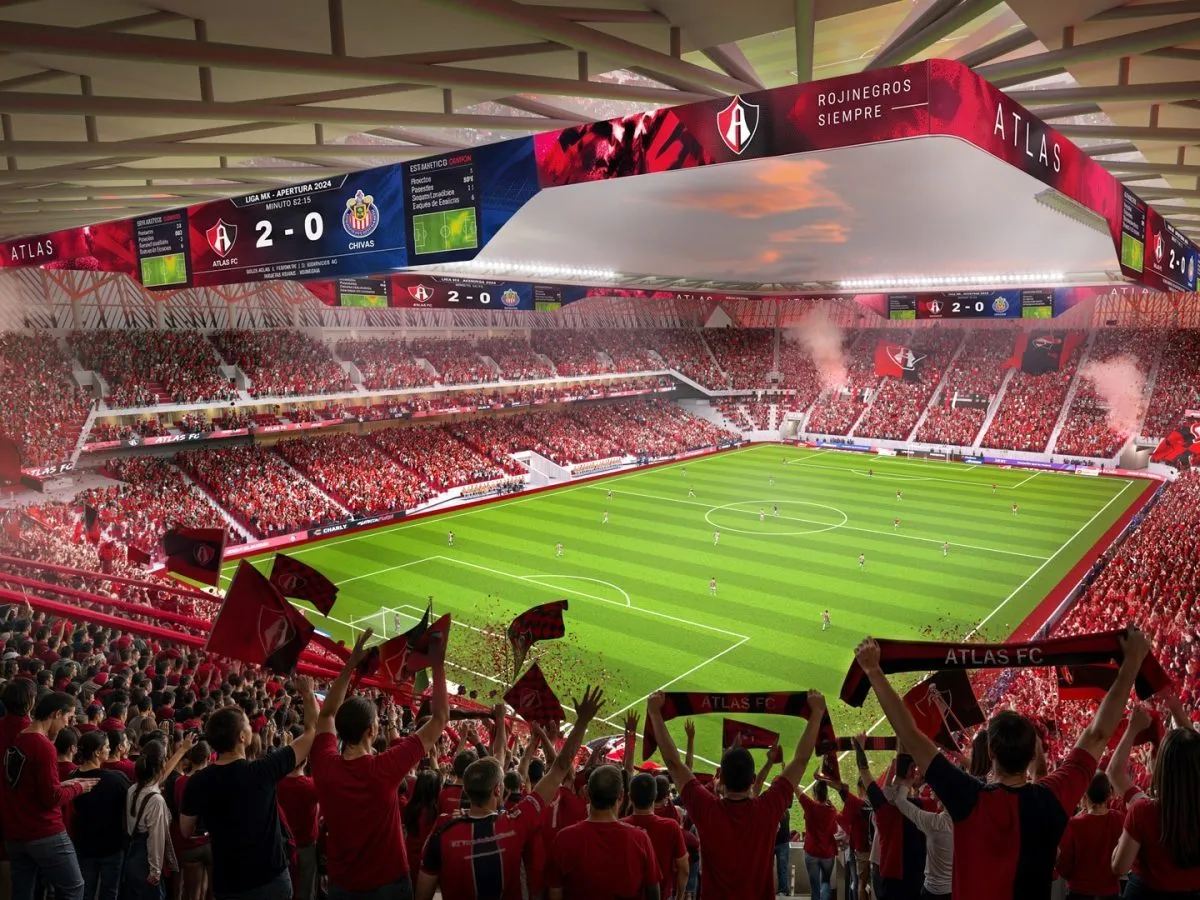 Source: https://populous.com/
An Innovative Stadium That Can Transform
One of the development’s most distinctive features is its flexibility.
The proposed northern seating structure will incorporate a movable grandstand system that can adapt to different event requirements.
This configuration will allow part of the venue to operate as a smaller entertainment space for approximately 5,000 spectators.
The system is designed to accommodate concerts, exhibitions, sporting competitions, and cultural performances without requiring the entire football stadium to operate in its normal configuration.
Developers are targeting more than 200 events per year, transforming the complex into a year-round destination.
Beyond the football pitch, the plans include restaurants, official merchandise stores, a Football Museum, and more than 8,600 square metres of commercial and visitor facilities.
Public gathering areas will also play a prominent role, with spaces celebrating the traditions and culture of Jalisco, including plazas intended for music, social activities, and pre-match celebrations.
An adjacent multi-purpose venue is also planned for smaller events and exhibitions.
The broader ambition is to make Ciudad UdeG an active destination every day, rather than a facility that attracts visitors only during football matches.
How Much Will the Stadium Cost?
The project’s financial scale is considerable.
Grupo PRODI has announced an initial private investment of approximately five billion Mexican pesos, equivalent to roughly $275 million using indicative exchange-rate estimates.
However, some broader development estimates have reached approximately eight billion pesos, or around $450 million, potentially including additional commercial and urban infrastructure.
These figures should not be treated as a single confirmed final construction budget.
The agreement between Grupo PRODI and the Universidad de Guadalajara is particularly important.
Under the proposed long-term arrangement, the university will retain ownership of the land while granting development and operating rights through a 99-year framework.
The university is expected to hold approximately 20 percent participation in the project, with Grupo PRODI holding the remaining 80 percent.
It will also receive at least 18 million Mexican pesos annually, adjusted for inflation.
University officials have emphasized that no money from the institution’s budget will finance stadium construction.
For Grupo PRODI, the development offers an opportunity to establish a more sustainable commercial model for Atlas FC, generating revenue from premium seating, sponsorships, events, and year-round business activities.
Sustainability and Transport Infrastructure
Environmental sustainability is another important element of the proposed development.
The Ciudad UdeG master plan includes more than 61,000 square metres of landscaped public areas, incorporating trees, pedestrian spaces, recreational facilities, and gathering areas.
Rainwater collection, water treatment, natural ventilation, and environmentally conscious landscaping are among the measures being considered.
Transportation will also be critical.
The proposed stadium is near Mercado del Mar station on Guadalajara’s Light Rail Line 3 and Constitución station on the Mi Macro Periférico bus rapid transit network.
Developers have outlined plans for approximately 1,400 parking spaces within the development, supported by more than 4,600 additional spaces in the surrounding area.
Pedestrian improvements, bicycle routes, shuttle services, and possible road modifications are also part of the broader mobility strategy.
However, these proposals will require further technical assessments and coordination with local authorities.
Local Residents Raise Concerns
Despite enthusiasm surrounding the announcement, the project has already generated opposition.
Residents from several nearby neighborhoods, including Villa de los Belenes, Ecológica Seattle, Tepeyac, and Paraísos de la Seattle, have expressed concerns about the stadium’s impact on their communities.
The surrounding district already experiences considerable traffic from university campuses, cultural venues, concerts, and baseball events.
Adding a 40,000-seat football stadium could significantly increase congestion, particularly when major events take place simultaneously.
Residents have requested detailed environmental, acoustic, transportation, and urban planning studies, alongside meaningful public consultation.
The Universidad de Guadalajara has acknowledged that further assessments and discussions with neighboring communities will be necessary before construction can proceed.
Consequently, the stadium’s announced opening timetable remains dependent on the successful completion of regulatory and planning requirements.
What Will Happen to Estadio Jalisco?
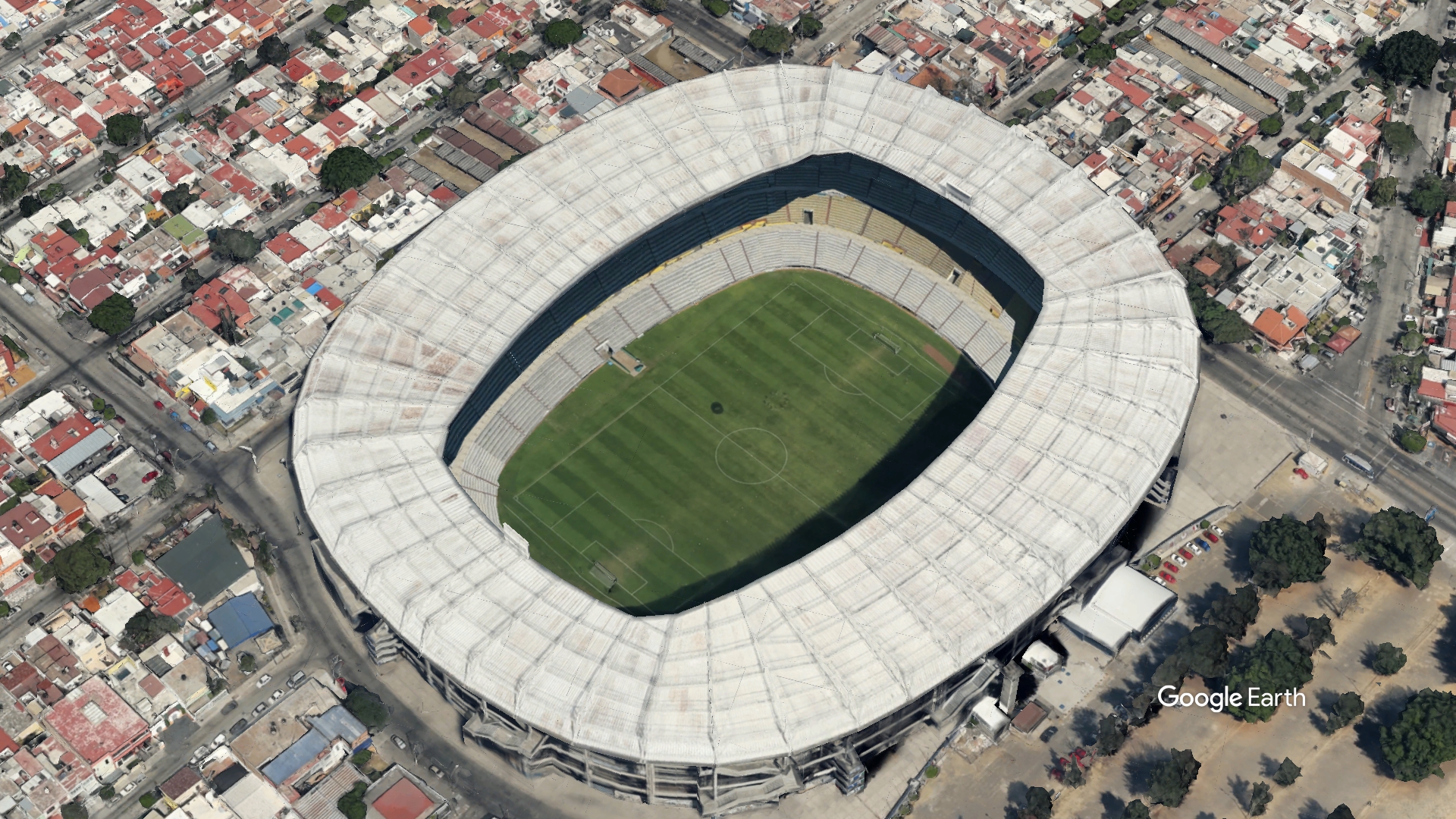
For Atlas supporters, perhaps the most emotional aspect of the development is the possibility of leaving Estadio Jalisco.
Opened in 1960, the historic stadium has been home to Atlas for generations and hosted matches during the 1970 and 1986 FIFA World Cups.
It also witnessed one of the greatest moments in the club’s history when Atlas ended its 70-year league championship drought in December 2021.
Moving away from such an iconic venue would represent a profound change.
However, officials have emphasized that Estadio Jalisco is not currently scheduled for demolition.
Its owners, Clubes Unidos de Jalisco, have discussed continuing to operate the stadium for concerts, sporting events, and other major activities.
Ongoing renovations, including improvements to facilities, sound systems, and event infrastructure, are intended to support its future use.
The challenge will be preserving the stadium’s historical importance while establishing a sustainable role for it after Atlas and Leones Negros relocate.
When Will Construction Begin?
The project was officially presented on October 7, 2026, following approval of the relevant university master-plan framework.
The developers aim to obtain the necessary approvals and begin construction during 2027.
The stated objective is to stage the first match in the new stadium in 2030.
Nevertheless, these dates remain targets rather than guaranteed milestones.
Environmental studies, mobility assessments, municipal permits, community consultation, and detailed construction planning must still be completed.
A Transformational Project for Mexican Football
If successfully delivered, the new Atlas FC stadium could become one of Mexico’s most significant modern football venues.
Its combination of world-class architecture, intimate seating, adaptable facilities, commercial development, and cultural integration reflects the evolution of stadium design worldwide.
For Atlas FC, it represents an opportunity to create a modern home that strengthens the club financially while delivering an enhanced experience for supporters.
For Leones Negros, it offers access to a top-level venue closely connected to the university’s identity.
And for Guadalajara, Ciudad UdeG could become an important new cultural and sporting destination.
The ambition is unmistakable. But the ultimate success of this project will depend not only on its impressive design, but also on its ability to secure approvals, address neighborhood concerns, and turn an extraordinary architectural vision into reality.
https://youtu.be/L4MVB2gdBYs