
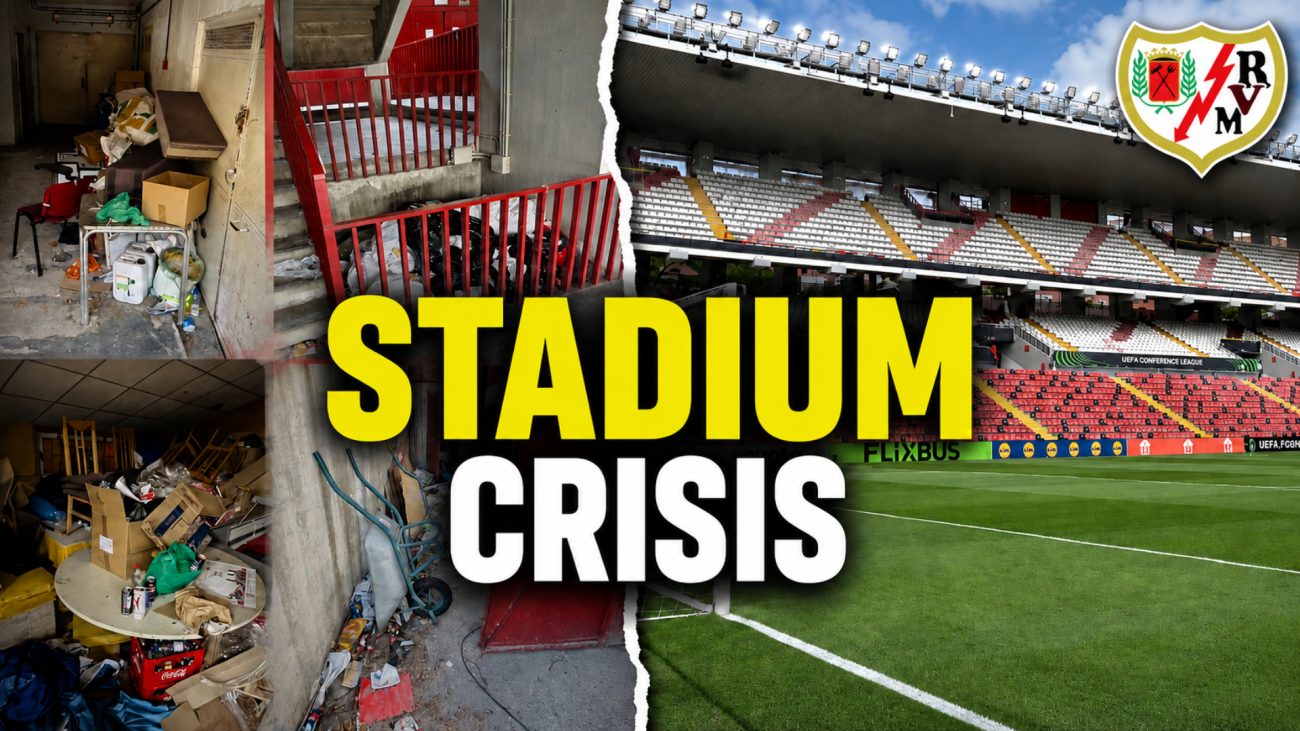
Few football clubs are as closely connected to their neighbourhood as Rayo Vallecano. While Spain’s biggest clubs have transformed into global entertainment brands with state-of-the-art stadiums and enormous commercial revenues, Rayo remains deeply rooted in the working-class district of Vallecas.
The club’s current stadium, Campo de Fútbol de Vallecas officially opened in 1976, replacing Rayo’s previous ground on the same site. While modest in size, the stadium quickly became one of Spanish football’s most intimidating venues, with supporters positioned close to the pitch and creating one of LaLiga’s most passionate atmospheres.
Nearly fifty years later, however, the stadium’s age has become impossible to ignore.
A Stadium Showing Its Age
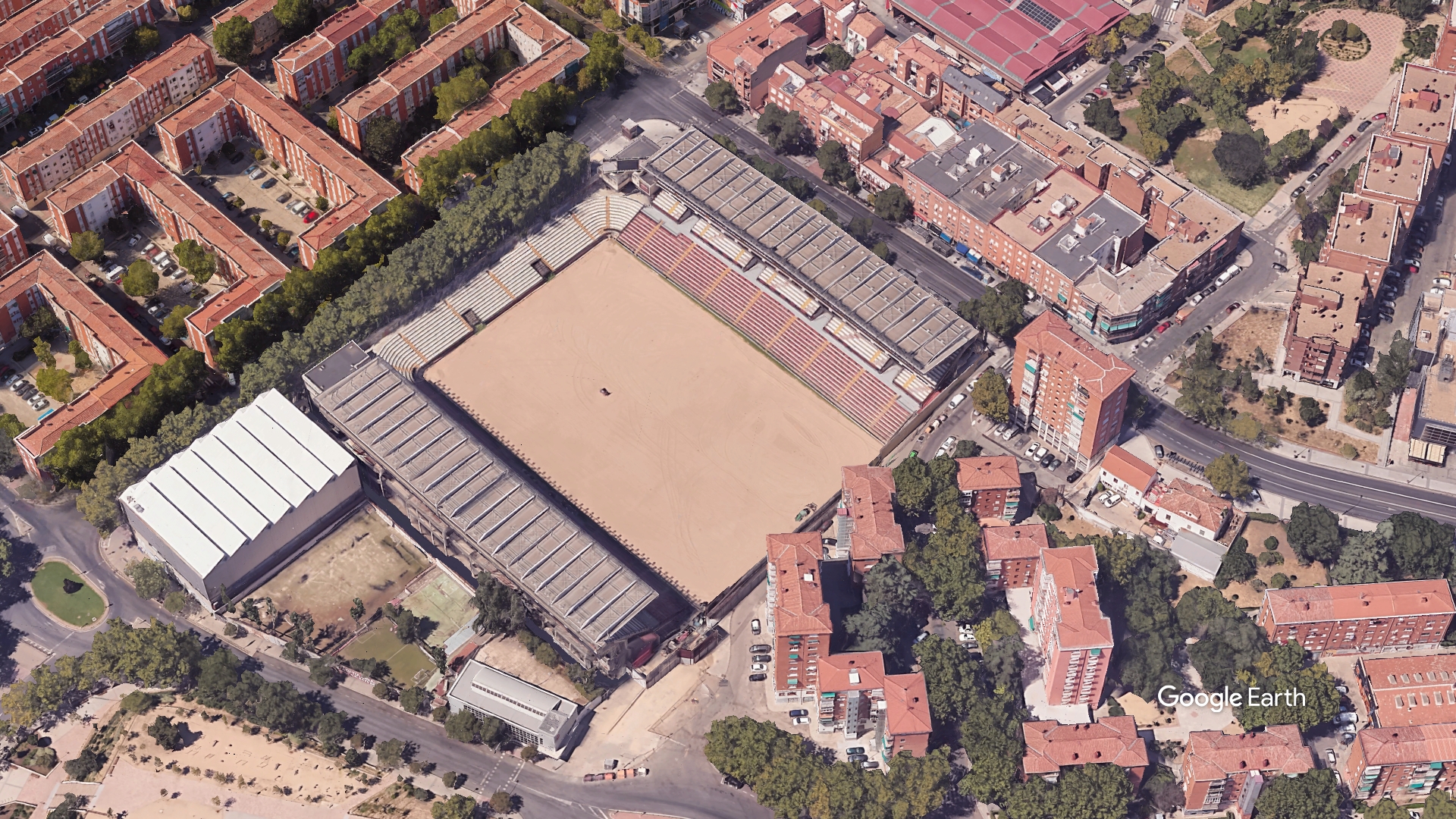
With a current capacity of just under 15,000 spectators, Vallecas is among the smallest stadiums in LaLiga. Decades of safety regulations have gradually reduced its capacity, while the dense urban surroundings leave very little room for conventional expansion.
Structural problems have become increasingly visible over recent years. The situation reached a critical point in 2018 when authorities temporarily closed parts of the stadium over safety concerns, forcing emergency repair works before matches could resume. Players have also expressed frustration. During the 2025-26 season, several members of the squad publicly criticised the poor condition of the playing surface, describing it as one of the worst in Spain’s top flight.
In a sudden turn of events ahead of the 2026/27 La Liga season, Estadio de Vallecas was temporarily closed in late July 2026 for emergency repairs after failing a major safety audit. The Community of Madrid officially withdrew Rayo Vallecano’s concession to the stadium due to severe health and safety deficiencies, which reportedly included widespread structural neglect, fire hazards, and the risk of Legionnaires’ disease. Because these urgent remediation works are expected to take anywhere from two to six months, Rayo Vallecano has been forced to seek an alternative temporary home venue for the start of their upcoming campaign
The future of Campo de Fútbol de Vallecas has become one of the most debated stadium projects in Spain. Regional authorities, the club’s ownership and supporters all agree on one thing: the current stadium can no longer meet the demands of modern football. What they disagree on is how to solve the problem.
The Club Owner Wants Something Bigger
Club president Raúl Martín Presa has consistently argued that neither renovation proposal goes far enough.
His preferred solution is the construction of an entirely new privately owned stadium with a capacity of around 30,000 spectators. According to Presa, remaining in a stadium with fewer than 20,000 seats would prevent Rayo from competing financially with the rest of LaLiga.
However, finding enough land within the district for such a project presents enormous challenges. Any realistic location would likely move the club away from its historic home, something many supporters strongly oppose. For many fans, moving away from their district would mean losing much of what makes Rayo Vallecano unique.
The AGAS Project (February 2026)
In February 2026, supporters commissioned the architectural firm AGAS to explore whether Campo de Fútbol de Vallecas could be transformed without leaving the neighbourhood.
The firm argued that the stadium’s biggest limitation was actually its current layout. Their proposal centred on rotating the pitch by 90 degrees, changing its orientation from east-west to north-south. According to the architects, this would unlock valuable space within the existing urban block and allow the entire stadium to be rebuilt with a capacity of around 25,000 spectators.
Estimated to cost between €40 million and €50 million, the AGAS project quickly became a popular alternative among supporters.
The Community of Madrid’s Official Redevelopment Plan
 Source: https://www.comunidad.madrid
Although the AGAS project received widespread attention among supporters, on July 2026 the Community of Madrid presented a new €60 million redeveloment plan.
Rather than rebuilding the stadium from scratch or relocating the club, the government intends to modernise Campo de Fútbol de Vallecas while preserving its historic position in the neighbourhood. Regional president Isabel Díaz Ayuso has repeatedly stressed that Rayo belongs in Vallecas and that the stadium should continue serving as both a football venue and a community landmark.
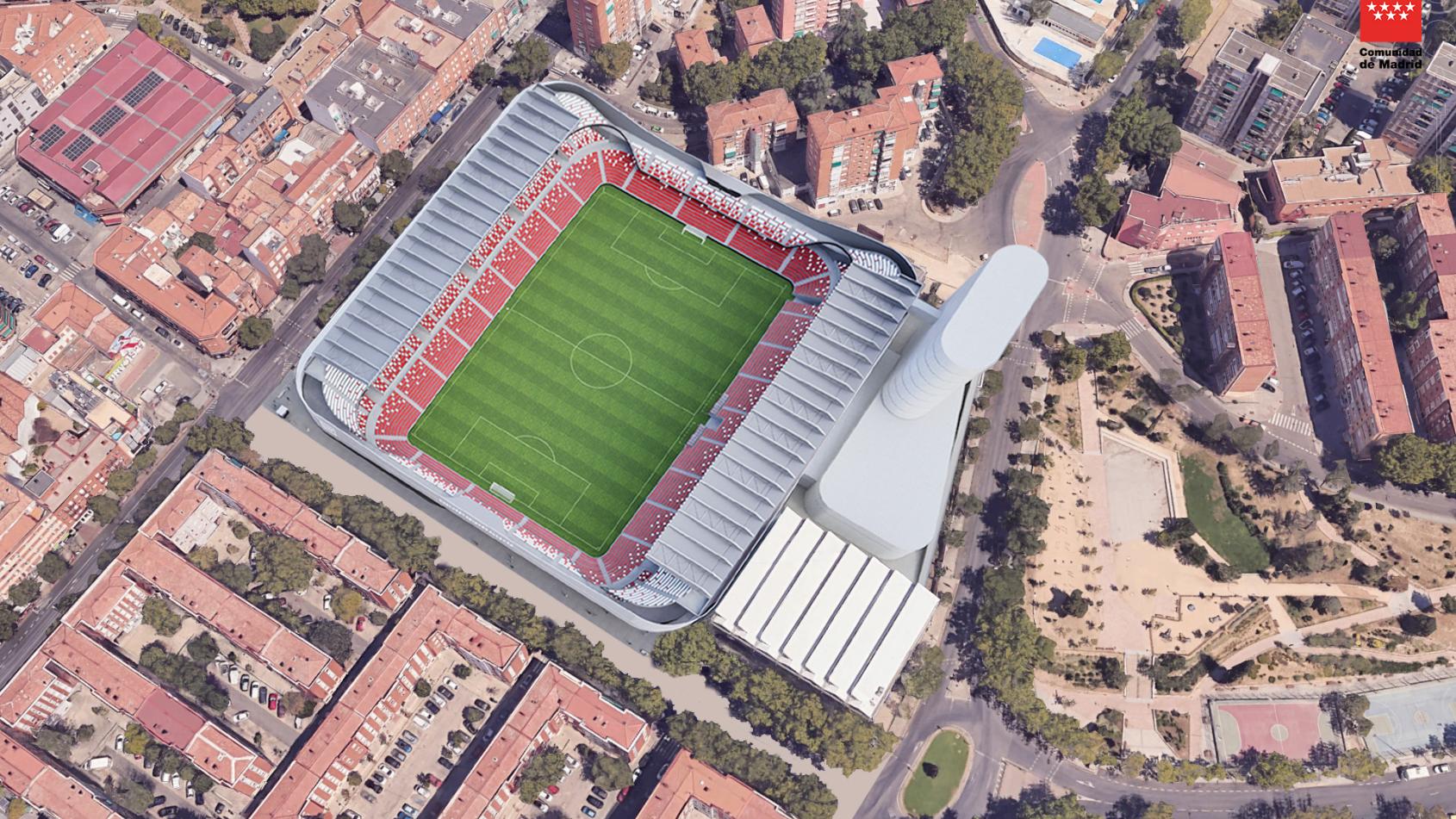
The redevelopment would include the construction of a new fourth stand to close the currently open end of the stadium, creating a fully enclosed bowl for the first time. Because the surrounding streets leave almost no room for conventional expansion, engineers propose using cantilevered structures that extend above existing public space while keeping the stadium within its current footprint.
To accommodate the new stand, the pitch would be shifted by approximately 10 to 12 metres, allowing the stadium’s capacity to increase from around 14,700 to approximately 18,500 spectators.
The project also introduces a completely new translucent façade, modern concourses, upgraded seating, improved accessibility, LED ribbon boards and significantly enhanced supporter facilities throughout the stadium.
Perhaps the most important commercial addition is a new multi-purpose building on nearby public land along Arroyo del Olivar. Connected directly to the stadium, this annex would contain VIP hospitality suites, corporate lounges, club offices, retail space and underground parking, providing the revenue-generating facilities that simply cannot be accommodated within the existing 1976 structure.
Extensive structural repairs are also planned, including reinforced concrete, roof replacement, improved drainage, upgraded public facilities and a completely renewed natural grass pitch following repeated criticism from players about playing conditions.
Construction is expected to be carried out in phases over approximately 24 months, allowing Rayo Vallecano to continue playing home matches at Vallecas throughout the redevelopment. If completed as planned, the renovated stadium could also serve as a training base during the 2030 FIFA World Cup.
Conclusion
For nearly a century, Rayo Vallecano has been inseparable from Vallecas. The stadium is far more than four stands and a football pitch—it is a symbol of the neighbourhood’s identity and community spirit. Yet football has changed dramatically since Campo de Fútbol de Vallecas opened its gates in 1976, and the club now faces a difficult balancing act between preserving its heritage and securing its future.
What do you think Rayo Vallecano should do? Should the club stay in Vallecas and redevelop its historic stadium or start fresh with a brand-new home somewhere else?
Let me know your thoughts in the comments below.