

Italy’s EURO 2032 Stadiums: All 14 Candidates, New Projects and Renovation Plans
Italy is preparing for one of the biggest football tournaments in its history. Alongside Turkey, the country will host UEFA EURO 2032, creating an opportunity to modernise its stadium infrastructure and bring some of its most famous football grounds into a new era.
However, Italy faces a considerable challenge. Many of its existing stadiums are ageing, several require extensive renovations, and a number of ambitious new stadium projects must overcome planning, financing and construction obstacles before they can become reality.
On 30 September 2026, the Italian Football Federation (FIGC) submitted its official EURO 2032 stadium dossiers to UEFA. The proposal includes 14 stadiums across 13 Italian cities. Rome is the only city with two candidates: the existing Stadio Olimpico and AS Roma’s proposed new stadium in Pietralata.
Only five Italian venues will eventually be selected to host the tournament, alongside five stadiums in Turkey.
Here is a complete overview of Italy’s 14 EURO 2032 stadium candidates, including their proposed developments, current status and prospects.
Italy’s 14 EURO 2032 Stadium Candidates
The official Italian submission includes the following venues:
- Allianz Stadium – Turin
- New San Siro – Milan
- Stadio Olimpico – Rome
- New AS Roma Stadium – Pietralata, Rome
- Stadio Artemio Franchi – Florence
- New Bologna Stadium – Bologna
- New Gigi Riva Stadium – Cagliari
- Stadio Diego Armando Maradona – Naples
- Stadio Luigi Ferraris – Genoa
- Stadio San Nicola – Bari
- Stadio Renzo Barbera – Palermo
- Stadio Via del Mare – Lecce
- Stadio Arechi – Salerno
- New Hellas Verona Stadium – Verona
The FIGC has submitted these projects to UEFA for compliance checks covering 11 thematic areas and 120 operational requirements. These include accessibility, security, sustainability, infrastructure, hospitality and media facilities. The selection of the five Italian host venues will follow UEFA’s assessment.
1. Turin – Allianz Stadium
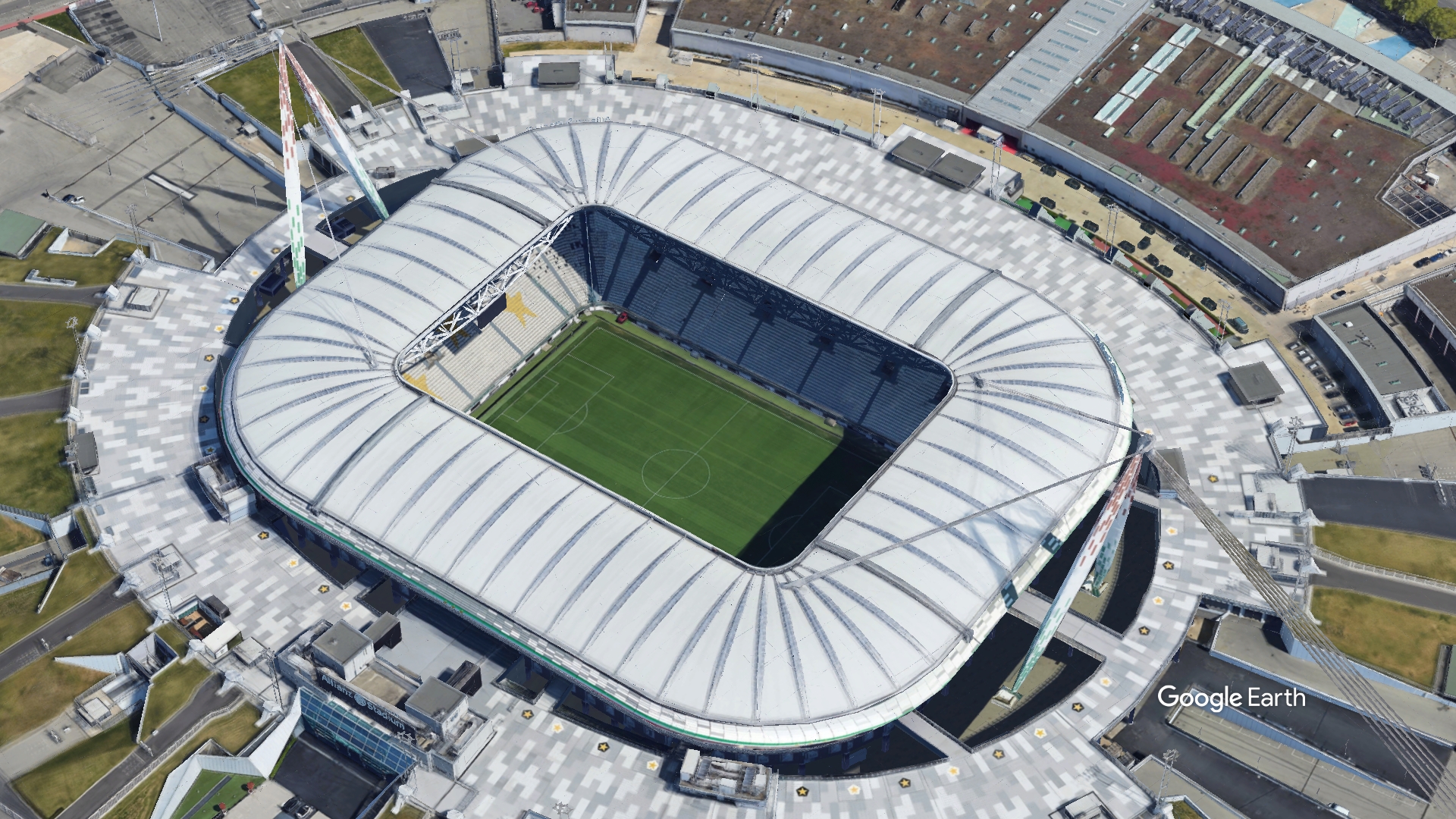
Turin has one of the strongest candidates in the entire Italian selection process: Juventus’ Allianz Stadium.
Opened in 2011, the stadium has a capacity of approximately 41,500 spectators and is widely regarded as one of Italy’s most modern football venues.
Unlike many traditional Italian stadiums, Allianz Stadium was designed specifically for football. Its stands are positioned close to the pitch, creating an intimate atmosphere and excellent visibility.
The venue already offers modern hospitality facilities, media infrastructure and spectator services. Consequently, it requires considerably less work than most of the other candidates.
Its existing infrastructure gives Turin a significant advantage in the race to host EURO 2032.
2. Milan – The New San Siro
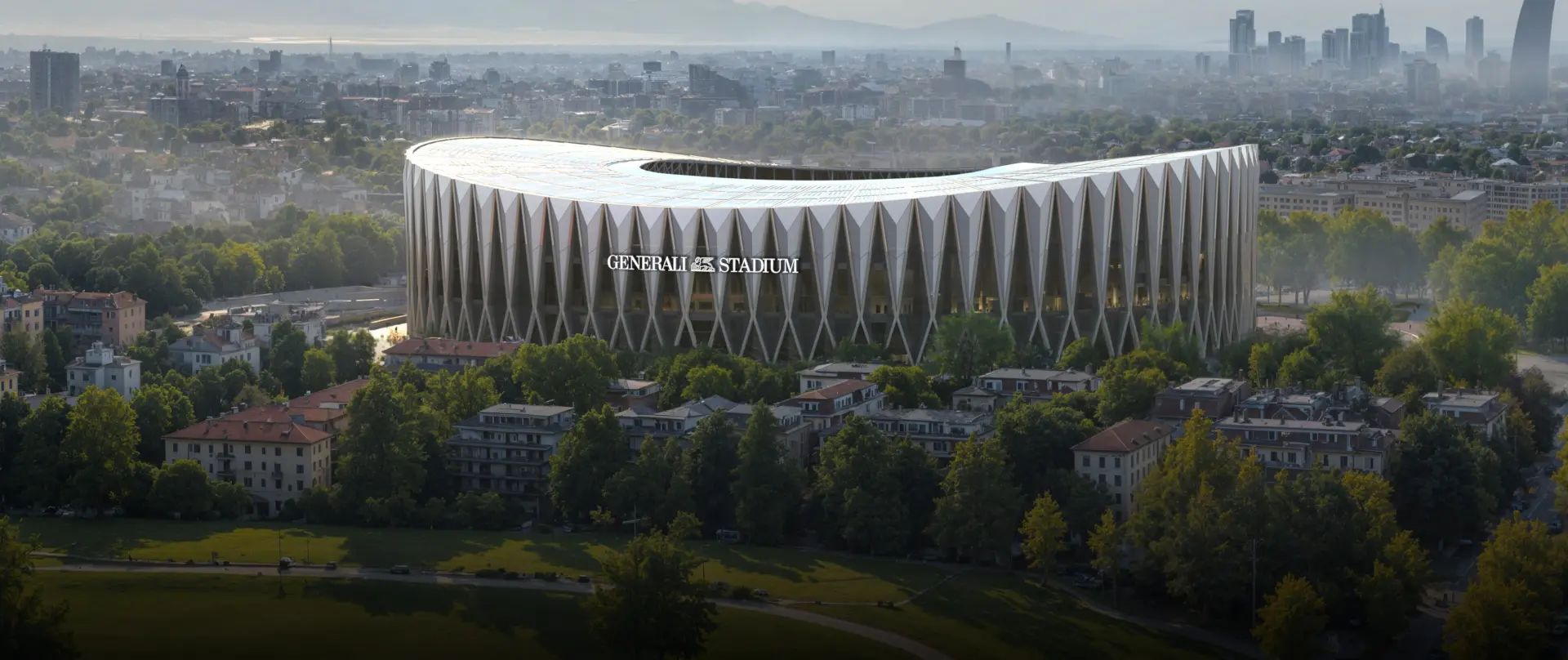 Source: https://www.acmilan.com/
Milan’s proposal is arguably the most high-profile stadium project in Italy.
AC Milan and Inter are planning to replace the historic San Siro with a new shared stadium in the same area. The clubs completed the acquisition of the relevant land in November 2025, marking an important milestone after years of negotiations.
The proposed new stadium is expected to accommodate approximately 71,500 spectators.
The architectural project involves Foster + Partners and MANICA, with the wider development intended to transform the surrounding district through commercial, leisure and public spaces.
The new venue is expected to offer modern hospitality facilities, improved spectator services and substantially greater commercial opportunities for both clubs.
However, the project still faces a demanding timetable. The final design, planning process and construction schedule will determine whether Milan can deliver the new stadium before EURO 2032.
3. Rome – Stadio Olimpico
Rome is the only Italian city with two stadiums included in the official submission.
The first is the historic Stadio Olimpico, home to AS Roma and Lazio.
With a capacity of approximately 70,000 spectators, it is already an established international venue. It has hosted major European football matches, including European Championship games and Champions League finals.
The stadium also has experience hosting major athletics and rugby events.
Unlike several competing candidates, the Olimpico does not require an entirely new construction project. Nevertheless, improvements to accessibility, hospitality, spectator services and other operational facilities will be important.
Its capacity, location and experience make it one of the most established options in Italy’s EURO 2032 proposal.
4. Rome – AS Roma’s New Pietralata Stadium
AS Roma’s proposed stadium in Pietralata is one of the most ambitious projects in the Italian selection.
The planned football-specific venue is expected to accommodate approximately 60,000 supporters.
The architectural concept features a modern exterior, steep stands and a particularly impressive Curva Sud designed to reflect the atmosphere of Roma’s most passionate supporters.
The project also includes wider urban development around the stadium.
After years of discussions and administrative procedures, the proposal has made progress during 2026. However, the construction phase remains the decisive challenge.
Roma’s objective is to deliver a modern home that can host major European matches and provide the club with greater control over its stadium revenues.
If completed on schedule, Pietralata could become one of the most impressive new stadiums in Italy.
5. Florence – Stadio Artemio Franchi
Florence’s candidate is the historic Stadio Artemio Franchi, designed by renowned Italian architect Pier Luigi Nervi.
Opened in 1931, the stadium is an important example of modernist sports architecture. Its distinctive concrete structures make redevelopment more complicated than a conventional renovation.
The current project aims to modernise the stadium while preserving its architectural heritage.
The redevelopment includes improvements to the stands, new roofing elements and upgraded spectator facilities.
Unlike several other Italian candidates, construction work has already been underway.
Nevertheless, the project has faced financial and scheduling challenges. Completing the necessary improvements within the required timeframe will be essential if Florence is to secure a place among the five Italian host venues.
6. Bologna – New Bologna Stadium
Bologna’s EURO 2032 proposal has evolved considerably.
The original plan focused on redeveloping the historic Stadio Renato Dall’Ara. However, financial and technical difficulties led to a change in direction.
The latest proposal involves constructing an entirely new stadium in the BolognaFiere exhibition district.
The planned venue is expected to accommodate approximately 35,000 spectators and provide a modern football experience with improved hospitality and commercial facilities.
The project represents a major opportunity for Bologna, but it also creates a significant construction challenge.
The new stadium must progress through planning, financing and construction within a relatively short period.
Its inclusion in the official EURO 2032 submission demonstrates the city’s ambition, although the timetable remains one of the main questions surrounding the project.
7. Cagliari – New Gigi Riva Stadium
Cagliari is planning a new stadium to replace the former Sant’Elia, with the proposed venue named in honour of club legend Gigi Riva.
The project is expected to provide approximately 30,000 seats and create a modern football-specific arena.
The design includes covered stands, improved spectator facilities and a wider redevelopment of the surrounding area.
The new stadium is particularly important for Sardinia, as it would provide the island with a modern venue capable of hosting major sporting events.
Planning and administrative procedures have progressed, but construction and financing remain crucial steps.
Cagliari’s geographical position could also make transport and accommodation planning important factors in the UEFA assessment.
8. Naples – Stadio Diego Armando Maradona
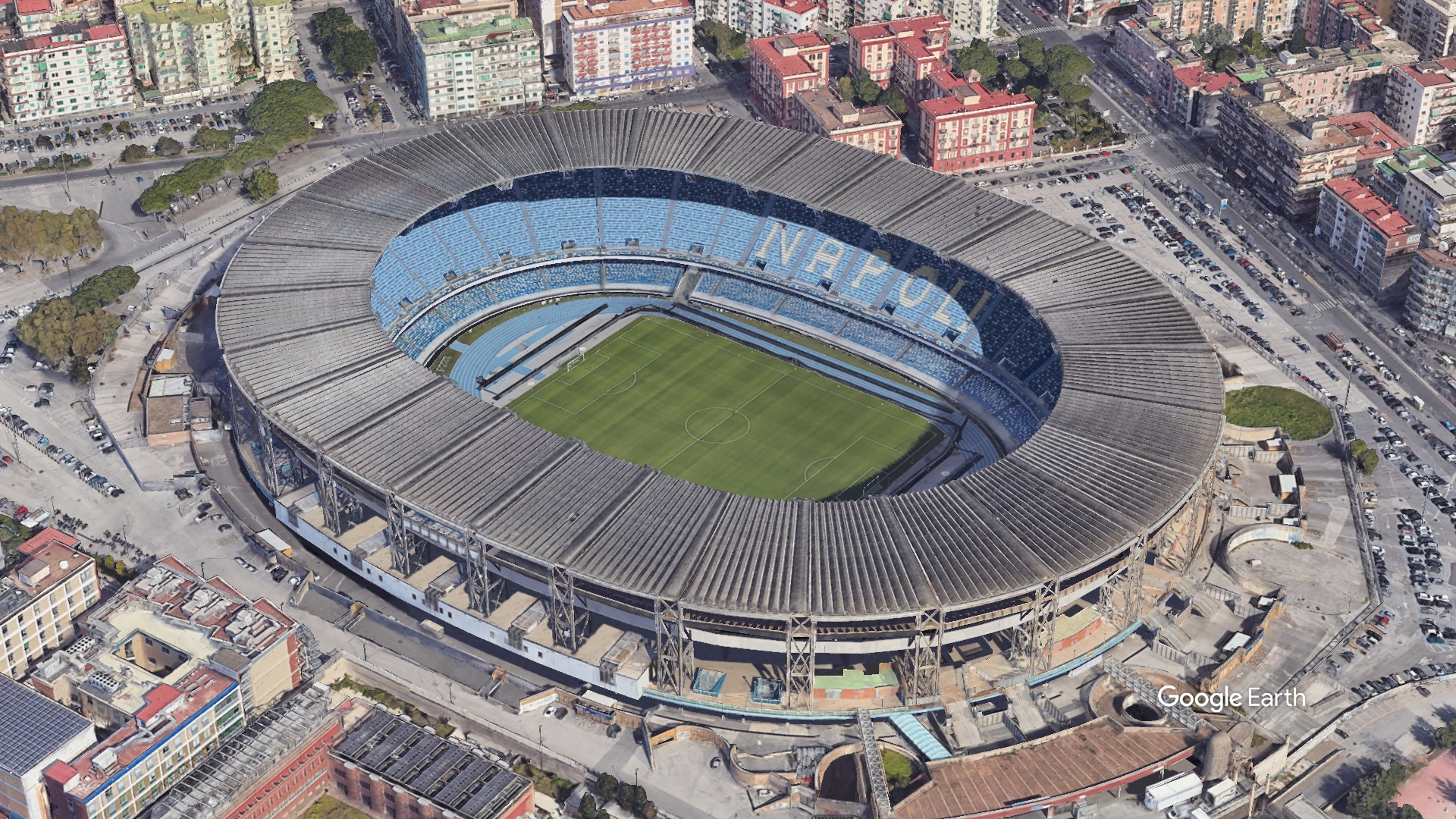
Naples is putting forward the Stadio Diego Armando Maradona rather than a completely new stadium project.
Opened in 1959 and extensively modified for the 1990 World Cup, the stadium has a capacity of approximately 54,000 spectators.
It is one of the most recognisable football venues in Italy, particularly because of the history of Diego Maradona and the passionate support of Napoli.
The proposed EURO 2032 approach involves renovating the existing stadium.
Improvements to spectator facilities, accessibility, hospitality, media infrastructure and general services will be necessary to meet modern international standards.
Naples has the advantage of an established stadium with considerable capacity, but the scale and delivery of the renovation programme will influence its chances.
9. Genoa – Stadio Luigi Ferraris
The Stadio Luigi Ferraris is one of Italy’s most historic football grounds.
Opened in 1911, it is shared by Genoa and Sampdoria and is famous for its distinctive architecture, steep stands and intense atmosphere.
Rather than replacing the stadium, Genoa’s proposal focuses on preserving its historic identity while bringing the venue up to modern UEFA standards.
The redevelopment aims to improve accessibility, hospitality, spectator facilities and the stadium’s technical infrastructure.
The project has an estimated investment of around €100 million, with the objective of transforming the Ferraris into a modern international venue.
The challenge is particularly interesting because construction must take place around a stadium that remains important to two football clubs.
If the redevelopment is delivered successfully, Genoa could offer EURO 2032 a unique combination of historic architecture and modern facilities.
10. Bari – Stadio San Nicola
Bari’s Stadio San Nicola is another important candidate with a strong connection to Italian football history.
Designed by Renzo Piano for the 1990 FIFA World Cup, the stadium is famous for its unusual flower-like architectural design.
Its capacity of approximately 58,000 makes it one of the largest venues in southern Italy.
However, the stadium needs significant modernisation.
The proposed redevelopment focuses on improving the existing venue rather than replacing it. The wider regeneration plans also involve the historic Stadio della Vittoria, although the San Nicola is the stadium submitted for EURO 2032.
The objective is to improve spectator comfort, accessibility, technical infrastructure and the overall matchday experience.
Bari’s challenge is turning an ambitious redevelopment proposal into a fully financed and deliverable construction programme.
With its history, capacity and distinctive architecture, the San Nicola could become an interesting host venue if the required improvements are completed.
11. Palermo – Stadio Renzo Barbera
Palermo is another important candidate from southern Italy.
The Stadio Renzo Barbera has a capacity of approximately 36,000 spectators and is famous for its passionate atmosphere.
The proposed redevelopment aims to transform the existing venue into a modern stadium with improved hospitality, commercial spaces, accessibility and spectator facilities.
Palermo FC has been working with Populous, an internationally recognised architecture firm, on the stadium development.
The ambition is to create a venue that can serve the club and the wider city long after EURO 2032.
The project has made important administrative progress, including recognition of public interest and the submission of planning documentation.
However, funding, approvals and the construction timetable remain essential.
For Palermo, EURO 2032 represents an opportunity to modernise one of Sicily’s most important sporting venues.
12. Lecce – Stadio Via del Mare
The Stadio Via del Mare, home of US Lecce, is another southern Italian venue included in the official submission.
Opened in 1966, the stadium has a capacity of approximately 31,000 spectators.
The redevelopment proposal focuses on upgrading the existing structure, improving the roof, lighting and spectator facilities.
The stadium’s modernisation is also connected to the wider sporting infrastructure improvements associated with the Mediterranean Games.
Lecce’s proposal is based on transforming an existing venue rather than constructing a completely new stadium.
The main challenge is ensuring that the redevelopment satisfies all UEFA requirements, including accessibility, hospitality, media facilities and security.
The club’s passionate supporters and the importance of football in the Salento region make Lecce an interesting candidate.
13. Salerno – Stadio Arechi
Salerno’s Stadio Arechi is another stadium requiring a substantial redevelopment.
Opened in 1990, the venue has a capacity of approximately 31,000 spectators and has been the home of Salernitana for decades.
The proposed project aims to modernise the stadium through improvements to the stands, roofing, accessibility, hospitality and technical infrastructure.
An important element of the wider plan involves the nearby Stadio Volpe, which is intended to provide temporary facilities during the main redevelopment works.
The project is being driven by public institutions, making administrative procedures, financing and construction coordination particularly important.
Salerno’s inclusion in the official candidate list provides an opportunity to accelerate the stadium’s modernisation.
However, the project must demonstrate that its construction programme is realistic and that the completed venue will meet UEFA’s requirements.
14. Verona – New Hellas Verona Stadium
Verona’s proposal is one of the most ambitious additions to Italy’s EURO 2032 stadium race.
Hellas Verona have presented plans for a new stadium to replace the existing Marcantonio Bentegodi.
The proposed venue is expected to accommodate approximately 30,000 spectators, with an estimated investment of around €300 million.
The project aims to create a modern football-specific stadium with improved spectator facilities and commercial opportunities.
The existing Bentegodi would be demolished as part of the redevelopment, with temporary arrangements needed during the construction period.
However, Verona’s proposal entered the process relatively late compared with some other candidates.
Planning, financing and construction will all need to progress quickly if the city is to deliver the project before the tournament.
The new stadium could represent a major transformation for football in Verona, but the tight timetable makes it one of the projects to watch particularly closely.
Which Five Italian Stadiums Will Host EURO 2032?
Italy’s stadium selection is far from straightforward.
Turin’s Allianz Stadium and Rome’s Stadio Olimpico already provide established venues, while Milan, Rome, Bologna, Cagliari and Verona are pursuing ambitious new stadium projects.
Other cities are relying on major renovations to bring historic grounds up to modern standards.
The UEFA assessment will consider much more than stadium capacity or architectural design. Accessibility, security, transport, accommodation, sustainability, hospitality and media facilities will all influence the final decision.
The FIGC will select the five Italian host venues after UEFA completes its compliance checks.
The deadline gives Italy several years to deliver the necessary infrastructure, but the most ambitious projects cannot afford significant delays.
EURO 2032 could become a turning point for Italian football stadiums, providing the investment and momentum needed to modernise venues that have been waiting for redevelopment for decades.
Whether Italy can deliver all five selected stadiums on time remains one of the biggest questions surrounding the tournament.