
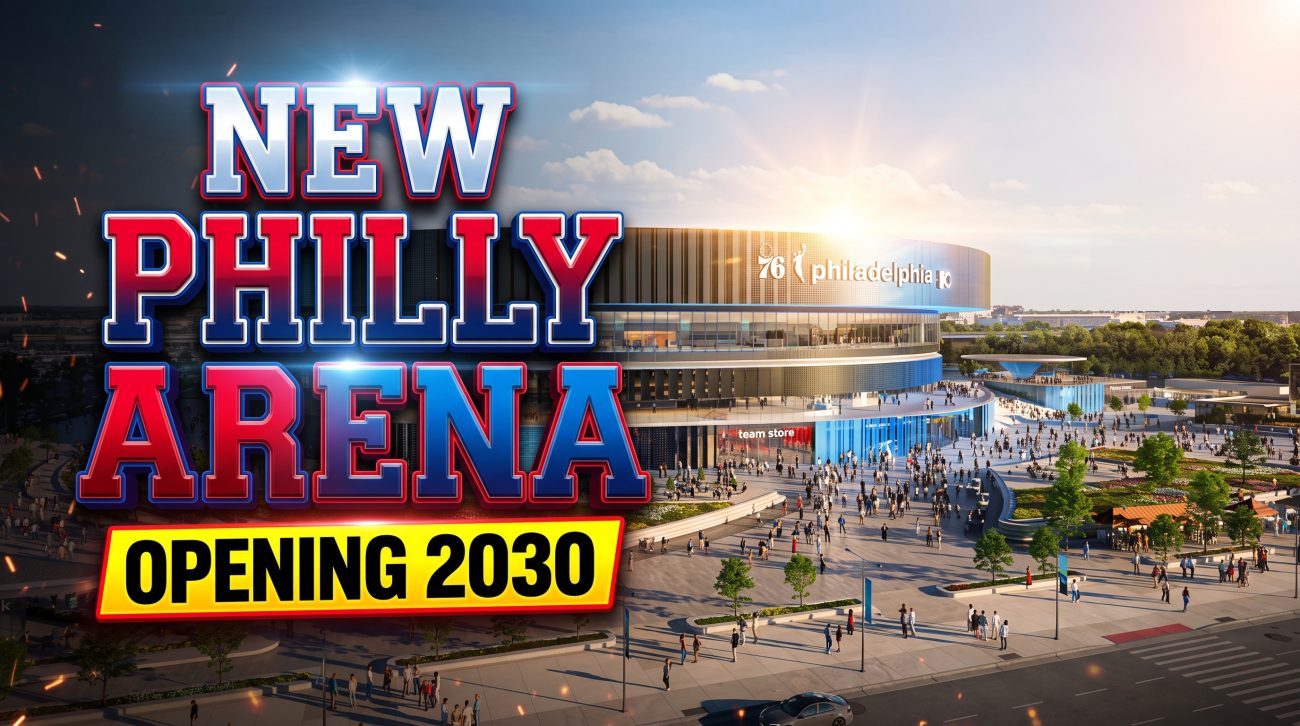
n September 8 2026, the Philadelphia 76ers and Philadelphia Flyers revealed the first exterior renderings of their planned new joint arena, giving fans a first look at what could become a major new sports and entertainment venue in the city.
Scheduled to open its doors in May 2030, this state-of-the-art facility will replace the current Xfinity Mobile Arena and serve as the permanent home for three professional franchises: the NBA’s 76ers, the NHL’s Flyers, and the city’s recently acquired Women’s National Basketball Association (WNBA) expansion team.
From Market East controversy to South Philadelphia
The story of the new arena began with a very different proposal.
In 2022, Harris Blitzer Sports & Entertainment unveiled plans for a privately financed, $1.3 billion arena in Center City. Known as 76 Place at Market East, the project would have been built above Jefferson Station and would have required the redevelopment of part of Fashion District Philadelphia.
Philadelphia Mayor Cherelle Parker strongly supported the concept, and the project eventually received approval from City Council in December 2024.
But there was a major problem. The neighboring Chinatown community strongly opposed the development. The dispute became increasingly heated, with protests surrounding the City Council vote.
Then, despite winning approval, the 76ers changed course.
On January 13, 2025, HBSE abandoned the Market East project and announced a historic 50-50 partnership with Comcast Spectacor —the owners of the Flyers and the current Xfinity Mobile Arena — to build a new arena in South Philadelphia.
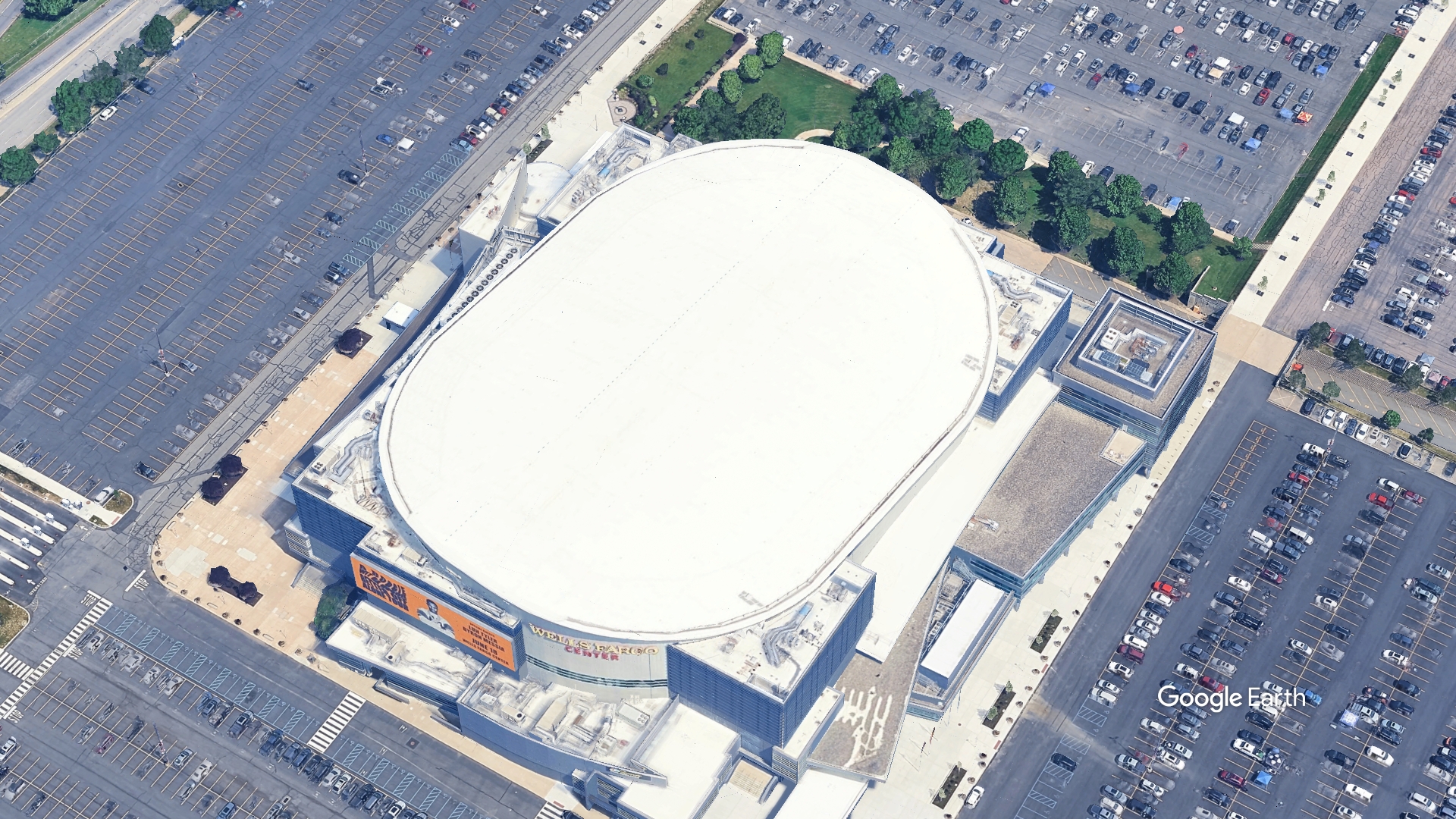
The project also became significantly larger in scope. The incoming WNBA franchise, awarded to Philadelphia in June 2025, would become the building’s third permanent tenant. The result is a rare triple-tenant arena designed to remain active throughout almost the entire year.
A new arena inspired by the old Spectrum
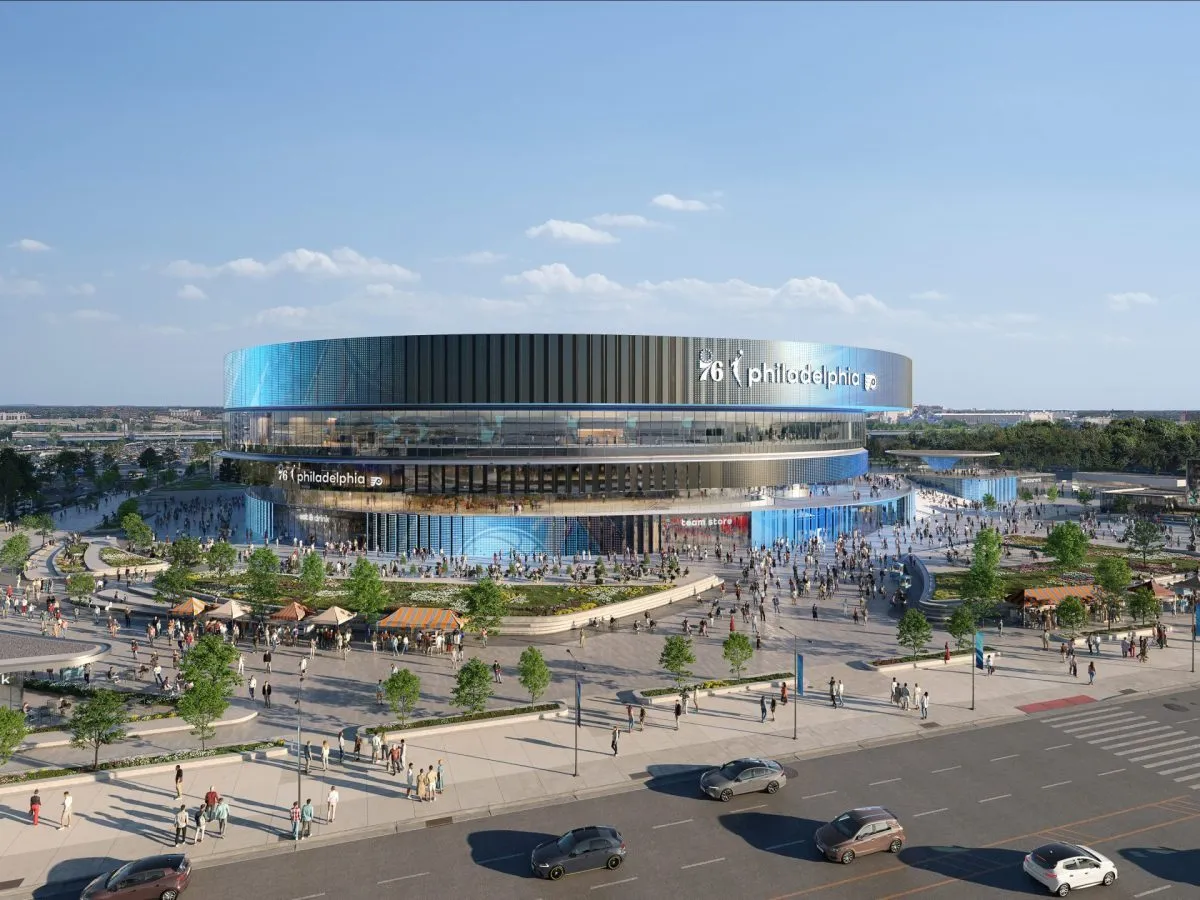 Source: https://populous.com/
With the location secured on the historic footprint of the original Spectrum arena—which stood from 1967 until its demolition in 2011—the joint venture turned to the globally renowned architecture firm Populous to design the facility.
The new building will occupy the historic footprint of the Spectrum. Rather than creating one enormous vertical wall, the architects have divided the building into a series of horizontal, cantilevered bands. These layers rise and step backwards, reducing the visual impact of the arena’s enormous volume.
From street level, the building should therefore feel less like a massive box. The cantilevered bands also have a practical purpose. They provide shade and weather protection around the pedestrian areas while creating large surfaces for lighting and digital displays.
The exterior will combine extensive glazing with integrated LED screens. That means the arena itself can effectively become a giant digital billboard. The building could appear in the colors of the Flyers, 76ers or WNBA team depending on which club is playing. Instead of having one permanent appearance, the building will constantly change.
Perhaps the most distinctive feature of the new arena will be its enormous arrival staircase. Located on the northwest side of the building, the staircase is designed as both an entrance and a gathering space. Its inspiration comes from one of Philadelphia’s most recognizable landmarks: the steps of the Philadelphia Museum of Art.
A $2.5 billion transformation
The arena itself is only one part of the story. Comcast Spectacor’s wider master plan for South Philadelphia is valued at approximately $2.5 billion.
For decades, the Sports Complex has been dominated by enormous surface parking areas that sit largely empty outside event days. The new strategy is to make much greater use of this land.
Alongside the new arena, plans include a 5,500-seat concert venue, a 250-room hotel and expanded retail and restaurant space, with the possibility of residential and office development in the future.
The strategic goal of this master plan is to capture visitor spending by transforming the complex into a year-round destination.
A massive private investment
Financially, the project is also unusual.
The arena is being promoted as the largest fully privately funded development project in Philadelphia’s history. That means the city is not being asked to finance the construction through the kind of major public subsidy that has become common in North American sports development.
This is why the third tenant is so important. The WNBA franchise could prove particularly important to the economics of the building. The NBA and NHL seasons dominate the traditional American sports calendar from autumn through spring. The WNBA, however, plays primarily during the summer. That creates a natural complement.
Add concerts and other events, and the arena has the potential to become one of the most heavily utilized indoor venues in the country.
The traffic problem
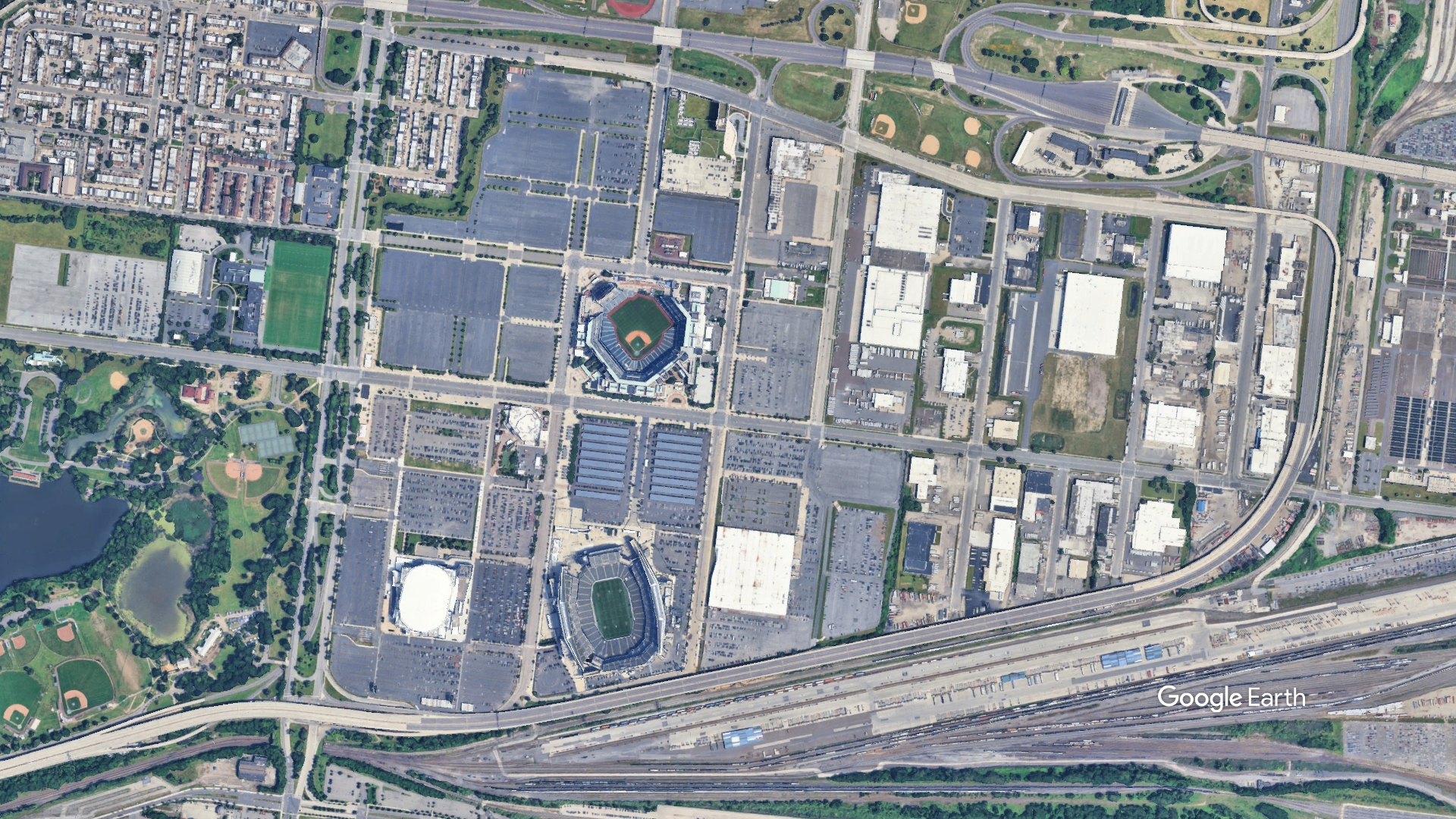
For all its historical success, there is one major issue that has followed South Philadelphia Sports Complex for decades: traffic.
The Sports Complex already contains three major arenas and a 67,000-seat football stadium. On major event days, tens of thousands of cars can descend on the area simultaneously.
Adding another major venue makes solving this problem essential.
In June 2026, Pennsylvania Governor Josh Shapiro announced a $30 million traffic improvement program for the district.
Developed in collaboration with the Pennsylvania Department of Transportation (PennDOT), city planners, and the major sports franchises, the upgrades are scheduled to be fully operational by the end of 2028, well ahead of the arena’s grand opening.
Conclusion
So, what do you think about the future of Philadelphia sports? With its May 2030 opening fast approaching, this massive new venue is set to completely transform the South Philadelphia Sports Complex into a year-round entertainment destination.
Let me know in the comments if you’re excited for this new chapter in Philly sports, and which team you are most excited to see play there!