

No World Cup has ever looked like this. Between June 8 and July 21, 2030, football’s 24th World Cup — and the official centenary of the very first tournament in 1930 — will play out across three continents and six countries at once. Spain, Portugal, and Morocco will host the bulk of the tournament under a joint bid, while Uruguay, Argentina, and Paraguay each stage one ceremonial opening match in honor of 1930. FIFA awarded the hosting rights by acclamation in December 2024, since the Spain-Portugal-Morocco bid ran unopposed.
That six-nation structure comes with an equally unprecedented stadium project: 23 venues, ranging from a rebuilt Camp Nou to a brand-new 115,000-seat colossus rising outside Casablanca. Here’s every 2030 World Cup stadium, country by country — including the capacities, costs, and controversies behind each one. 
Quick Facts: 2030 World Cup at a Glance
- Dates: June 8 – July 21, 2030
- Format: 48 teams, 104 matches
- Main hosts: Spain, Portugal, Morocco
- Centenary hosts: Uruguay, Argentina, Paraguay — one opening match each
- First match of the tournament: Estadio Centenario, Montevideo — the same stadium that hosted the first-ever World Cup final in 1930
- Total stadiums: 23, across 6 countries
- Final venue: Undecided. It’s a genuine three-way contest between Barcelona’s Camp Nou, Morocco’s Grand Stade Hassan II, and Madrid’s Santiago Bernabéu, with FIFA expected to rule around December 2026
Why This World Cup’s Stadiums Are Unlike Any Before It
Every recent World Cup has left behind a few oversized, underused stadiums — what planners call the “white elephant” problem, most visible after Brazil 2014 and Qatar 2022. The 2030 hosts are structuring their bid specifically to avoid repeating it.
Instead of commissioning a wave of new, single-purpose arenas, Spain and Portugal are renovating and expanding stadiums that already exist — many of them upgraded for Euro 2004 or maintained by clubs like Real Madrid, Barcelona, and Benfica. Morocco is the exception, building genuinely new infrastructure, but with a clear post-tournament plan to keep using it for domestic and African football.
The framework governing all of this comes from FIFA’s Bidding Regulations, approved on October 4, 2023, with hosts formally ratified at an Extraordinary FIFA Congress on December 11, 2024. Stadium infrastructure alone makes up 35% of FIFA’s technical evaluation score — more than transport, accommodation, and broadcast facilities combined.
The Battle for the Final: A Three-Way Fight Nobody Can Call
Most World Cups have their final venue locked in years ahead of time. This one doesn’t — and the reason is more technical than political.
FIFA requires the final to be played in a stadium holding at least 80,000 people. Madrid’s Santiago Bernabéu, long assumed to be the obvious choice, actually sits right on the edge of that line: depending on configuration, its capacity is usually cited somewhere between about 78,000 and 84,000, and its biggest recent crowds — including a sold-out NFL game — have topped out closer to 78,600. Real Madrid is reportedly exploring ways to close the gap, but for now the shortfall has opened the door to two serious rivals.
Spotify Camp Nou in Barcelona is finishing a rebuild that will take it to 105,000 seats — comfortably clearing FIFA’s threshold, with completion targeted for 2027. And Morocco’s Grand Stade Hassan II, rising outside Casablanca at a planned 115,000 seats and reportedly over 40% built as of mid-2026, was designed from the outset with the final specifically in mind, right down to purpose-built FIFA office space.
Spanish federation president Rafael Louzán has publicly lobbied for the final to stay on home soil, at either the Bernabéu or Camp Nou. Moroccan officials counter that a greenfield site gives them room to meet FIFA’s operational demands in a way no dense European city center can. Even Lisbon’s Estádio da Luz has occasionally been floated as a neutral compromise. FIFA has said settling the question now would be premature — for the 2026 World Cup, the final’s host city wasn’t confirmed until two years out — but the full venue list, and likely the final’s host, is expected to be ratified around December 2026.
FIFA’s Stadium Rules: What Every Venue Must Have
To even qualify, host stadiums had to clear a strict technical bar. FIFA’s regulations require:
- All-seater configuration
- A fully covered roof over spectator areas
- Natural grass or hybrid pitches with vacuum and ventilation systems
- Up to 8% of total seating reserved for premium VIP and VVIP hospitality
Capacity requirements scale with how far a stadium is expected to go in the tournament:
| Match Stage | Minimum Capacity |
|---|---|
| Group stage through quarterfinals | 40,000 |
| Semifinals | 60,000 |
| Opening match and final | 80,000 |
The joint Spain-Portugal-Morocco bid scored 4.2 out of 5.0 in FIFA’s official evaluation — including 4.3 for transport and 4.2 for accommodations — and projected running costs roughly $250 million below historical World Cup baselines. The South American centenary bid, covering Uruguay, Argentina, and Paraguay, scored 3.6 out of 5.0, reflecting the smaller scope of hosting just one match each.
Spain: The Anchor Nation (and Its Growing Pains)
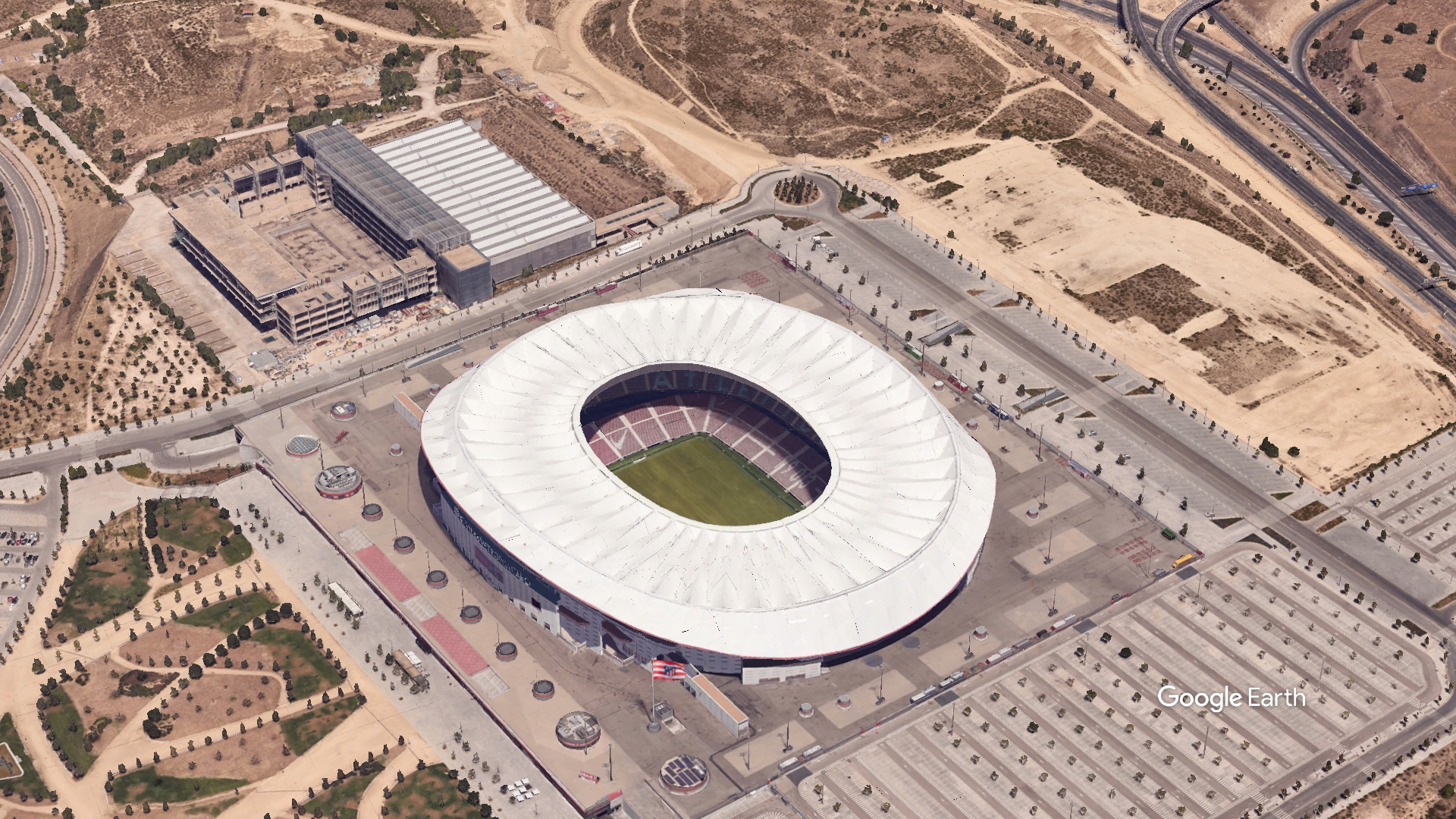
Spain carries the heaviest load of any 2030 host, with a bid built around 11 stadiums across 9 cities — a list that has turned out to be the messiest of any host nation’s, because it keeps changing.
The Elite Tier
Real Madrid’s rebuilt Santiago Bernabéu gives Madrid a state-of-the-art anchor with a fully retractable roof, a 360-degree video board, and an underground pitch-storage system that lets the stadium host concerts without damaging the grass — plus a major HVAC retrofit using over 75,000 meters of insulation to handle Spanish summer heat. Madrid is also backed by the 70,460-seat Riyadh Air Metropolitano. In Catalonia, the Spotify Camp Nou rebuild — discussed above in the fight for the final — is on track to become the largest football stadium in Europe. Barcelona’s backup option, the 40,500-seat RCDE Stadium in Cornellà-El Prat, is already fully compliant and turnkey.
Regional Powerhouses
Seville’s Estadio La Cartuja is undergoing a two-phase, roughly €256 million transformation — removing its old athletics track and extending its roof — to push capacity past 70,000 and establish it as a “Spanish Wembley.” In the Canary Islands, a €174.7 million project called “La Nube” (“The Cloud”), designed by L35 Architects, will expand the Estadio de Gran Canaria from 32,392 to 44,020 seats while targeting an ‘A’ energy rating — extending the tournament’s footprint into the Atlantic as a bridge to the venues in Morocco. Bilbao’s San Mamés (56,633 gross capacity) and Zaragoza’s rebuilt Nueva Romareda (43,144 seats, on a site last used for the 1982 World Cup) round out the group.
When Cities Say No
The financial demands weren’t sustainable everywhere. In July 2025, Málaga withdrew the Estadio La Rosaleda rather than spend an estimated €270 million ($316 million) on an expansion that would have forced the local club into a 12,500-seat stadium for years, alienating 26,000 season ticket holders. A Coruña followed in March 2026, pulling the Estadio Riazor after concluding it couldn’t justify the long-term costs of a stadium built well beyond its regional club’s needs.
The Vigo Controversy
To fill the gap, the RFEF asked FIFA in late March 2026 to add two replacement venues: Nou Mestalla in Valencia — a long-stalled project revived by a €322 million financing package backed by Goldman Sachs and La Liga, now targeting completion in 2027–2028 at 70,044 seats — and Estadio de Balaídos in Vigo.
Balaídos’ path here has been rocky. Back in early 2025, Spanish reporting revealed that Balaídos had initially edged out San Sebastián’s Reale Arena for Spain’s final host slot by a razor-thin margin of less than a tenth of a point, only for RFEF evaluators to revise the scoring within 48 hours — a swing of roughly 0.4 points that flipped the result and dropped Vigo out of the host list entirely. Vigo’s mayor, Abel Caballero, has repeatedly accused the federation of bias against the city and pushed for the full scoring to be made public. A Coruña’s later withdrawal reopened a path for Vigo, but as of mid-2026 the city still doesn’t have a fully funded renovation plan, and FIFA hasn’t confirmed either Vigo or Valencia — a final call is expected later in 2026.
Spain’s 2030 World Cup Stadiums
| City | Stadium | Capacity | Furthest Stage |
|---|---|---|---|
| Madrid | Santiago Bernabéu | ~78,000–84,000 | Final (capacity dependent) |
| Madrid | Riyadh Air Metropolitano | 70,460 | Semifinal |
| Barcelona | Spotify Camp Nou | 105,000 | Final |
| Cornellà-El Prat | RCDE Stadium | 40,500 | Round of 16 |
| Seville | Estadio La Cartuja | 70,000+ | Semifinal |
| Bilbao | San Mamés | 56,633 | Quarterfinal |
| Donostia-San Sebastián | Reale Arena | 42,300 | Quarterfinal |
| Las Palmas | Estadio de Gran Canaria | 44,500 | Quarterfinal |
| Zaragoza | Nueva Romareda | 43,144 | Round of 16 |
| Valencia | Nou Mestalla | 70,044 | Proposed replacement |
| Vigo | Balaídos | ~43,000 (target) | Proposed replacement |
A final ruling on Spain’s last one or two host slots is expected later in 2026.
Morocco: Building the World’s Biggest Stadium
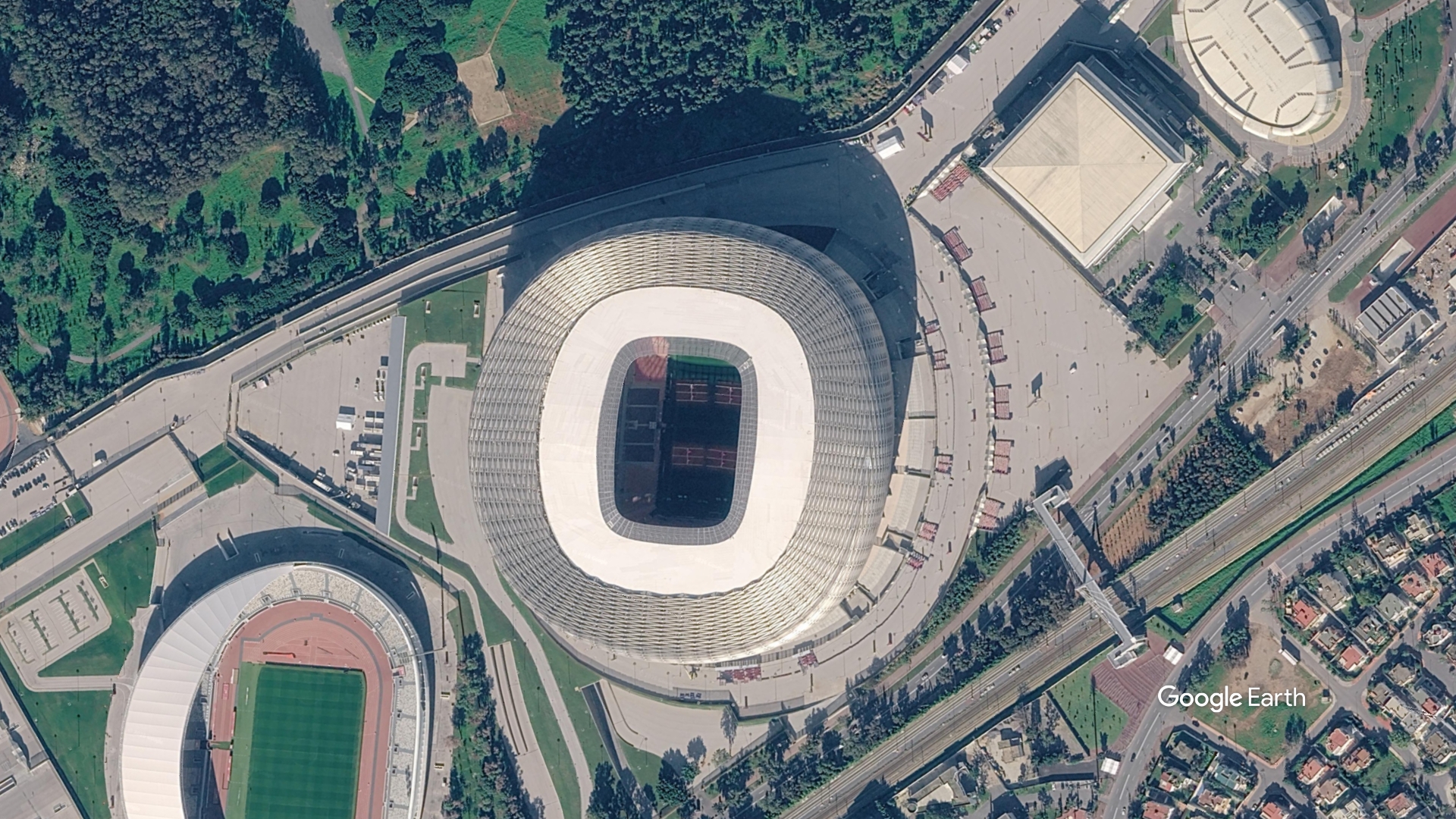
Morocco is hosting after five unsuccessful solo bids (1994, 1998, 2006, 2010, and 2026) — and it’s making up for lost time with roughly $2.2 billion in stadium investment.
Grand Stade Hassan II
The centerpiece of Morocco’s bid is rising on a 100-hectare site in El Mansouria, Benslimane, about 38 kilometers north of Casablanca. Designed by Populous with Paris-based Oualalou + Choi, the stadium draws on traditional Moroccan moussem festival tents for its design language: a translucent aluminum lattice roof, 32 monumental stairways, and elevated botanical gardens 28 meters up that create a passive-cooling “oasis” beneath the canopy.
Construction began in 2024, led by contractor SGTM, with the workforce set to scale from 5,000 to around 10,000 at peak. The roughly 5.1-billion-dirham (about $520 million) build was reportedly over 40% complete as of mid-2026, with officials now targeting delivery by the end of 2027 — earlier than the 2028 date originally floated. When it opens, its 115,000-seat capacity, including 9,000 VIP and VVIP seats across five hospitality levels, will make it the largest football stadium in the world, surpassing North Korea’s Rungrado 1st of May Stadium.
The Rest of the Portfolio
Before the 2025 African Cup of Nations Moroccoh has renovated the Ibn Batouta Stadium in Tangier (65,000 → 75,600 seats) and largely rebuilt the Prince Moulay Abdellah Stadium in Rabat (to roughly 69,500 seats), both comfortably clearing the 60,000-seat semifinal threshold. Fez Stadium is expanding to 55,800 seats, Marrakesh Stadium to 45,860, and the Adrar Stadium in Agadir to 46,000 gross seats while preserving its setting between the Atlantic Ocean and the Atlas Mountains. The 2025 Africa Cup of Nations served as a live operational test run for the whole system.
Morocco’s 2030 World Cup Stadiums
| City | Stadium | Capacity | Furthest Stage |
|---|---|---|---|
| Casablanca (Benslimane) | Grand Stade Hassan II | 115,000 | Final (candidate) |
| Tangier | Ibn Batouta Stadium | 75,600 | Semifinal |
| Rabat | Prince Moulay Abdellah Stadium | ~69,500 | Semifinal |
| Fez | Fez Stadium | 55,800 | Quarterfinal |
| Agadir | Adrar Stadium | 46,000 | Round of 16 |
| Marrakesh | Marrakesh Stadium | 45,860 | Quarterfinal |
Portugal: Doing More With Less
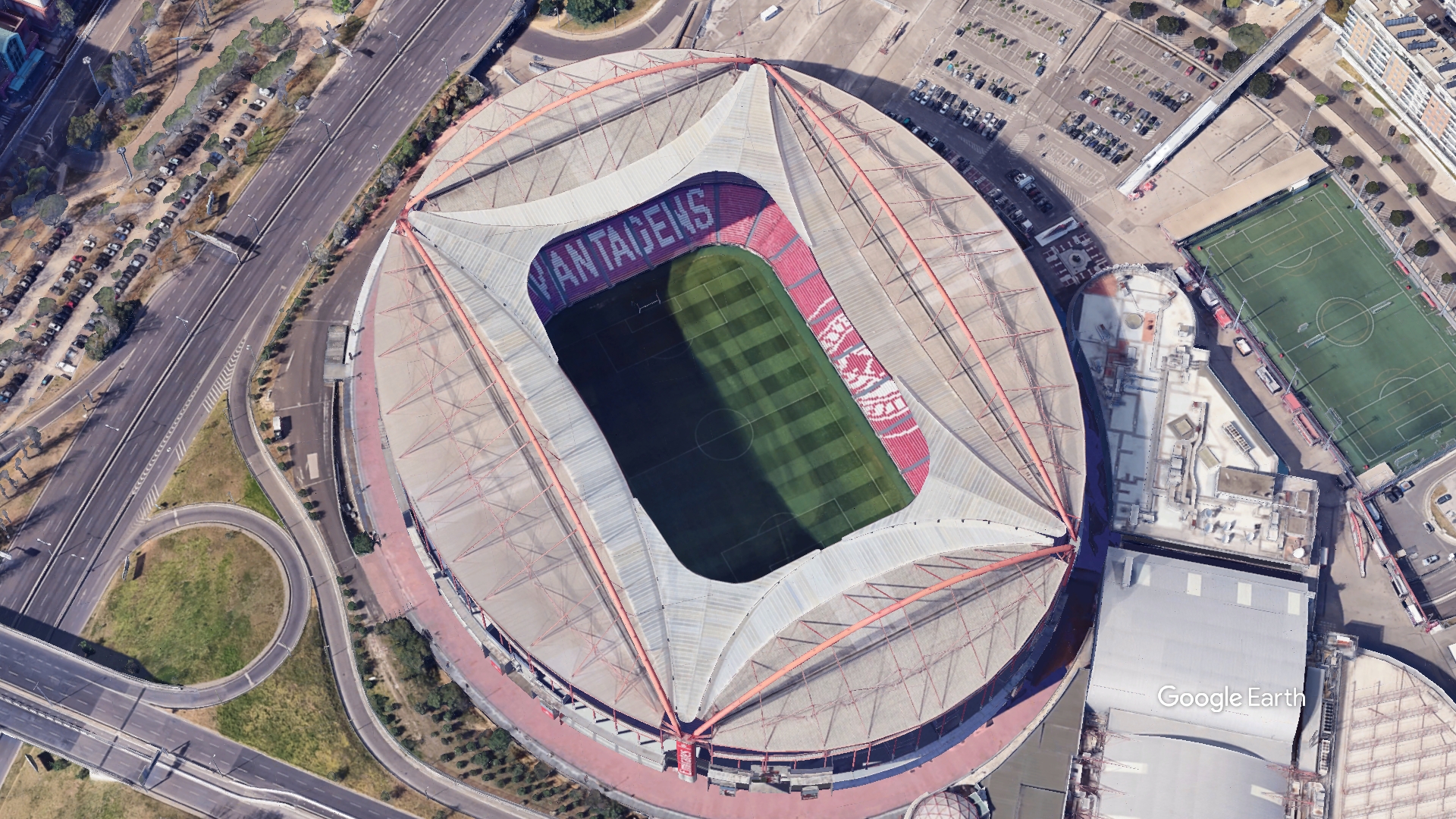
Where Spain and Morocco are building big, Portugal is optimizing. Its bid leans almost entirely on stadium infrastructure built for Euro 2004, deliberately avoiding the debt loads that have burdened past hosts.
The centerpiece is Lisbon’s Estádio da Luz, home to Benfica and host of two Champions League finals. Its gross capacity of 65,209 seats technically clears the semifinal threshold, but its functional net capacity of 58,586 falls just short — prompting Benfica’s €220 million “Benfica District” master plan. Designed by Populous, the project adds a new 10,000-seat indoor arena, two smaller sports halls seating 2,500 and 1,500, a 10,000-person fan plaza anchored by a relocated statue of Eusébio, and a new fourth level with 6,800 square meters of premium hospitality space.
Lisbon’s Estádio José Alvalade (50,103 seats, home of Sporting CP) and Porto’s Estádio do Dragão (51,075 seats, home of FC Porto) round out the roster — both fully UEFA-tested and ready for group-stage through quarterfinal fixtures.
Portugal’s 2030 World Cup Stadiums
| City | Stadium | Capacity | Furthest Stage |
|---|---|---|---|
| Lisbon | Estádio da Luz | 65,209 | Semifinal (pending review) |
| Lisbon | Estádio José Alvalade | 50,103 | Round of 16 |
| Porto | Estádio do Dragão | 51,075 | Quarterfinal |
South America’s Centenary Matches
FIFA allocated the tournament’s three opening matches to Uruguay, Argentina, and Paraguay — a direct nod to 1930, when Uruguay hosted and won the very first World Cup, Argentina finished runner-up, and Paraguay became home to CONMEBOL, the oldest continental football confederation. Fittingly, the entire tournament kicks off not in Spain or Morocco, but in Montevideo.
Uruguay opens the tournament at the Estadio Centenario, the only stadium FIFA recognizes as a “World Football Historical Monument.” A sensitive $120–140 million modernization — funded mostly by private capital — will lower the pitch by 1.5 meters for better sightlines and add a canopy roof, while deliberately leaving the iconic Torre de los Homenajes tower exposed to preserve the stadium’s historic silhouette.
Argentina is expanding River Plate’s Estadio Más Monumental in Buenos Aires past 100,000 seats in a $90–100 million project designed with German engineering firm Schlaich Bergermann Partner — making it the largest stadium in South America and the second-largest club stadium in the world, behind only Camp Nou.
Paraguay is completely rebuilding Club Olimpia’s stadium — the site of a near-disastrous fence collapse during a 1965 match featuring Pelé — into a 46,000-seat venue called Estadio Osvaldo Domínguez Dibb, with up to 338 executive boxes. It’s due for completion in early 2027 and will go on to host Copa Libertadores finals.
South America’s 2030 World Cup Stadiums
| Country | City | Stadium | Target Capacity |
|---|---|---|---|
| Uruguay | Montevideo | Estadio Centenario | 63,000 |
| Argentina | Buenos Aires | Estadio Más Monumental | 100,000+ |
| Paraguay | Asunción | Estadio Osvaldo Domínguez Dibb | 46,000 |
Frequently Asked Questions
How many stadiums are hosting the 2030 World Cup? 23 stadiums across 6 countries: 11 in Spain, 6 in Morocco, 3 in Portugal, and one each in Uruguay, Argentina, and Paraguay.
Which stadium will host the 2030 World Cup final? It’s genuinely undecided. Barcelona’s Camp Nou (105,000 seats) and Morocco’s Grand Stade Hassan II (115,000 seats) are the strongest contenders on paper, since Madrid’s Santiago Bernabéu currently sits right around FIFA’s 80,000-seat minimum. FIFA is expected to rule around December 2026.
Will the Grand Stade Hassan II really be the world’s largest football stadium? At its targeted 115,000-seat capacity, yes — it would surpass North Korea’s Rungrado 1st of May Stadium when construction finishes, expected in late 2027.
Where is the first match of the 2030 World Cup played? At the Estadio Centenario in Montevideo, Uruguay — the same stadium that hosted the first-ever World Cup final in 1930.
Why did Málaga and A Coruña drop out of hosting? Both cities withdrew rather than fund FIFA-mandated expansions — an estimated €270 million for Málaga’s La Rosaleda alone — that would have displaced local clubs for years and left taxpayers with stadiums too large for regular post-tournament use.
When is the 2030 World Cup? June 8 to July 21, 2030.
Why are Uruguay, Argentina, and Paraguay hosting matches? FIFA awarded each nation one ceremonial opening match to mark the tournament’s centenary. Uruguay hosted and won the first World Cup in 1930, Argentina was that tournament’s runner-up, and Paraguay is home to CONMEBOL, the sport’s oldest continental confederation.
The Bottom Line
The 2030 World Cup’s stadium map tells two stories at once. In Spain and Portugal, it’s a story of optimization — squeezing world-class capacity out of venues that mostly already exist, while a couple of cities decide the prestige isn’t worth the bill and a razor-thin scoring dispute still hasn’t fully settled who fills the gap. In Morocco, it’s a story of ambition — a kingdom that failed to land a World Cup five times building the largest football stadium on the planet to make a serious run at hosting the final itself. Add three South American cities each hosting a single symbolic match, and you get the most logistically complex, heavily scrutinized, and expensive stadium buildout in World Cup history — with its single biggest question, who gets the final, still wide open.