The New Huntington Bank Field: A $3.6 Billion Vision for Northeast Ohio
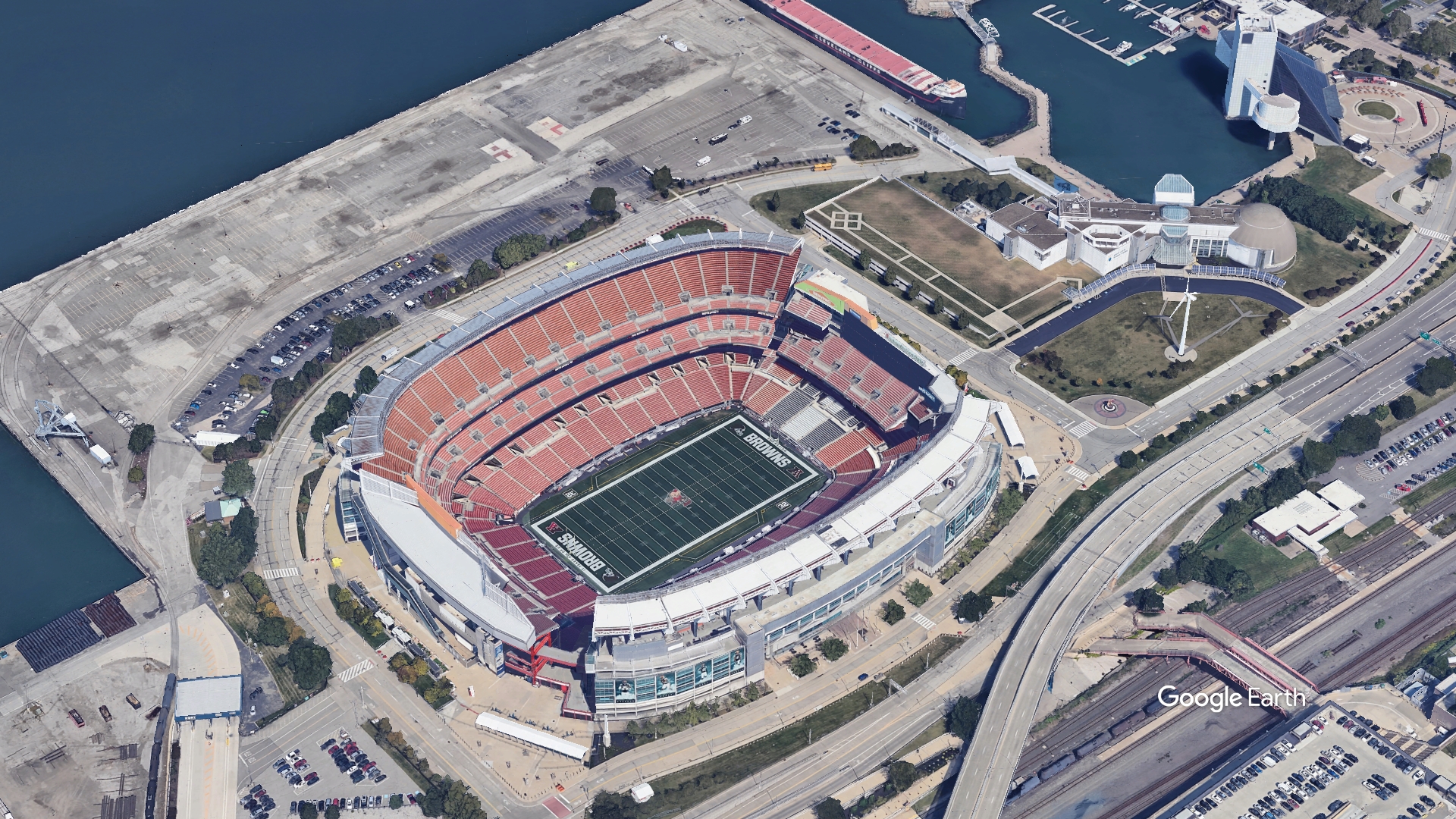
For decades, the Cleveland Browns have played their home games on the shores of Lake Erie, battling freezing temperatures and lake-effect snow. However, the era of the open-air downtown stadium is coming to a close. On April 30, 2026, the team officially broke ground on the new Huntington Bank Field in the suburb of Brook Park.
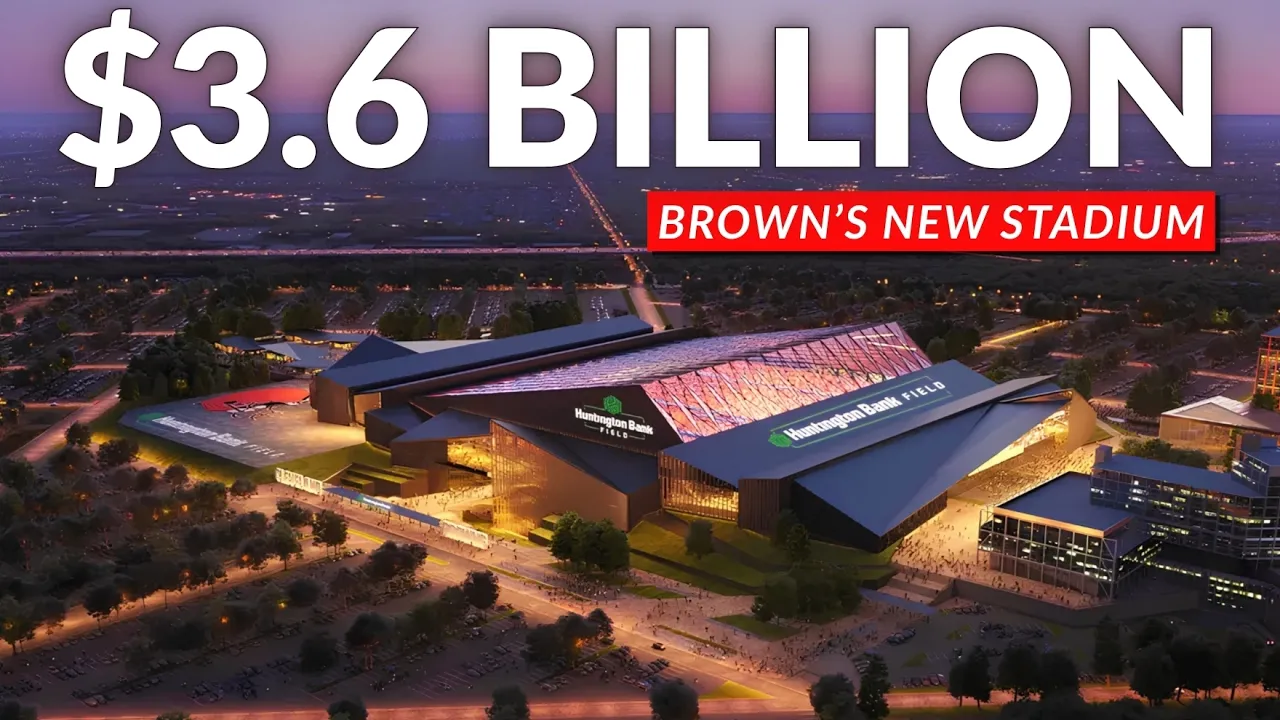
This $3.6 billion megaproject represents a fundamental shift in sports venue development. Instead of a traditional stadium used only a dozen times a year, the Brook Park project is designed as a sprawling, 176-acre mixed-use entertainment district. Developers refer to the concept as an “aerotropolis,” creating a vibrant, year-round destination adjacent to Cleveland Hopkins International Airport. The project promises groundbreaking architectural engineering, but it also must navigate a highly complex financial and legal landscape.
Next-Level Architecture and Fan Experience
The $2.6 billion stadium was designed by HKS, a globally recognized architecture firm responsible for several of the world’s most advanced sports venues. The defining feature of the new Huntington Bank Field is its massive, translucent ETFE roof. It is the world’s first long-span stadium roof designed entirely without a truss. This allows for an uninterrupted, panoramic sightline for fans, without giant steel beams obstructing the view. The translucent material floods the interior with natural light, preserving an outdoor feel while providing complete protection from Ohio’s harsh winters.
The design also focuses on preserving the Browns’ famous home-field advantage. The northeast endzone features a modernized Fwith a 34-degree vertical incline, engineered to push a wall of sound directly down onto the opposing team. Incorporating elements from European soccer stadiums, this section will include standing-rail seats, allowing passionate fans to stand and lean into the action safely. Additionally, the home and visiting team tunnels run directly past this section, maximizing fan-player interaction and game-day intimidation.
Beyond the seating bowl, the stadium boasts the largest grand concourse in the NFL. Designed as a “social street,” it features large video screens, regional dining, and sports bars that open directly to the field, ensuring fans never miss a play. Outside, expansive, park-like “civic plazas” include a dedicated tailgating zone, blending the traditional pre-game experience with modern amenities.
Navigating Aviation Constraints
The Brook Park site is located directly next to Cleveland Hopkins International Airport, presenting a significant logistical challenge. The Federal Aviation Administration (FAA) strictly regulates building heights near active runways. Initially, the Ohio Department of Transportation (ODOT) denied the stadium’s construction permit because the planned 221-foot-tall structure intruded 58 feet into a protected air navigation zone.
To comply with federal aviation glide path restrictions without sacrificing the building’s size, construction crews are executing a massive earth-moving project. The playing surface is being sunk 80 feet below ground level, requiring the excavation of nearly 2 million cubic yards of dirt. This subterranean design keeps the building’s above-ground profile within the regulated 221-foot limit while maintaining the soaring interior volume required for a modern NFL facility.
The “Super Theater” Concept
A $2.6 billion stadium cannot be sustained financially by hosting only 10 to 12 NFL games per year. To maximize the venue’s economic viability, the Browns designed Huntington Bank Field around a highly flexible “Super Theater” concept.
Because the stadium is fully enclosed and climate-controlled, it can operate 365 days a year, free from weather concerns. The facility is highly modular; utilizing automated acoustic dampening, dynamic lighting, and retractable curtains, the stadium can seamlessly scale its capacity to fit different events. It can host up to 75,000 fans for massive global events, but can also scale all the way down to a 6,000-person setup for intimate concerts or community theater performances.
This flexibility allows Cleveland to aggressively compete for major events that were previously out of reach due to the unpredictable weather and open-air design of their former stadium. Target events include NCAA Final Fours, WWE events like SummerSlam, indoor international soccer matches, and major global concert tours.
Financial Structure and Public Investment
The funding model for the $3.6 billion project is intricate. The Haslam Sports Group and their private partners are providing $1.76 billion for the stadium’s construction, and they are entirely privately financing the $1 billion mixed-use entertainment district that surrounds the venue. Furthermore, the owners have contractually agreed to cover all construction cost overruns, shielding the public from inflation and supply chain risks.
This leaves a $1.2 billion capital gap for the stadium itself, which the team has proposed splitting evenly between the state of Ohio ($600 million) and local municipalities ($600 million).
To justify the public investment, the team commissioned an economic impact study from real estate advisory firm RCLCO. The study claims the new district will generate $1.2 billion in direct economic output annually across Cuyahoga County and create roughly 5,400 permanent jobs.
However, independent economists and local officials remain highly skeptical of these figures. Cuyahoga County Executive Chris Ronayne rejected the county’s participation in the local funding scheme, calling it a bad deal for taxpayers. A report from the Ohio Legislative Service Commission also noted that sports facilities rarely create net-new economic growth; they largely just redistribute existing discretionary spending. Furthermore, models project that the City of Cleveland could lose up to $11 million annually in direct tax revenue once the team vacates the downtown premises.
Legal Challenges Over State Funding
The state’s proposed $600 million contribution has become the center of a major, ongoing legal battle. Rather than raising taxes, Ohio lawmakers passed a bill to fund their portion using a multi-billion-dollar pool of “unclaimed funds”—dormant bank accounts, forgotten deposits, and uncashed checks belonging to private citizens that the state holds in custody.
This legislative maneuver triggered a massive class-action lawsuit led by former Ohio Attorney General Marc Dann, who argued that permanently seizing these funds for a private stadium constitutes an unconstitutional taking of private property.
In March 2026, a judge issued a preliminary injunction that officially froze the $600 million state contribution. The judge ruled that the state failed to provide proper notice to the citizens who own the money, and crucially, taking private funds for a stadium does not qualify as a “public use” under the Ohio Constitution. Until this lawsuit is fully resolved—a process that could take years—half a billion dollars of the stadium’s funding is completely locked up.
The City of Cleveland Settlement
Despite the frozen state funds, the Haslam Sports Group publicly stated they remained undeterred and proceeded with the April 30, 2026, groundbreaking right on schedule.
To avoid a protracted, toxic legal dispute over abandoning their downtown home, the Browns reached a comprehensive settlement with the City of Cleveland in late 2025. The team agreed to pay the city a lump sum of $100 million. This payment covers the eventual, highly expensive demolition of the old lakefront stadium and secures the city’s promise not to pursue litigation over the relocation.
Crucially, this settlement grants the Browns a vital insurance policy: the option to extend their lease at their current downtown home through the 2029 and 2030 seasons. If the Brook Park megaproject faces further delays due to lawsuits or construction hurdles, the team is guaranteed a place to play.
Conclusion
The new Huntington Bank Field is setting out to be a groundbreaking facility that completely changes the economic and cultural landscape of Northeast Ohio. By replacing a seasonal venue with a 365-day entertainment powerhouse, the project offers immense regional potential. However, between navigating strict aviation regulations, fierce debates over economic impact, and high-stakes constitutional lawsuits over funding, the road to the projected 2029 kickoff remains complex and uncertain. If completed, it will stand as one of the most spectacular sports venues in the country.