
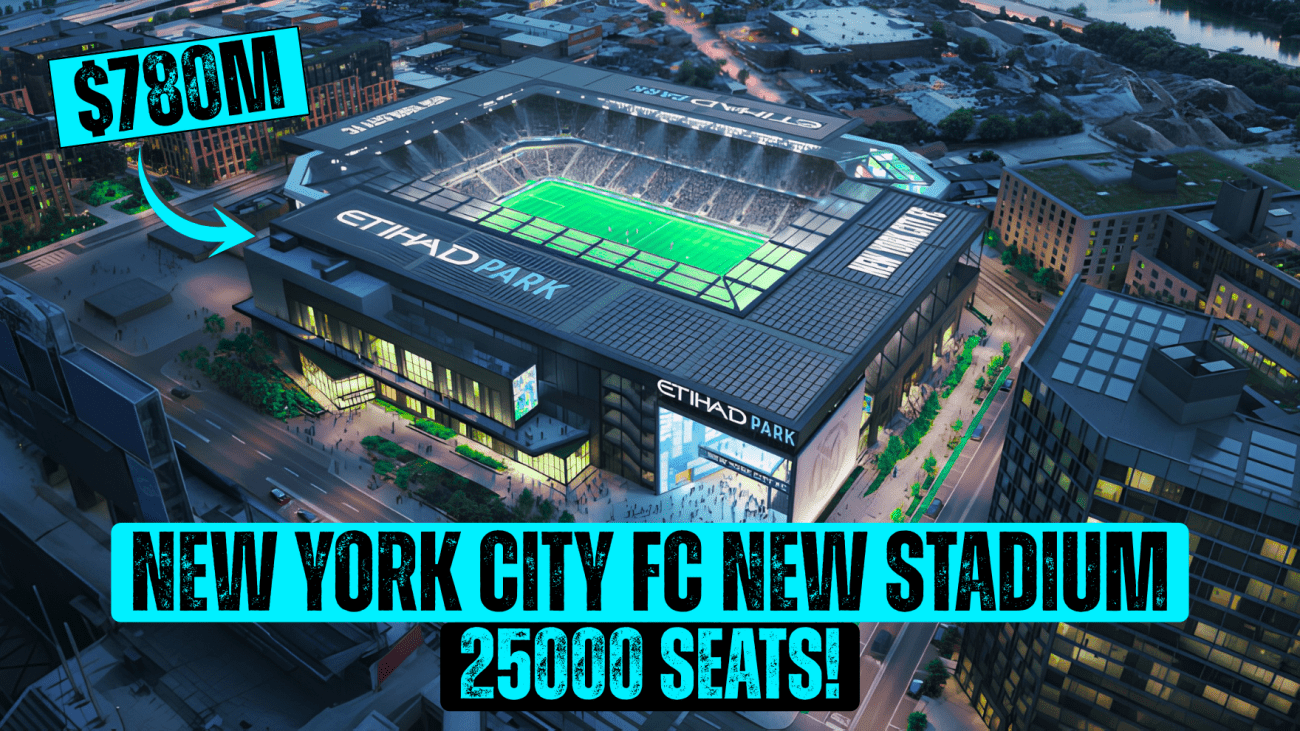
For over 100 years, the Willets Point area in Queens, New York, was known as the “Valley of Ashes.” It was a messy, unpaved industrial zone filled with junkyards, waste plants, and auto repair shops. Today, this 23-acre area is the center of a massive $6.1 billion rebuilding plan. At the heart of this project is Etihad Park, a new $780 million soccer stadium with 25,000 seats. This stadium will finally give the New York City Football Club (NYCFC) a permanent, modern home. But it is not just a sports stadium. The project is tied to the city’s largest affordable housing plan in 40 years, changing how sports buildings can help local communities grow.
Etihad Park: Smart Design and Fan Experience
 Source: New York City FC
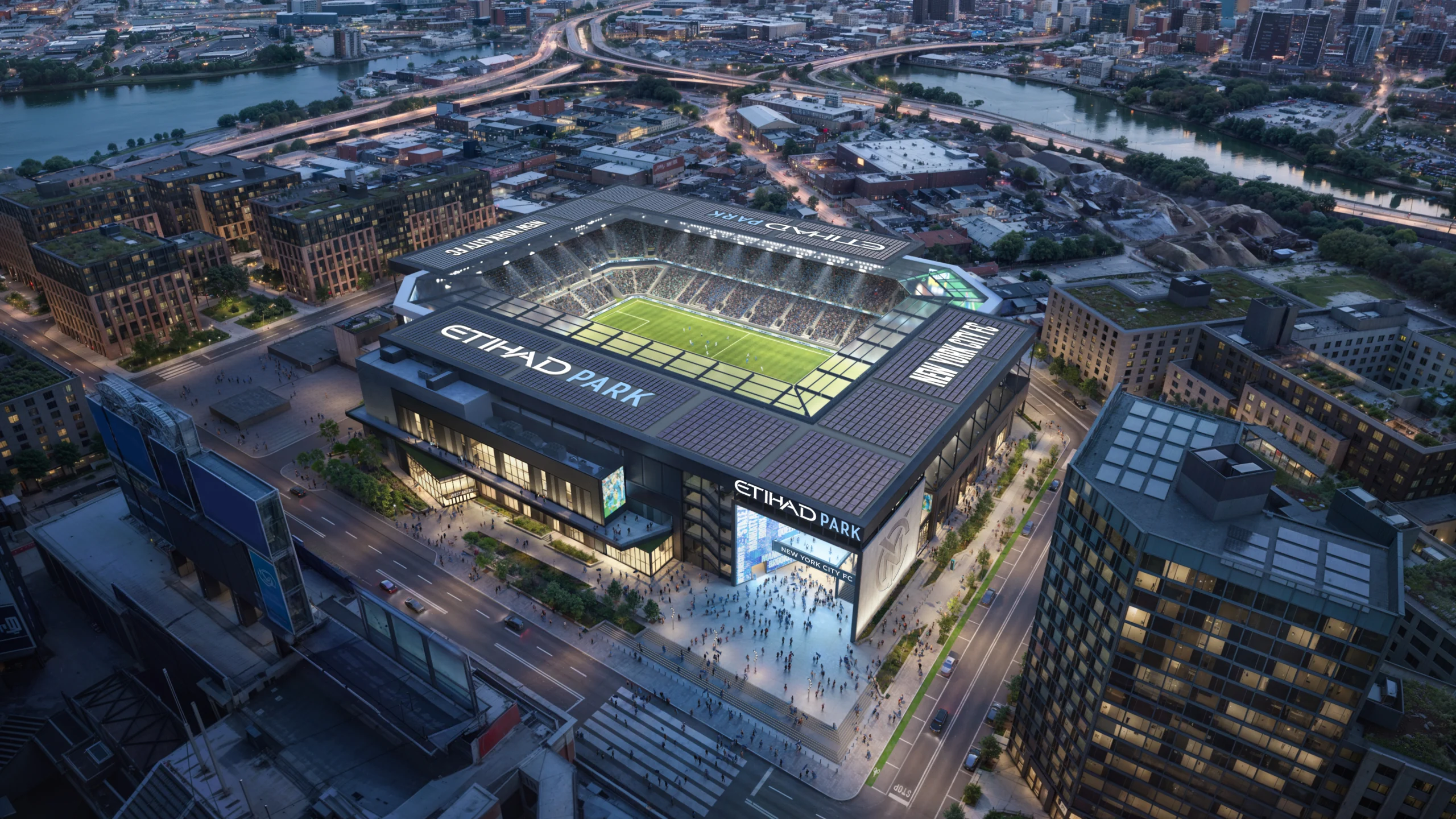
Designed by the famous architecture group HOK and built by Turner Construction, Etihad Park is created to fit perfectly into a tight city space. Located next to Citi Field, the stadium has a unique rectangular shape with cut-off corners. This allows it to blend into the local streets naturally, similar to how classic baseball parks fit into their neighborhoods.
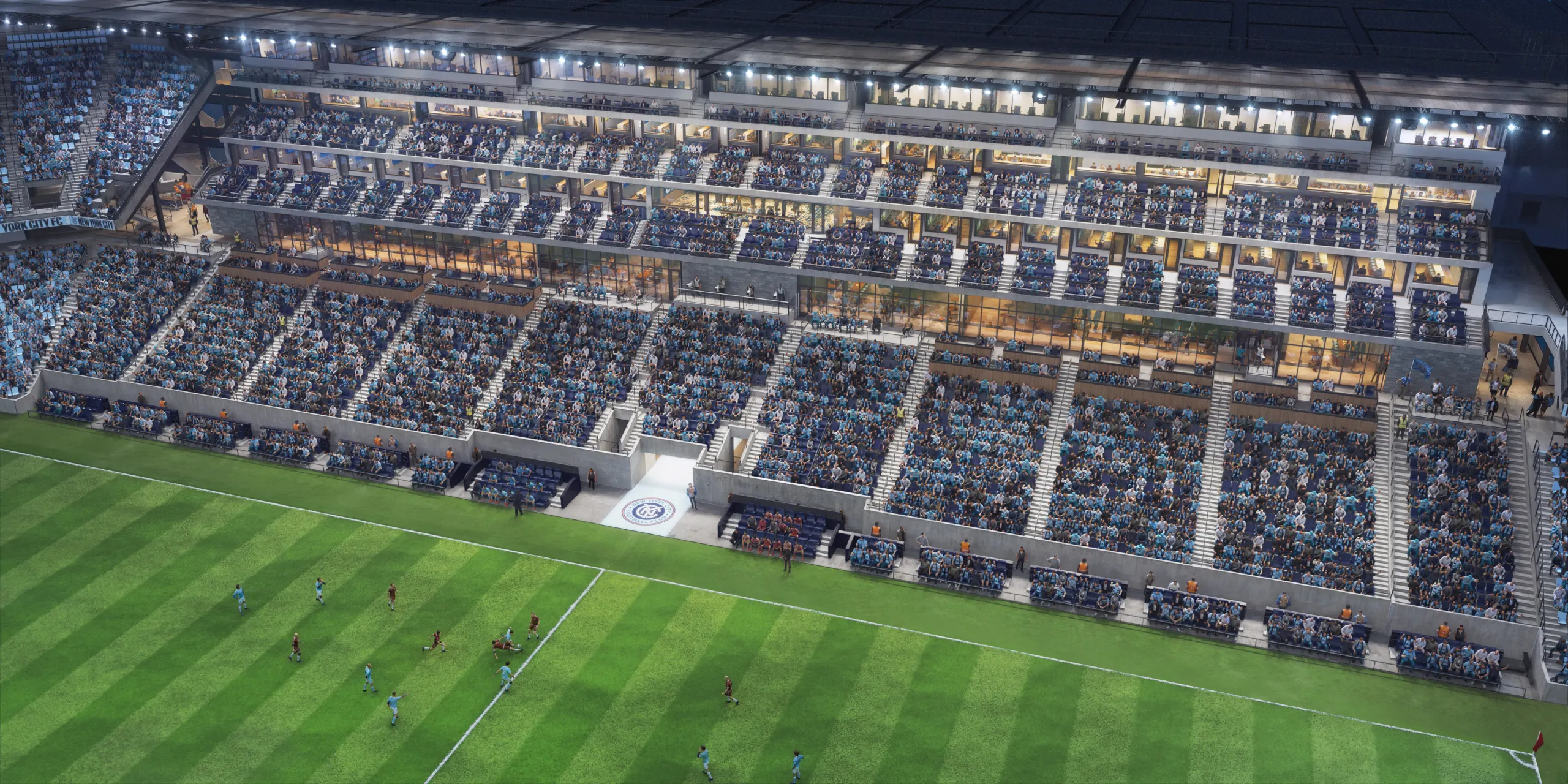
The stadium’s 25,000 seats are set up to give fans a great view and a custom experience. It features a special section for the loudest fans with safe-standing areas, fancy lounges right next to the field, and an exclusive Tunnel Club. In the Tunnel Club, VIP fans can watch the players walk through a restaurant before they step onto the field.
The standout feature on the outside of the stadium is “The Cube.” This is a massive, seven-story entrance covered with over 11,000 square feet of digital screens. It will welcome fans with live game footage, digital art, and interactive videos as soon as they get off the nearby train.
Setting the Standard for Green Energy
Etihad Park is setting new rules for how sports buildings can be good for the environment. It will be the first fully electric stadium in Major League Soccer (MLS) and the first of its kind in New York City. By completely avoiding fossil fuels for daily operations, the stadium will run on a large system of solar panels on its roof, smart energy systems, and large batteries to store power.
Because Willets Point has a history of bad flooding, the entire neighborhood is being raised higher to protect it from future storms. Underneath the soccer field, a special system will collect rainwater and reuse it to water the grass. Inside the stadium, water will be saved using automatic sinks and water-free urinals, helping the building reach high environmental standards.
Business Deals and Great Food
A privately paid-for stadium needs strong business deals to survive. In late 2024, NYCFC signed a huge 20-year deal worth $20 million with Etihad Airways, officially naming the stadium Etihad Park. Also, a digital payment company called Paze became the stadium’s first major partner. Paze has the naming rights to “City Square,” a large 35,000-square-foot public area inside the stadium’s main entrance. On game days, it will host fans, and on non-game days, it will be open for community events, making sure the building is always in use.
Instead of normal stadium food like basic hot dogs and pretzels, the food will be run by Legends Global and centered around the “Five Boroughs Food Hall.” This huge 40,000-square-foot food court will feature local restaurants, famous chefs, and local breweries. It will highlight the amazing food of New York City, giving fans a reason to arrive early and stay late.
How the Project is Paid For
 Source: New York City FC
NYCFC and its owners, City Football Group, are paying the full $780 million to build the stadium themselves, without asking the city for direct cash. However, the project still gets some help from the government. Because the stadium sits on land rented from the city for 49 years, it does not have to pay normal property taxes. A city budget office estimates this tax break will save the team about $516 million over the 49 years. The project also gets tax breaks on sales and mortgages for the other buildings on the site.
Even with these tax breaks, the city expects a huge economic payoff. The whole Willets Point plan is predicted to bring $6.1 billion into the local economy over the next 30 years. It is also creating jobs, with over 14,200 construction jobs and more than 1,550 permanent jobs once it is finished.
Fixing the Housing Crisis and Helping the Community
Politicians approved the stadium because the builders agreed to create 2,500 affordable apartments. Built in stages by the Queens Development Group, these apartments are designed for low- and middle-income families. There is a strict rule making sure that over half of the homes built in the second phase are kept affordable for people making 80 percent or less of the average local income.
The neighborhood plan also includes important community additions: a new public school for 650 students to help crowded local schools, a 250-room hotel, plenty of public parks, and new stores. The builders must also try to hire at least 30% of their workers locally and use businesses owned by women and minorities. To help the local economy even more, the planners agreed to make safe spaces on the sidewalks for local street vendors to sell their goods near the stadium.
Transportation and the Road to 2027
A big part of the stadium’s plan is that it will not build any new parking garages. To encourage people to use public transit, NYCFC will share the existing parking lots at the nearby Citi Field with the New York Mets on game days. The area is very easy to reach using the Long Island Rail Road, the 7 subway train, and several bus routes.
As of March 2026, the building of Etihad Park is moving very fast. The steel frame is going up quickly in Queens, and parts of the seating areas are already visible. The stadium is scheduled to officially open in the summer of 2027. This opening date was chosen to match Major League Soccer’s new schedule, which will start in the summer and end in the spring. After it opens, the stadium will not only host NYCFC games but will also be used for soccer matches during the 2028 Olympic Games in Los Angeles, making it a famous stadium around the world.
Conclusion
Etihad Park and the Willets Point plan are changing how cities build sports stadiums. Instead of just building a giant sports arena surrounded by empty parking lots, New York City is linking the new stadium to things the community actually needs—like affordable housing, a new school, good public transit, and green energy. As the stadium continues to be built in Queens, it shows how large projects can successfully support the neighborhoods around them.