
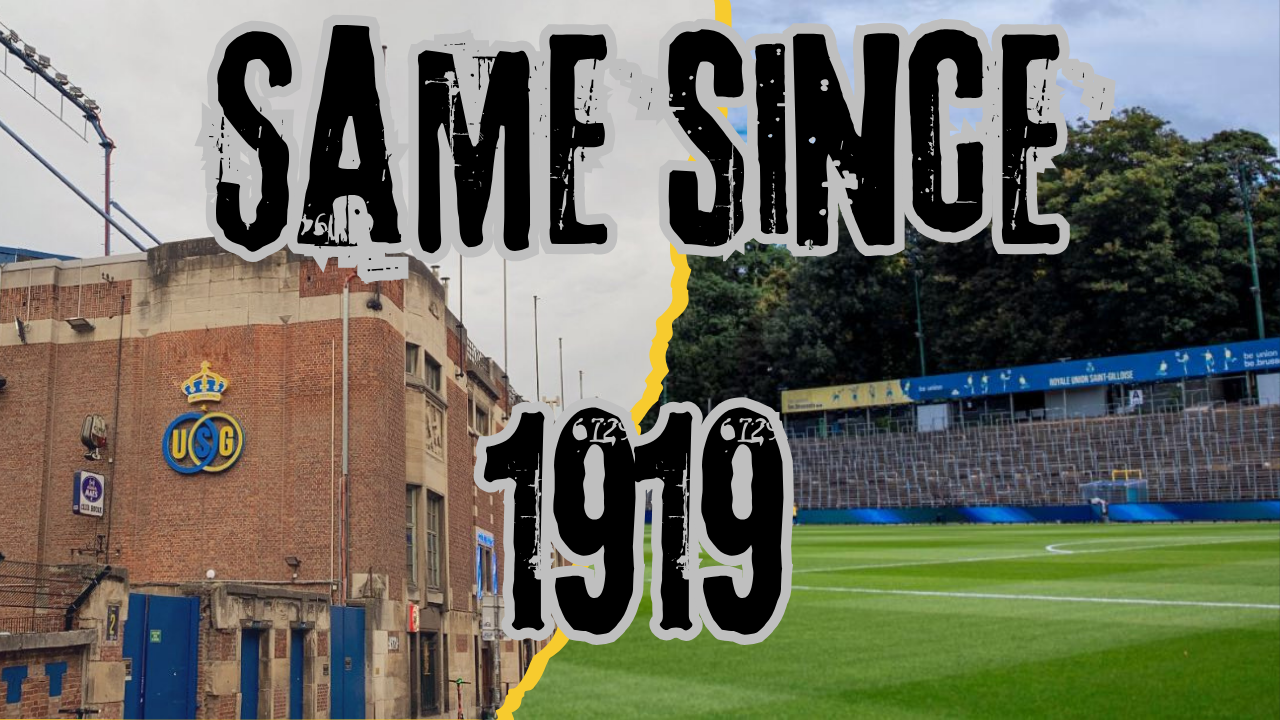
Few football clubs embody tradition quite like Union Saint-Gilloise. Nestled in the greenery of Duden Park, the club’s home — the Stade Joseph Marien — is one of Belgium’s most iconic grounds, a place where Art Deco architecture blends with over a century of sporting memories.
A Historic Jewel in the Forest
Stade Joseph Marien opened in 1919 and it hosted some football matches of the 1920 Olympic Games, including Spain’s first ever official match.
After that, it became home to one of Belgium’s most successful early football dynasties: Union Saint-Gilloise’s legendary “Union 60,” the team that went sixty games unbeaten between 1933 and 1935.
The stadium evolved alongside the club, always modest in size but rich in character. Its most recognizable element — the Art Deco façade added in 1926 — stands today as one of the most striking architectural features in Belgian sport, protected as official heritage since 2010.
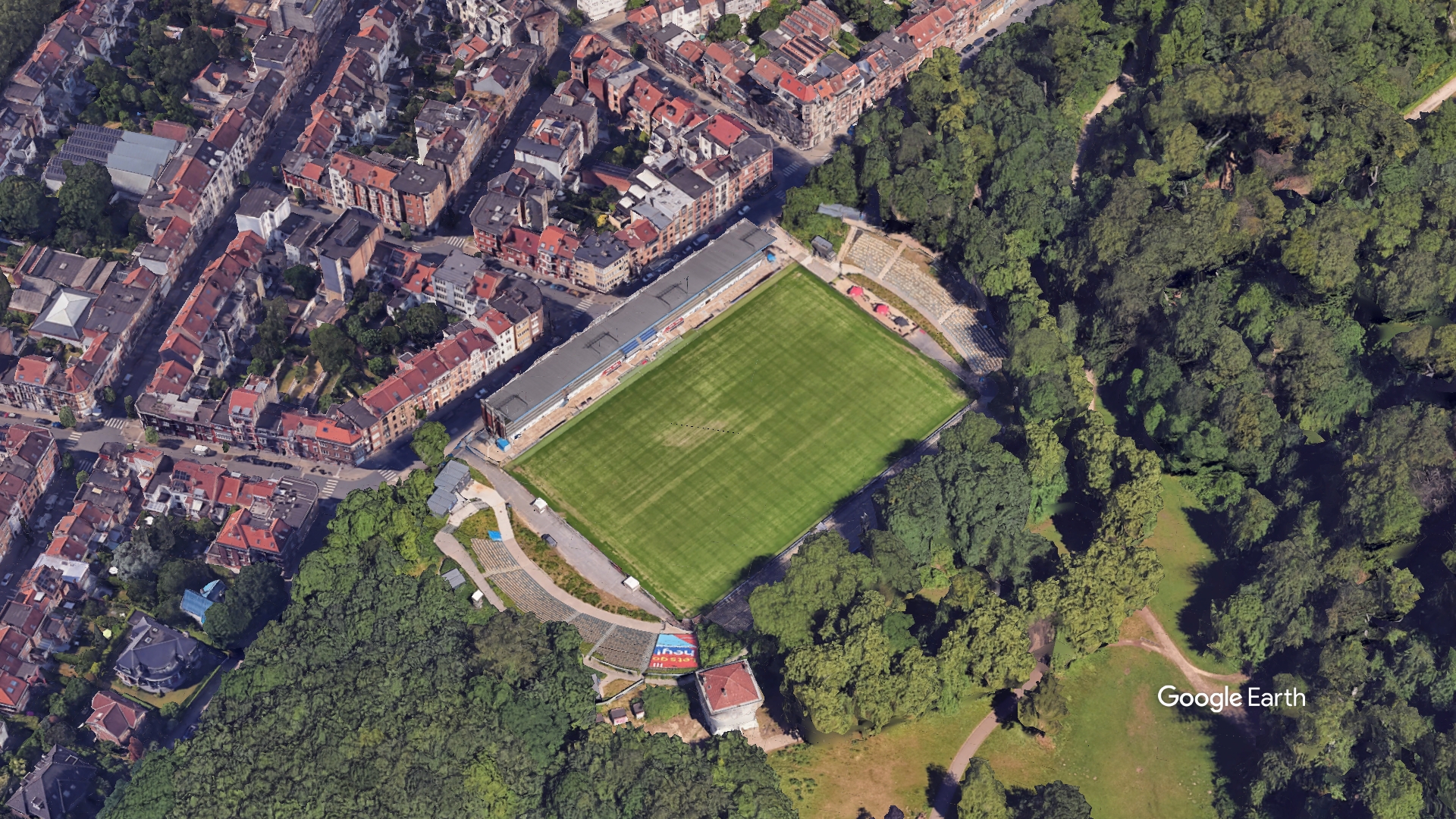
The stadium’s setting is equally unique. Located inside the wooded expanse of Duden Park, the ground feels like a hidden cathedral of football. Approaching it from the forest paths, supporters often remark that attending a Union match feels like stepping into a different era. It is also one of the few remaining traditional stadiums in Europe that still features classic terraces, which add an old-school atmosphere for the fans.
But charm alone cannot overcome structural limitations. Over the decades, the football world has changed dramatically. Safety requirements, broadcast standards, commercial needs, and European regulations have reshaped what it means to operate a top-tier stadium. Joseph Marien, for all its beauty, simply cannot keep up.
The Limitations of a Legacy Stadium
Union’s return to the top flight in 2021 after a 48-year absence and its subsequent rise as a contender in Belgian and European competitions brought long-standing problems into sharp focus. Even after extensive renovations between 2016 and 2018 — which improved seating, safety, and facilities — the stadium remains fundamentally constrained.
The site is hemmed in on all sides: heritage-protected structures, steep park slopes, and strict environmental rules around Duden Park. This means no realistic expansion is possible. The stadium’s capacity sits at roughly 9,400 — too small for a club now regularly competing in Europe. Operational space is also insufficient: media zones, hospitality areas, security and medical facilities, and matchday logistics all struggle against the physical boundaries of the terrain.
Just as crucially, Joseph Marien can never meet UEFA standards for European matches especially for the Champions League, forcing Union to play its continental fixtures elsewhere. This undermines both the club’s sporting identity and its financial potential.
Despite its deep emotional value, the stadium is now a symbol of a difficult truth: history cannot substitute for infrastructure. To grow, Union must build a new home.
Designing a Stadium for the 21st Century
When new owners Tony Bloom and Alex Muzio took over the club in 2018, they quickly identified stadium redevelopment as essential to the club’s future. Multiple studies were conducted, exploring the feasibility of expanding Joseph Marien — but every scenario collided with heritage protections, environmental rules, and spatial impossibility.
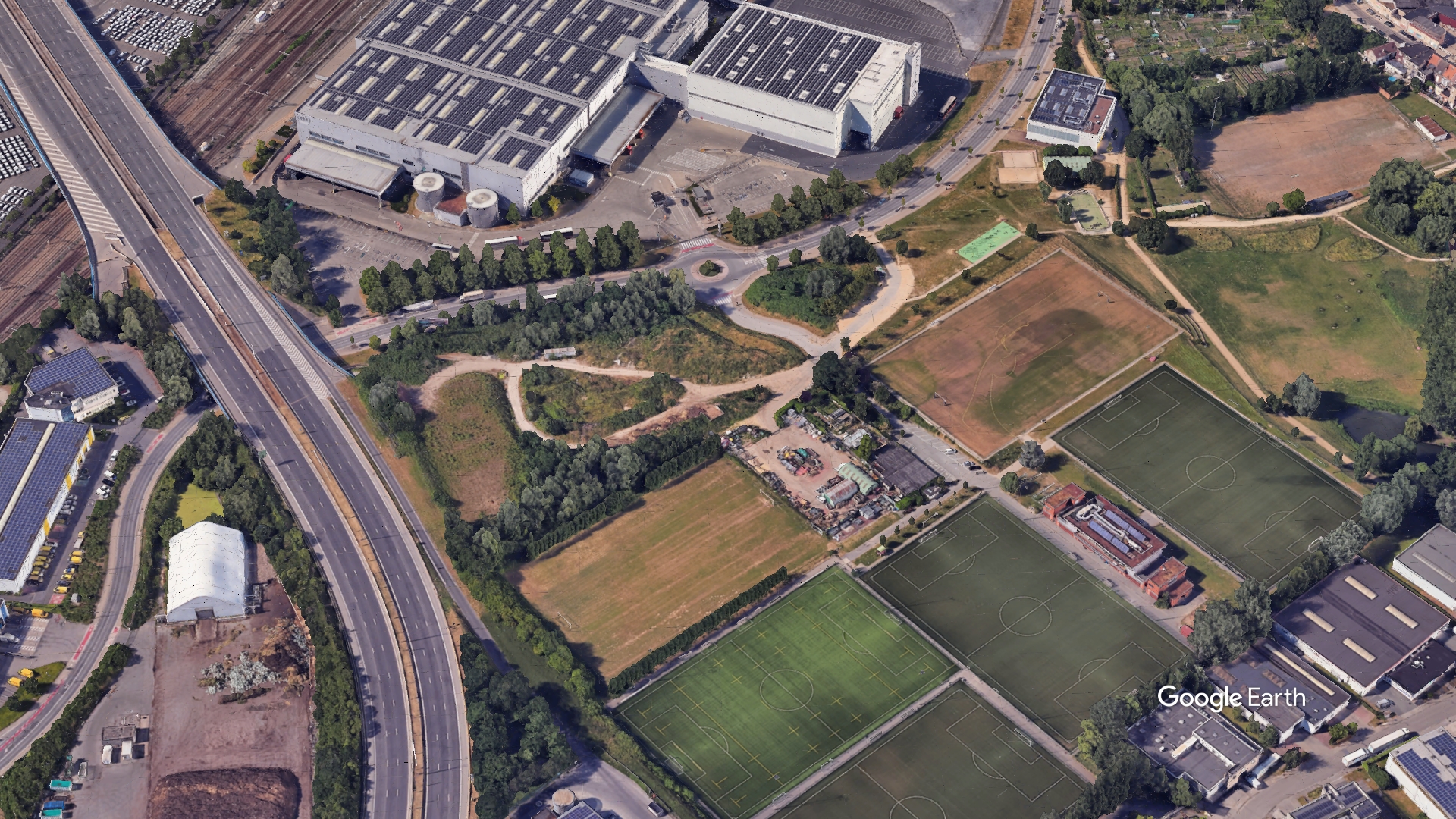
By 2019, the club identified the Bempt area, also in the municipality of Forest, as the most viable location for a modern stadium. Located just 2.5 km from Joseph Marien. The land stretches along Avenue de la 2ème Armée Britannique, positioned directly beside the Brussels Ring Road.
Union has been playing its home games in Forest for over a century, and it is also the municipality of residence of the majority of the club’s season ticket holders. The land is already zoned for sport, surrounded by existing sports fields, adjacent to a school, and near the former Audi factory. Much of it consists of underused municipal land, partly wasteland.
Union proposed a modern 16,000-seat stadium, designed by KSS Group and ESA Architecture. The project incorporated environmentally friendly materials, wooden structural elements, solar panels, rainwater harvesting systems, and minimal car parking. The idea was to build a stadium for the future: compact, sustainable, and fully compliant with European standards. It would allow Union to host European matches at home, increase revenue with hospitality areas and corporate boxes, and secure the club’s long-term future.
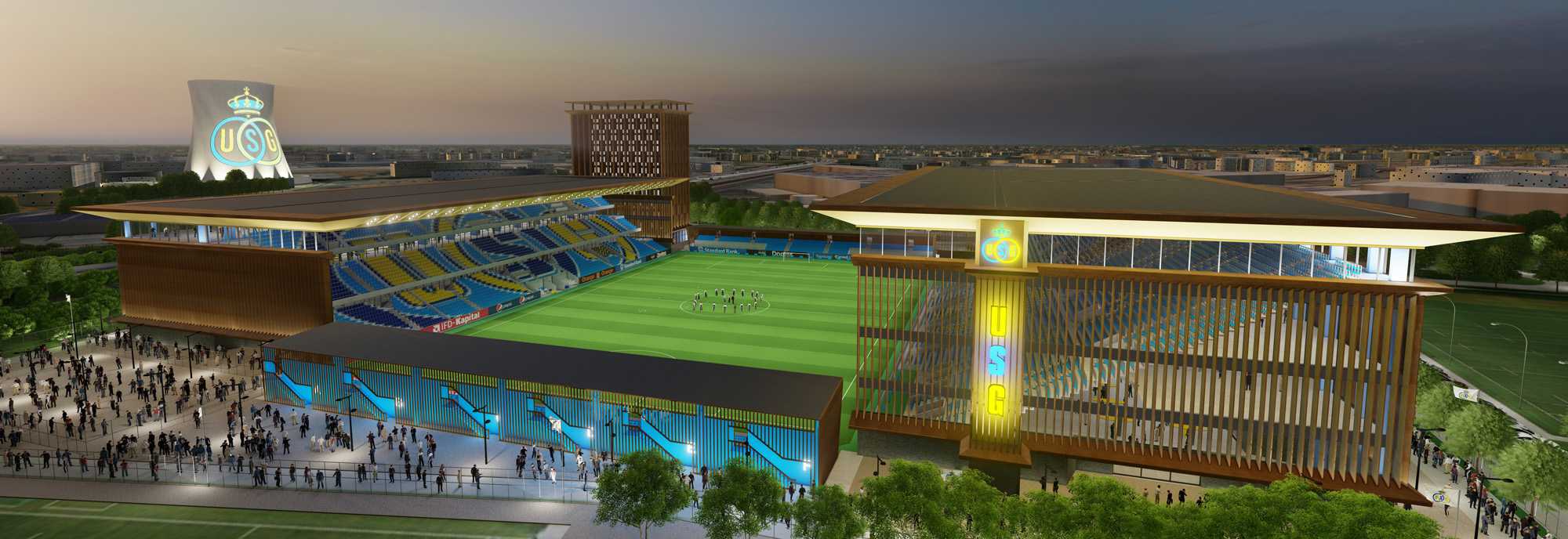 Source: kssgroup
Obstacles on the Path Forward
But in Brussels, nothing is simple. Even though the land belonged to the municipality of Forest, the project needed approval at both the municipal and regional levels. Quickly, the obstacles began to pile up.
First came planning rules. The strict regional zoning plan didn’t fully align with the club’s intended uses for hospitality, mobility, and building height. Changing these rules required extensive administrative and political approval, which never fully materialized.
Then came mobility problems. The surrounding roads were already congested, sidewalks narrow, and public transport insufficient to move thousands safely on match days. Major mobility investments were needed, but none had been secured.
Environmental concerns added another layer. The Bempt area lies in the Senne watershed, a zone sensitive to flooding and ecological disruption. Soil sealing, biodiversity loss, and microclimate impact became central points of opposition.
Most importantly, the land was not empty. Amateur clubs, hosting more than two thousand athletes annually, relied on the site’s pitches. Relocating them was complex, expensive, and politically sensitive.
Brussels politics made everything even harder. The municipality of Forest owned the land, but the Brussels Region controlled planning regulations. And within those levels, different parties held differing priorities. Perspective Brussels, the regional planning authority, acknowledged that Bempt was the best available site—but insisted on more studies and conditions. Negotiations dragged on for years. Eventually, Forest refused to sell the land, citing unresolved concerns.
And just like that, the project collapsed.
What Will Happen Next?
Today, Union Saint-Gilloise stands at a crossroads. Joseph Marien Stadium remains a cherished symbol and one of the most scenic stadiums in Europe. But sentiment alone cannot solve the club’s structural limitations.
In May 2025, the club announced its intention to submit a building permit application. But the Bempt option is frozen unless political winds shift dramatically.
Alternative sites in Brussels are scarce, contested, or unsuitable. Shared stadium solutions are unpopular among supporters who fiercely defend Union’s identity. And the longer the club competes at the highest level, the more urgent the stadium question becomes.