
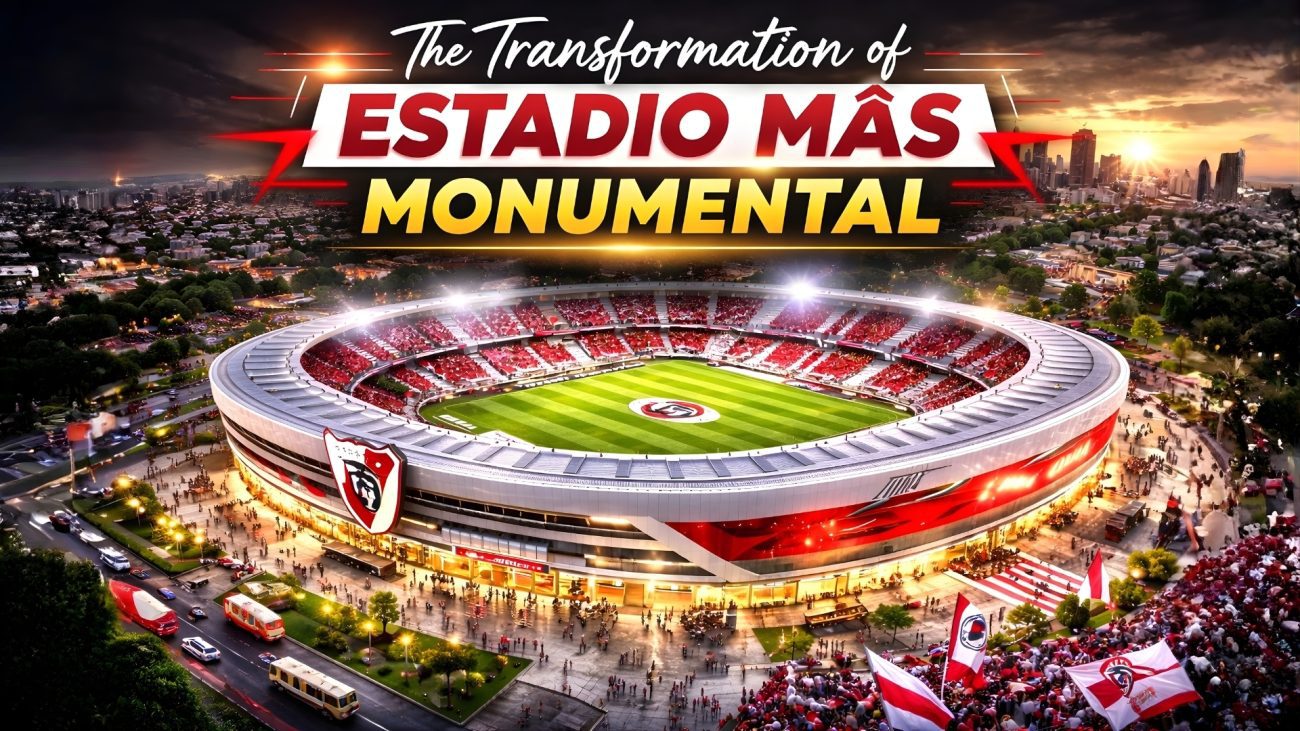
The transformation of the Estadio Mâs Monumental represents one of the most ambitious infrastructure projects in South American sports history. Club Atlético River Plate has undertaken a comprehensive renovation plan designed to modernize the historic 1938 venue, originally built for the Olympic games that never came, into a football-specific cauldron capable of holding 101,000 spectators.
While the initial stages of this project focused on the ground level and immediate proximity to the pitch, the upcoming third phase marks the defining architectural shift that will alter the stadium’s silhouette and functional capacity forever. This final stage, scheduled to commence in April 2026, involves the complex engineering task of connecting the upper seating tiers to form a complete 360-degree bowl and the installation of a comprehensive roof structure.
Foundational Works: Phases 1 and 2
The context for this massive undertaking lies in the completion of the first two operational phases, which ran from 2020 through 2025.
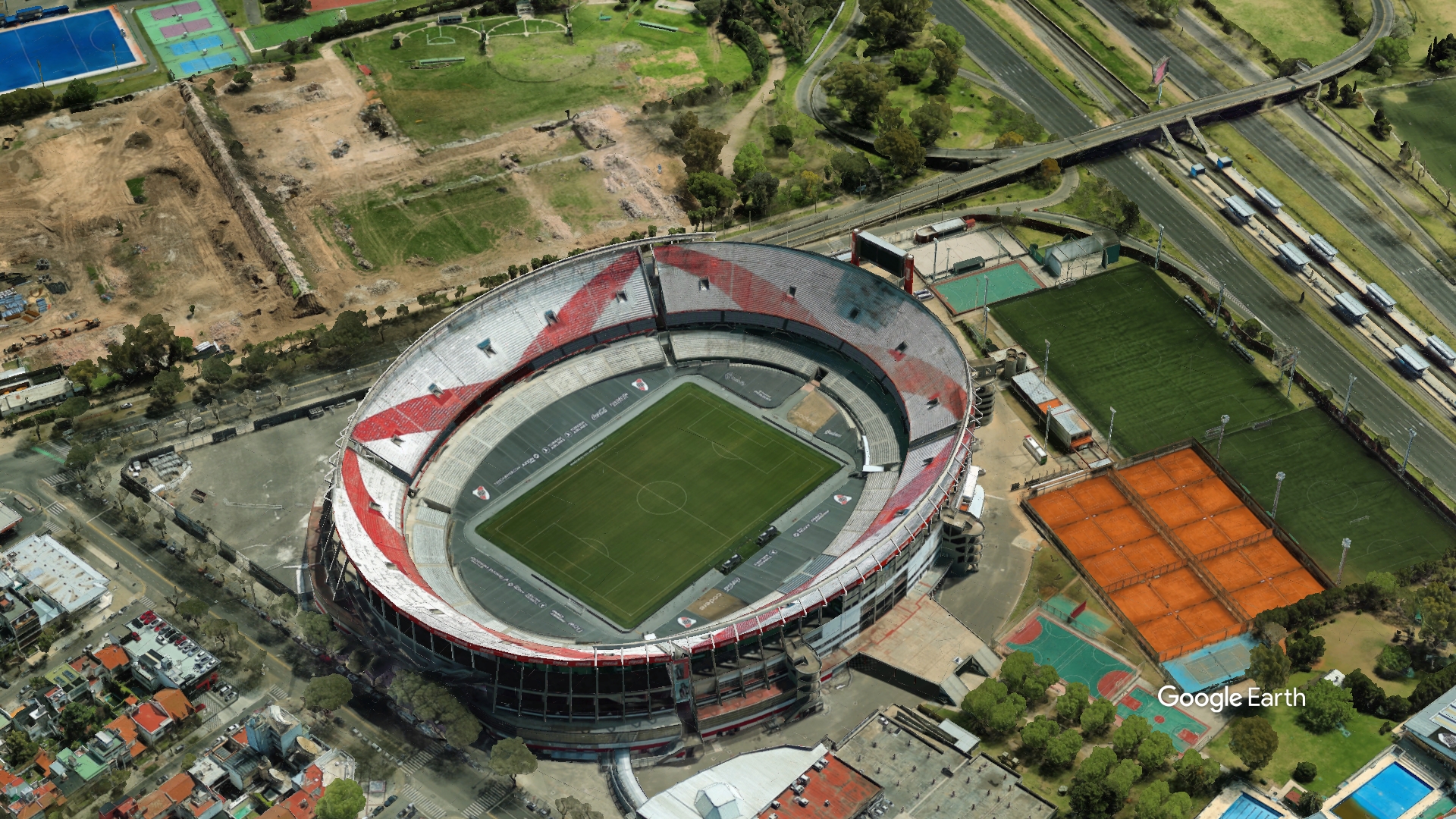
These early stages were foundational, necessitating the removal of the iconic athletic track and the excavation of 35,000 cubic meters of soil to lower the playing field by nearly two meters. This excavation allowed for the construction of new “inferior” stands in the Sívori, Centenario, San Martín, and Belgrano sectors, effectively extending the seating area directly to the edge of the new hybrid turf pitch. These works successfully increased the capacity from roughly 72,000 to nearly 85,000 and changed the viewing experience by reducing the distance between the fans and the field from thirty-five meters to just twelve.
However, while these changes modernized the lower bowl, the upper architecture of the stadium remained largely reflective of its mid-20th-century design.
The Vertical Expansion Strategy
The third and most significant phase of the renovation addresses the upper verticality of the stadium. Announced officially in January 2026, this stage is designed to push the total capacity to 101,000, a figure that will cement the Monumental’s status as the largest stadium in South America and the second-largest club stadium in the world.
The primary construction task involves the physical interconnection of the four existing high stands—the Sívori, Belgrano, Centenario, and San Martín—to create a continuous, unbroken upper ring. This architectural modification is not merely cosmetic; it generates space for approximately 16,000 additional spectators.
Engineering this vertical expansion presents significant technical challenges. The original concrete structures date back to 1938 and were not designed to support the additional load of a continuous upper connection or a heavy roofing system. To solve this, the engineering plan utilizes a system of independent reinforced concrete columns located around the exterior perimeter of the stadium. These columns will bear the weight of the new connecting structures and the roof, ensuring that the stress is not transferred to the historic and aging base of the stadium.
This independent support system allows the club to expand upwards without compromising the structural integrity of the nearly ninety-year-old venue.
Roof Installation and SBP Partnership
Simultaneous with the expansion of the seating bowl is the installation of a tensile cable roof, a feature that has become standard in modern elite stadiums but has been notably absent from the Monumental. The club has partnered with the German engineering firm Schlaich Bergermann Partner, a global leader in lightweight structures known for their work on the Maracanã in Rio de Janeiro and the Wanda Metropolitano in Madrid.
The design calls for a lightweight, translucent membrane supported by a cable net structure that “floats” above the seating bowl. This roof will cover one hundred percent of the spectator areas, protecting fans from rain and direct sunlight.
Acoustic Containment and Atmosphere
The acoustic implications of this roofing structure are a critical component of the design. By enclosing the seating bowl, the roof will act as a sound containment shield, reflecting crowd noise back toward the pitch rather than allowing it to dissipate into the open air. This “sound mirror” effect is expected to significantly amplify the atmosphere during matches, creating a more intimidating environment for visiting teams.
The combination of the closer lower stands constructed in Phase 1 and the acoustic containment of Phase 3 aims to replicate the intense sensory experience found in compact European venues, despite the Monumental’s vast size.
Construction Logistics and Timeline
Construction for this definitive phase is scheduled to begin in April 2026 and is projected to last approximately thirty-six months.
The logistical plan is designed to minimize disruption to the football calendar. Unlike the complete closure required for the pitch lowering in Phase 1, the work on the upper tiers and roof will primarily utilize external cranes and operate independently of the seating areas during match days.
River Plate administration has stated that the team will likely need to relocate its home matches for only a brief window of three games during the entire three-year construction period, likely when the heavy lifting of the main cable compression ring takes place over the field of play.
Financial Framework
Financing this final expansion requires a robust economic strategy distinct from the earlier phases. While the initial renovations were funded largely through the “Naming Rights” contract with Chango Más and the presale of luxury boxes, the capital requirements for the roof and upper tier expansion exceed 100 million dollars.
To bridge this gap, the club plans to extend the naming rights agreement for an additional ten years, leveraging the increased global visibility of a 100,000-seat venue. Furthermore, the club has outlined plans to secure long-term credit lines from international financial institutions, using the projected increase in matchday revenue driven by the 16,000 new seats and enhanced hospitality offerings as collateral for repayment.
2030 World Cup Implications
The timing of this expansion is strategically aligned with the 2030 FIFA World Cup. Argentina, along with Uruguay and Paraguay, is set to host the opening celebratory matches of the tournament.
With a capacity of 101,000, the renovated Monumental will far exceed FIFA’s requirement of 80,000 seats for opening matches and finals. The renovation ensures the stadium meets all modern FIFA criteria regarding safety, access, connectivity, and press facilities.
Operational Changes and Aesthetics
The completed project will fundamentally alter the utility and aesthetics of the venue. The stadium will transition from a traditional Olympic-style oval with distant sightlines to a vertically integrated football arena.
The systemic replacement of the old seats with gray, high-durability plastic folding seats will be completed across the new upper sections, creating a uniform visual identity.
The choice of gray over the traditional red and white is a functional decision to combat the rapid fading caused by UV radiation, ensuring the stadium maintains a clean, modern look over decades of use.
Future Outlook: 2029 and Beyond
Ultimately, the third phase of the expansion is the realization of a master plan to future-proof the Estadio Mâs Monumental.
By 2029, the facility will not only be the largest in the region but will also function as a modern commercial asset, featuring 24-hour restaurant access, a museum, and premium hospitality areas that generate revenue beyond match days.
The integration of the new upper tier and the protective roof completes the transformation, turning a historic landmark into a state-of-the-art facility prepared for the next century of football.