Founded in 1914 in Novi Sad, FK Vojvodina—affectionately known by its loyal supporters as “Voša”—has continuously stood as a foundational pillar of Serbian professional football.
The club’s visual identity is instantly recognizable across the Balkans; its iconic red and white halved jerseys were officially adopted by the club assembly in 1922. This distinctive color scheme was heavily inspired by SK Slavia Prague, honoring the famous Czech club that generously supported Vojvodina’s founding members during the difficult times preceding and during World War I.
Over the subsequent century, the club cultivated a legendary sporting reputation, fielding historic, world-class players like Vujadin Boškov and Todor Veselinović.
Throughout its rich history, Vojvodina has secured numerous prestigious titles, including winning the UEFA Intertoto Cup in 1976, the Mitropa Cup in 1977, and lifting the Serbian Cup twice, in 2014 and 2020. On the grandest continental stage, the club famously reached the quarter-finals of the European Cup (now the UEFA Champions League) during the 1966–67 season.
Furthermore, the club’s celebrated youth academy has consistently produced top-tier talent, cementing Vojvodina’s status as a premier developmental institution in the country.
The Story of Karađorđe Stadium
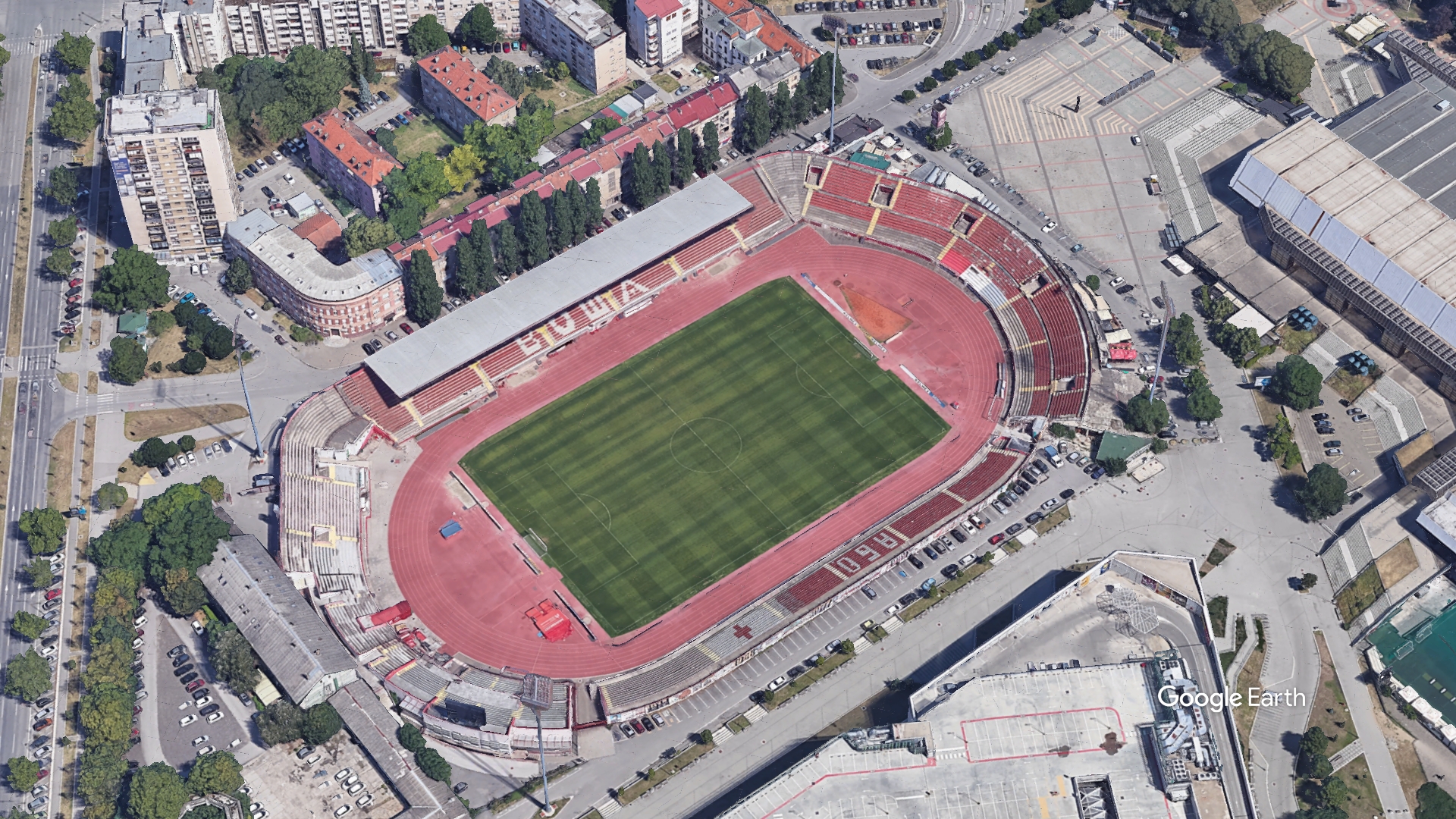
For almost its entire life, FK Vojvodina’s home has been the Karađorđe Stadium. Officially opened on June 28, 1924 (the Serbian holiday of Vidovdan), the stadium was built on the exact spot of an old 1888 bicycle track.
Named after Karađorđe Petrović, the leader of the First Serbian Uprising, it quickly became a fortress for sports. It has hosted amazing events, including a record-breaking crowd of 30,000 passionate fans who watched Vojvodina play the Scottish team Celtic FC in March 1967.
Over the years, the stadium had several updates—with major changes in 1931, 1967, 1991, 2004, 2009, and 2011—to keep up with modern sports. But even with these upgrades and new seats, the old multi-purpose stadium fell behind the strict rules of European football.
Time for a Brand-New Home
By the latter half of 2023, the municipal authorities of Novi Sad and the executive leadership of FK Vojvodina had initially endorsed an intermediate, localized modernization strategy.
This initial plan focused almost exclusively on reconstructing the aging western main stand, an endeavor estimated to carry a budget of €5 million. However, because of the need to host international games, this small plan was dropped.
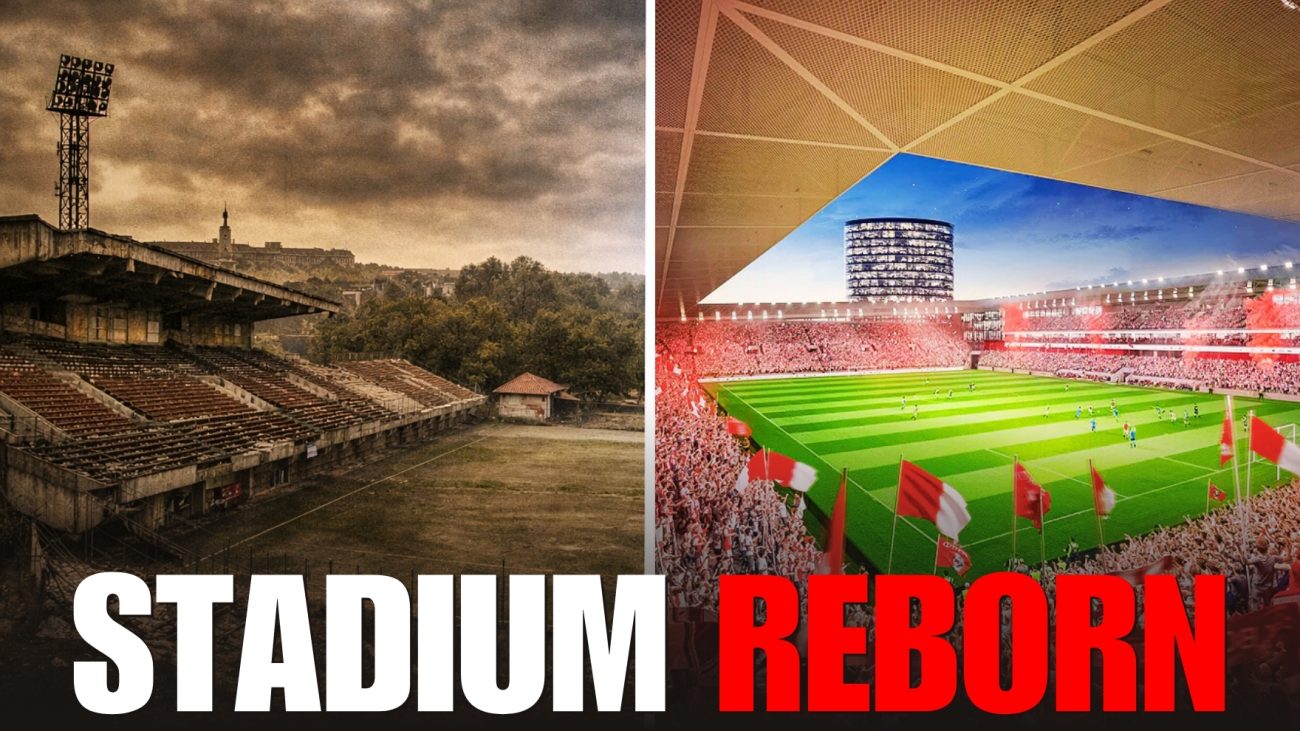
By early 2026, the project reached a huge milestone when official building permits were granted. The city decided to completely tear down the century-old Karađorđe stadium and build a brand-new, modern mega-structure in its place.
Modern Design and UEFA Standards
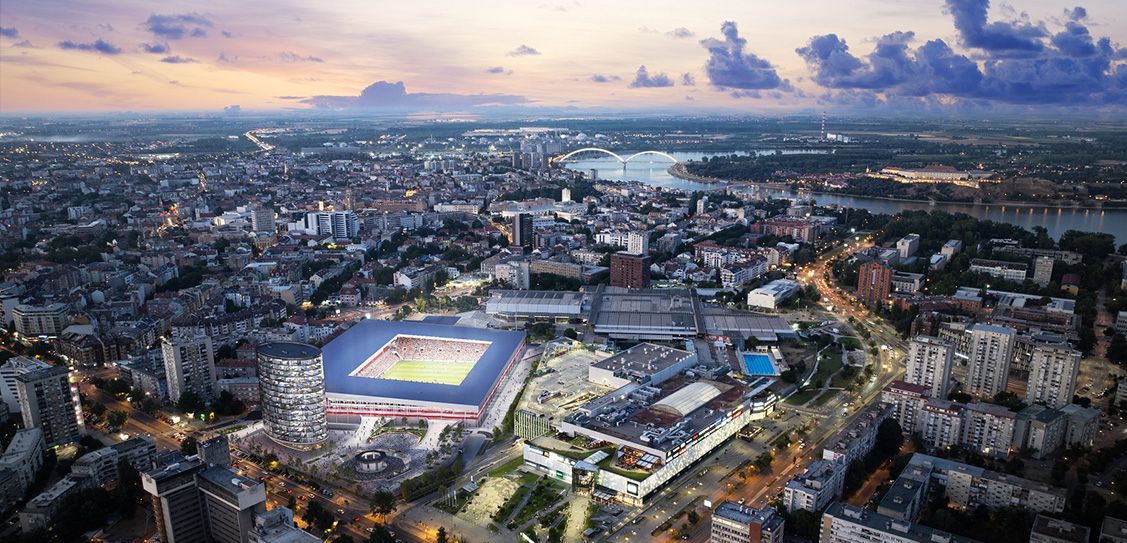 Source: DBA Architecture
The design for the new stadium was created by DBA Architecture, a well-known firm in Novi Sad led by architect Djordje Bajilo. This firm is famous in Southeast Europe for its sophisticated portfolio, including the critically acclaimed redesign of Theater Square in Novi Sad.
For the new Karađorđe, the architects chose a tight rectangular shape and removed the running track. This brings the fans much closer to the field, cultivating an intimidating, acoustically optimized, football-specific environment that brings supporters much closer to the pitch.
The new stadium is carefully designed to hold exactly 14,000 seated fans. This guarantees it meets the highest UEFA Category 4 rules.
One unique feature of the design is that it is uneven. The concrete and steel structure will rise significantly higher on its western flank, and drop to a lower height on the eastern side near the Promenada shopping center. This tall western side will hold the most important parts of the stadium, including VIP luxury suites, modern offices, and a high-tech media area that the old stadium lacked.
The design also places a heavy emphasis on year-round economic and energy sustainability, aiming to function as a vibrant, multi-purpose civic and commercial hub even on non-match days. To help mitigate the severe spatial friction of dropping a modern mega-structure into a highly dense urban grid, the master plan incorporates new surface-level parking alongside a highly necessary semi-buried underground garage.
Hosting the 2027 Under-21 Championship
The main reason this big project is moving so fast is the 2027 UEFA European Under-21 Championship. In February 2025, UEFA chose Serbia and Albania to host this big 16-team tournament. The new Novi Sad stadium is planned to be a main venue for these games.
Because of this strict deadline, construction has to happen quickly. While the old stadium is torn down and the new one is built, FK Vojvodina will have to play its home Superliga and European games at other nearby stadiums, like the TSC Arena in Bačka Topola or the stadium in Zrenjanin.
Funding the Mega-Project
Building a huge sports stadium costs a lot of money. While an audited, final total cost for the 14,000-seat stadium has not been explicitly published in early 2026 public discourse, moving from a €5 million single-stand renovation to a total Category 4 rebuild naturally implies tens of millions of euros in capital expenditure.
To make sure the club stays financially strong and competitive during this change, FK Vojvodina signed a massive sponsorship deal with MaxBet, a big regional betting and casino company. This private money will help boost the club’s budget and support the stadium upgrades.
This careful local planning is very different from the controversial National Stadium being built in Surčin, near Belgrade. That 52,000-seat stadium has faced heavy criticism for delays, missing permits, and huge costs that might reach €1.2 billion
In contrast, the Novi Sad project is moving smoothly, using local architects and legally getting its permits in early 2026. The city of Novi Sad strongly supports the project, passing a record 2026 budget of 48.16 billion Serbian Dinars that focuses heavily on big building projects.
Looking to the Future
Tearing down and completely rebuilding the Karađorđe Stadium is a huge turning point for Novi Sad and Vojvodina.
By choosing to build a state-of-the-art, 14,000-seat football temple in the exact same spot as the old one, the city respects its deep history while meeting the highest modern European football standards.
If completed successfully ahead of the 2027 Under-21 European Championship, the new Karađorđe will serve as a triumphant, revenue-generating permanent home for FK Vojvodina, ensuring the club’s legacy for the next hundred years.
https://youtu.be/mZoIbkyiARg