S.S. Lazio and the Stadio Flaminio: A Masterplan for the Future
In modern European football, if you don’t own your stadium, you’re falling behind. Renting a city-owned stadium just doesn’t cut it anymore because clubs need the cash that comes from naming rights, VIP boxes, and hosting concerts year-round. S.S. Lazio knows this all too well. To secure their financial future, they’ve launched a massive €480 million plan called “Lazio 2032 – Il Sogno Responsabile” (The Responsible Dream). The goal? Take the historic, completely abandoned Stadio Flaminio and turn it into a cutting-edge, 50,000-seat fortress. It’s a huge move, but pulling it off means navigating a crazy maze of Roman bureaucracy, angry locals, and strict historical preservation laws.
What Makes Lazio, Lazio
To get why Lazio wants this so badly, you have to look at their history. Born back in 1900, Lazio wasn’t even a football club at first; they were a multi-sport group focused on running and the Olympic spirit. Football came a little later. Their defining moment, though, happened in 1927. The fascist regime tried to force all the Roman clubs to merge into one super-team (A.S. Roma), but Lazio flat-out refused and managed to keep their independence. Ever since then, the club—which saw massive success and wild spending in the 1990s under Sergio Cragnotti—has prided itself on doing things its own way. For current President Claudio Lotito, getting their own stadium is the ultimate way to guarantee that independence forever.
Stadio Flaminio: A Decaying Masterpiece
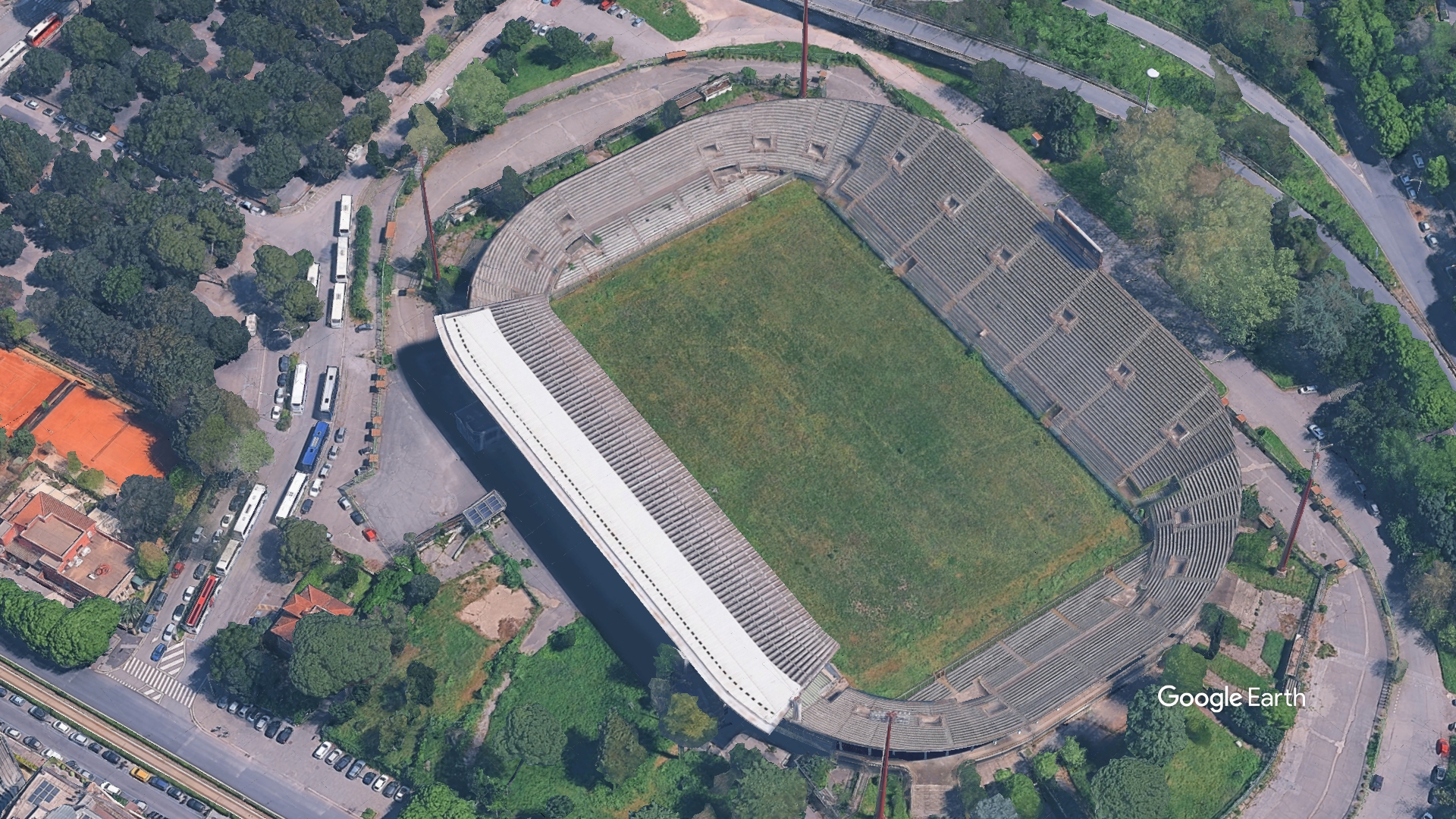
The stadium Lazio wants to take over isn’t just an empty lot. Stadio Flaminio is actually a world-famous architectural gem. Built for the 1960 Rome Olympics by the legendary engineer Pier Luigi Nervi, it’s known for its sleek, exposed concrete and sweeping roof. Staying true to Lazio’s multi-sport roots, it even has a swimming pool and boxing gyms tucked under the stands. But despite its awesome history (and hosting Italy’s rugby team until 2011), the city let it rot. It’s been sitting empty for over a decade, slowly being swallowed by weeds. The tricky part? Because it’s an architectural masterpiece, it’s heavily protected by heritage laws, making it incredibly hard to legally renovate.
Why the Olimpico Just Isn’t Working
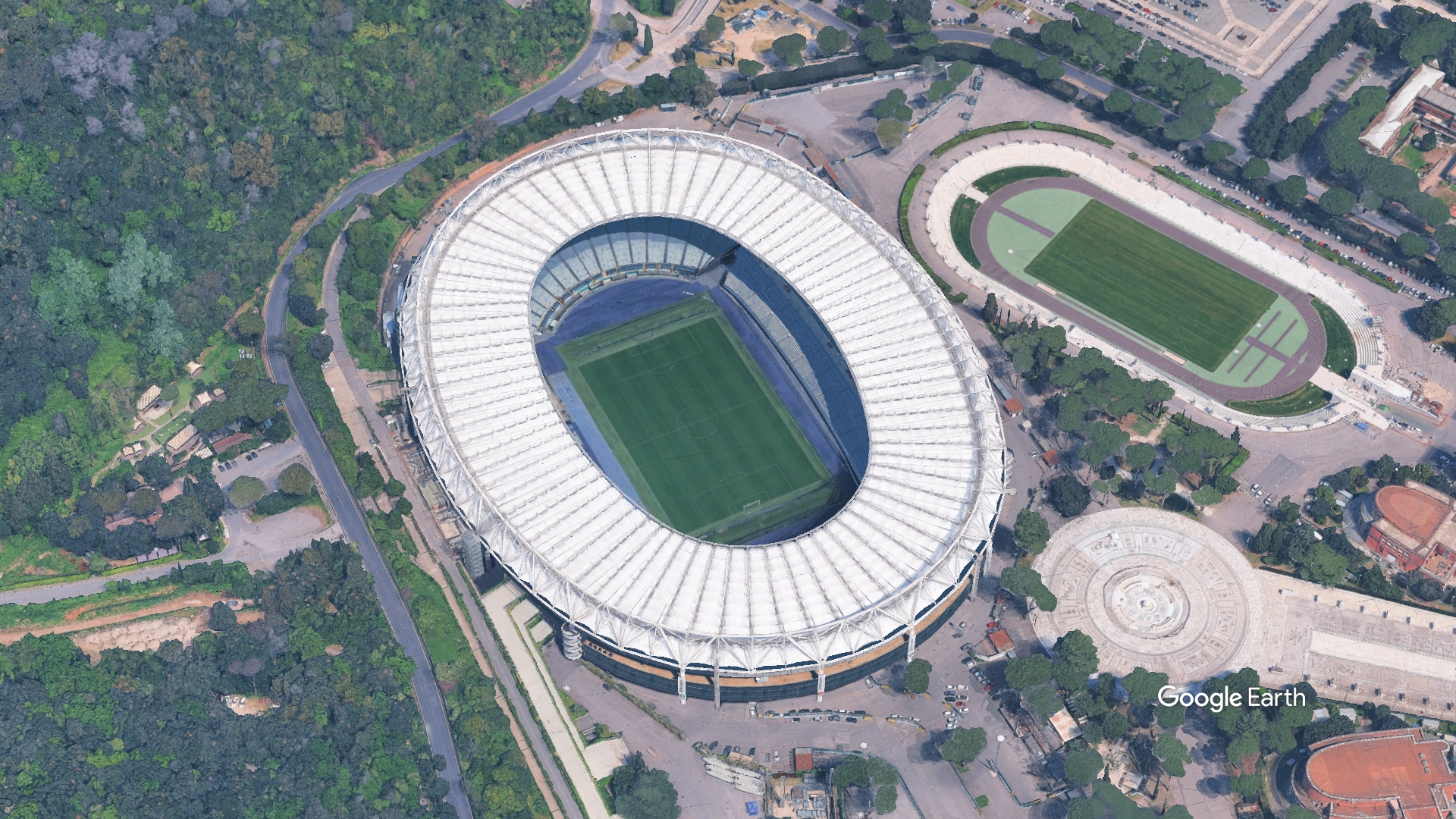
So why not just stay at the Stadio Olimpico? Well, sharing a stadium with your biggest rival, A.S. Roma, isn’t ideal. Plus, the Olimpico has some major flaws. It has a massive running track that keeps the fans way too far from the action, killing the atmosphere. At over 70,000 seats, it’s also way too big for a normal league game. More importantly, since Lazio just rents the place, they miss out on millions in commercial revenue. To make matters worse, A.S. Roma is already pushing ahead with their own €1 billion stadium project in the Pietralata neighborhood. If Roma gets a brand-new, cash-generating stadium and Lazio is stuck renting the Olimpico, the financial gap between the two rivals would become permanent. Lazio literally cannot afford to wait.
The “Lazio 2032” Masterplan: A Clever Design
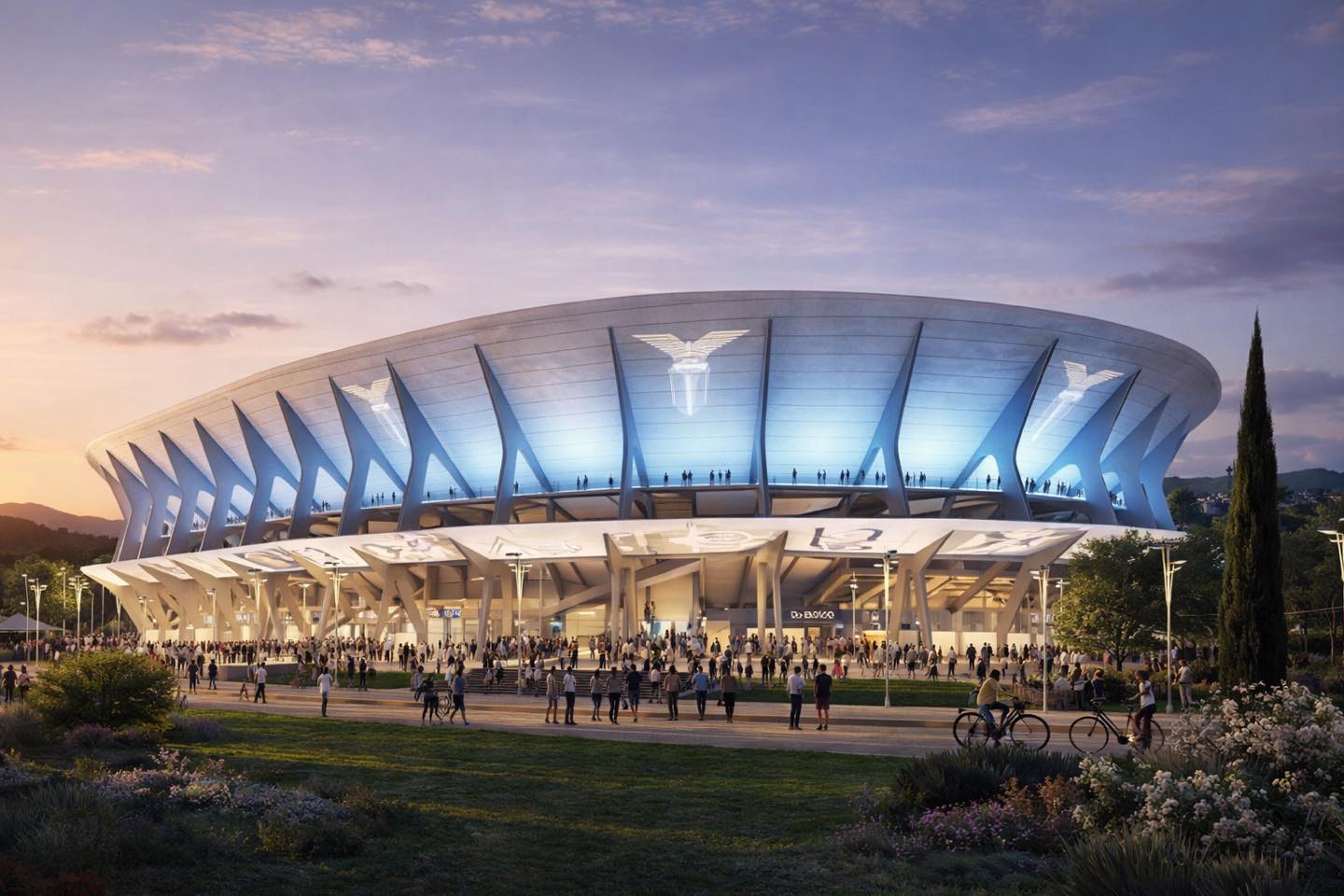
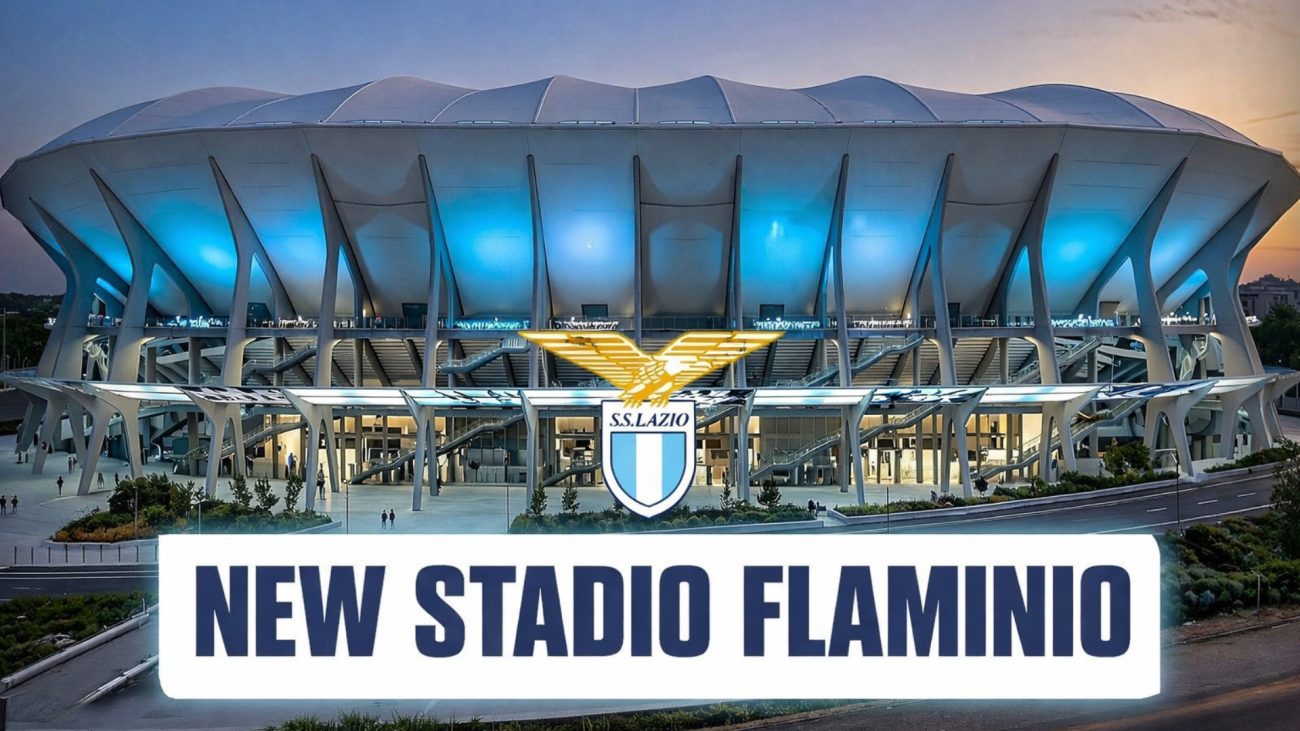
To get around the strict laws protecting the old concrete stadium, Lazio teamed up with architect Marco Casamonti to come up with a genius workaround. They call it the “matryoshka” (Russian nesting doll) concept. Basically, they are building a “stadium within a stadium.” Instead of tearing down the 1960s concrete, they’re building a brand-new, modern steel canopy that hovers right over the old stands, supported by new pillars placed outside the original footprint. This protects the historic structure from the weather while doubling the capacity to over 50,000 fully covered seats. They’re aiming to finish the €480 million project by 2031, hoping to use it as a host venue for the UEFA Euro 2032 tournament.
The Money and the “NewCo” Strategy
Dropping €480 million on a stadium is no joke, especially for an Italian club with tight profit margins. They’re getting about 59% of the money from long-term bank loans and tossing in private equity for the rest. But what if the project goes bust? To protect the actual football team from going bankrupt, Lotito is setting up a totally separate company, dubbed “NewCo,” to handle the stadium’s construction and debt. To pay off the massive loans—which stretch out 60 to 90 years—the stadium has to make money every single day, not just on matchdays. They’re planning to pull in over €37 million in the first year alone just from concerts, conferences, VIP hospitality, and retail shops.
Going Green and Handling the Traffic
The biggest headache of this whole project is the location. Flaminio is right in the middle of a dense, upscale Roman neighborhood that already has terrible traffic. Dumping 50,000 hyped-up football fans into the mix is a logistical nightmare. To win over the city, Lazio is spending €120 million just on upgrading the neighborhood. They’re planning an “environmental island” featuring a massive “Green Belt” of trees, high-tech paving that actually filters smog out of the air, and a ban on private cars right around the stadium on matchdays. They’re also using fancy sound-absorbing materials on the new roof so the noise from the ultras doesn’t drive the neighbors crazy.
The Pushback: Angry Locals and City Hurdles
Even with all the green upgrades, the project faces formidable opposition. The Nervi family is totally divided on it—one grandson loves the new design, but the Luigi Nervi foundation, run by another grandson fiercely opposes it as it’s going to ruin the historic stadium. Meanwhile, locals have mobilized against the stadium due to security and traffic congestion on matchdays. City planners have also poked a massive hole in Lazio’s plans: the club’s strategy relies heavily on fans taking a new subway line extension to the stadium. The catch? That subway line won’t even be finished until 2036, five years after the stadium is supposed to open.
What’s Next?
Lazio’s push for the Stadio Flaminio is a massive, make-or-break moment for the club. It’s a brilliant, creative way to save a crumbling historic landmark while finally giving the team a home of its own. But the road ahead is rough. They have to survive Rome’s notorious red tape, figure out how to transport 50,000 people without a finished subway line, and calm down some very angry neighbors. If they pull it off, Lazio secures its future and independence for the next century. If they don’t, they risk getting left behind in the dust by their biggest rivals.