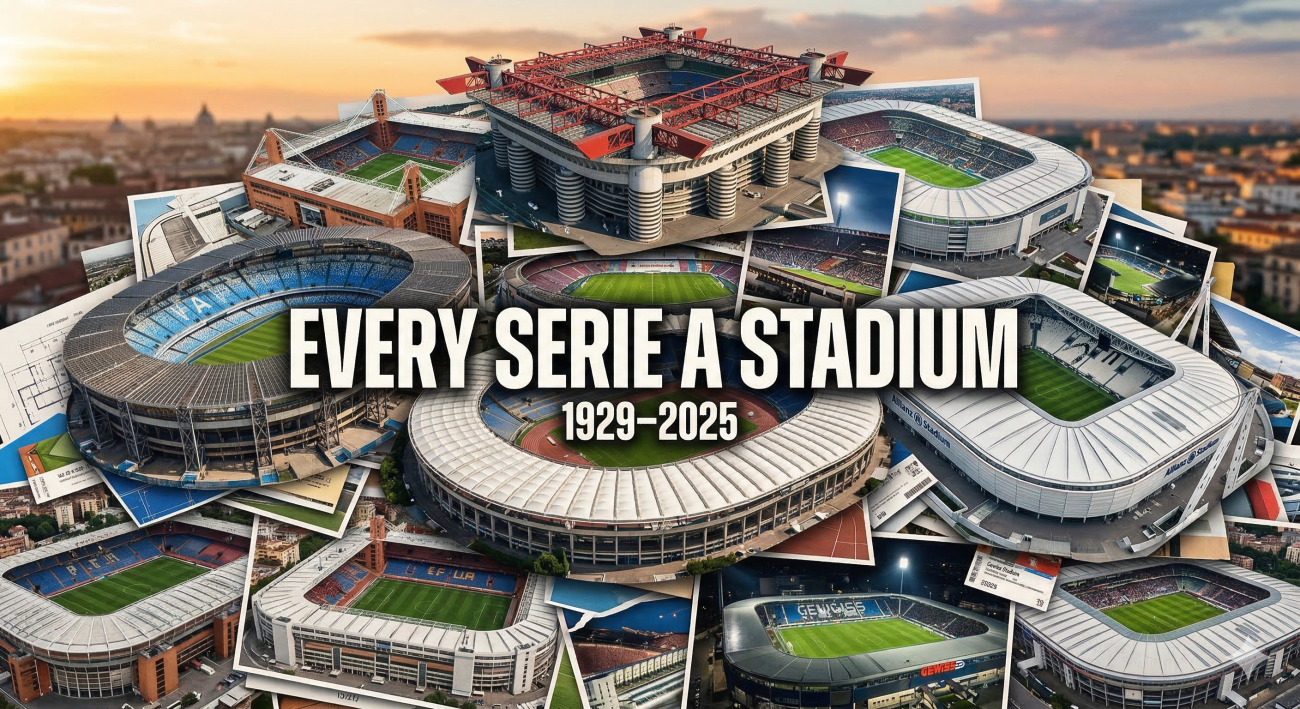
Since the inauguration of the girone unico (single-round league format) in the 1929–30 season, the Italian peninsula has witnessed a profound evolution in sporting infrastructure. This evolution mirrors the broader socio-political and economic trajectory of the nation: from the early, multi-purpose velodromes of the pre-war era to the monumental, rationalist concrete bowls of the Fascist period; from the grandiose, often cavernous projects funded by the 1990 FIFA World Cup to the modern, compact, and increasingly club-owned arenas of the 21st century.
Unlike the model often seen in England or Germany, where stadium ownership has historically been the purview of the clubs, the Italian landscape is defined by the Stadio Comunale—the municipal stadium. This systemic reliance on public infrastructure has created a unique historical dynamic. It has fostered a deep connection between the team and the civic identity of the town, turning stadiums into secular cathedrals of the municipality. However, it has also led to periods of stagnation, bureaucratic entanglements, and the phenomenon of “nomadism,” where clubs are forced into exile in neighboring cities due to renovation delays or safety failures.
This article provides an exhaustive analysis of every facility that has hosted a Serie A match since the league’s inception in 1929. It categorizes these 80+ venues by region and historical significance, detailing the years of operation, the tenant clubs, and the specific circumstances that defined their tenure in the top flight. Furthermore, it examines the network of neutral grounds and temporary homes that have sustained the league during times of crisis, war, and reconstruction.
Part I: The Cathedrals of the North-West (Lombardy)
Lombardy, the industrial engine of Italy, has provided more Serie A participants than any other region. Its stadium history is dominated by the colossal structures of Milan but is supported by a dense network of provincial fortresses that have hosted top-flight football for decades.
The footballing identity of Milan, a city with two giants, is split between two historic venues, though one has largely eclipsed the other in the modern consciousness.
Stadio Giuseppe Meazza (San Siro)
-
Tenant Clubs: AC Milan (1926–Present), Inter Milan (1947–Present)
-
Serie A Years: 1929–1943, 1946–Present
-
Opened: 1926 | Renovated: 1935, 1955, 1990
-
Current Capacity: ~75,817
The Stadio Giuseppe Meazza, universally known as San Siro after the district in which it sits, stands as the veritable opera house of Italian football. Commissioned by AC Milan president Piero Pirelli in 1925, the stadium was designed specifically for football—a rarity in an era obsessed with multi-purpose athletics tracks intended to serve the multifaceted sporting ideals of the time.
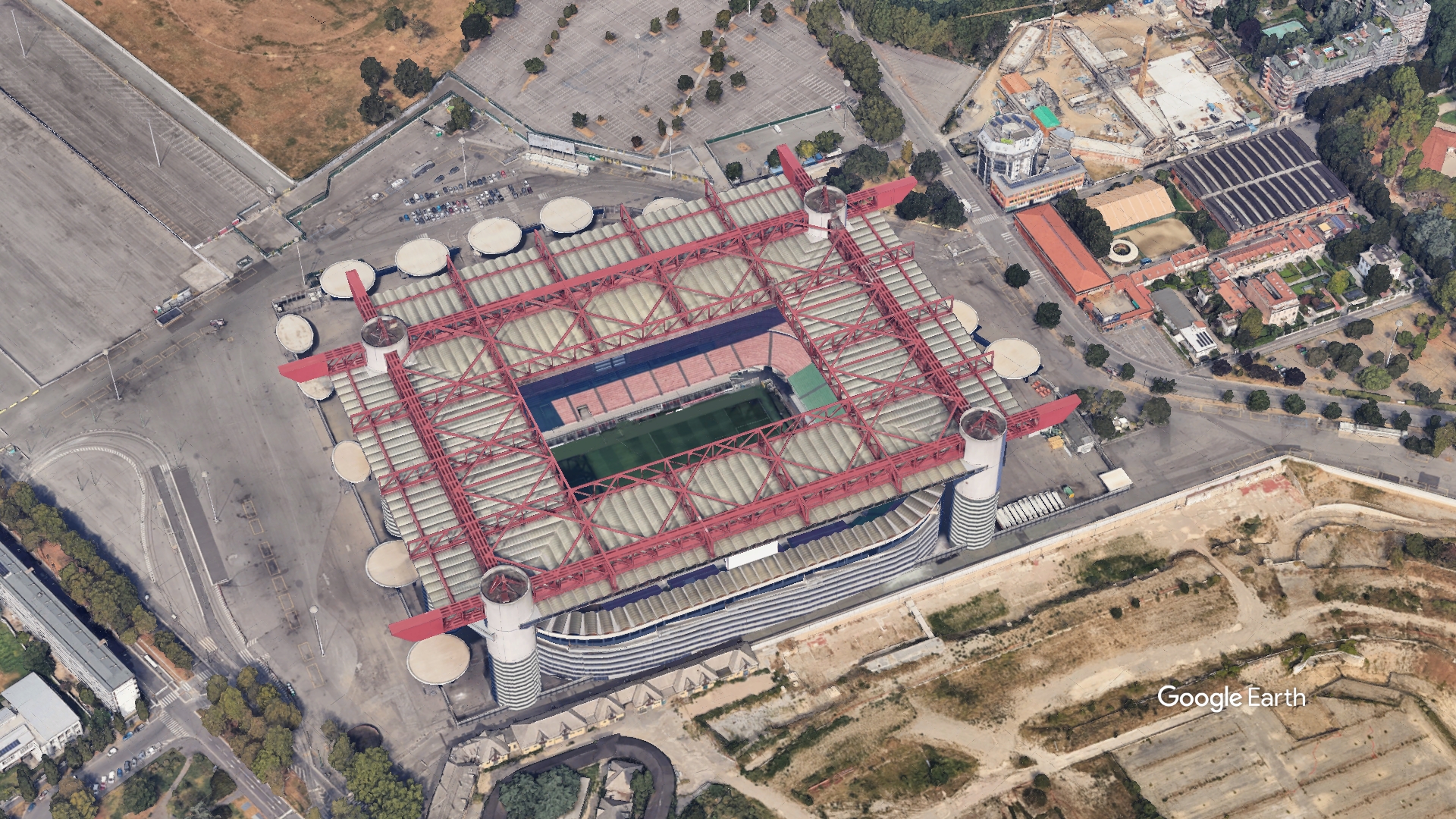
In the inaugural Serie A season of 1929–30, San Siro was the exclusive home of AC Milan. It was a fortress of English-style stands, intimate and imposing, with a capacity of approximately 35,000. For the first 17 years of the league, the stadium remained the sole property and battleground of the Rossoneri.
The dynamics of the venue changed irrevocably in 1947. Inter Milan, having outgrown their downtown venue (the Arena Civica), moved into San Siro, initiating one of the most famous ground-sharing arrangements in world sport. This necessitated expansion. The 1955 renovation, led by engineer Ferruccio Calzolari, added a second tier reached by iconic spiraling ramps, creating a capacity of nearly 100,000 for a time and turning the stadium into a terrifying vertical wall of spectators.
However, it was the renovation for the 1990 FIFA World Cup that gave San Siro its current, menacingly brutalist silhouette. Eleven cylindrical concrete towers were erected around the perimeter to support a massive roof and a third tier on three sides. This addition gave the stadium its distinct “spaceship” aesthetic but also introduced issues with pitch quality due to reduced sunlight. Despite these challenges, San Siro remains the most utilized venue in Serie A history, having hosted over 3,000 top-flight matches.
Arena Civica (Gianni Brera)
-
Tenant Clubs: Inter Milan (1929–1947)
-
Serie A Years: 1929–1947
-
Opened: 1807 | Closed for Serie A: 1947
-
Current Status: Active for lower leagues (Brera FC)
Before their migration to the San Siro, Inter Milan’s spiritual home during the dawn of Serie A was the Arena Civica. A neoclassical amphitheater commissioned by Napoleon Bonaparte in the early 19th century, it is one of the oldest venues to have hosted top-flight football anywhere in the world. Located in the heart of Milan near the Sforza Castle, the Arena Civica provided a genteel, bourgeois setting for the Nerazzurri, contrasting sharply with the working-class, industrial roots of AC Milan at San Siro.
Inter won their first Serie A titles (1929–30, 1937–38, 1939–40) on this pitch. The venue, filled with roughly 10,000 to 30,000 spectators depending on the configuration of temporary stands, offered a unique atmosphere where the history of the Napoleonic era met the emerging fanaticism of professional calcio. Although Inter left in 1947, the Arena remains a functioning monument, hosting rugby and lower-league football, preserving its status as a silent witness to the league’s infancy.
Stadio Atleti Azzurri d’Italia (Gewiss Stadium)
-
Tenant Clubs: Atalanta (1929–Present), Albinoleffe (2007–2008)
-
City: Bergamo
-
Serie A Years: 1937–Present (intermittently during relegation)
-
Opened: 1928
Inaugurated in 1928 as the Stadio Mario Brumana (named after a fascist martyr), this stadium is a quintessential example of the evolution of Italian grounds. For decades, it was a typical oval with an athletics track and uncovered curved ends (curve).
However, following Atalanta’s acquisition of the stadium from the municipality in 2017—a landmark moment in the shift toward private ownership—the facility has been radically transformed. The track was removed, and rectangular stands were built tight to the pitch, turning the Gewiss Stadium into one of the most atmospheric and modern venues in the league, befitting Atalanta’s rise to European prominence. It also hosted Albinoleffe during their brief proximity to the top flight (though primarily in Serie B).
Stadio Mario Rigamonti
-
Tenant Clubs: Brescia (1959–Present)
-
City: Brescia
-
Serie A Years: 1965–1968, 1969–1970, 1980–1981, 1986–1987, 1992–1993, 1994–1995, 1997–1998, 2000–2005, 2010–2011, 2019–2020
Named after the Brescia-born defender of the Grande Torino who died at Superga, the Rigamonti opened in 1959. It is a classic municipal bowl that has aged significantly.
Prior to 1959, Brescia played their Serie A campaigns (including the inaugural 1929 season) at the Stadium di Viale Piave, a smaller venue inaugurated in 1921 that served the club until the post-war expansion necessitated a move.
Stadio Giovanni Zini
-
Tenant Clubs: Cremonese (1929–Present)
-
City: Cremona
-
Serie A Years: 1929–1930, 1984–1985, 1989–1990, 1991–1992, 1993–1996, 2022–2023
The Zini is a historic survivor. Opened in 1929, just in time for the first Serie A season, it has been the permanent home of US Cremonese.
Unlike many municipal stadiums that retain their oval shape, the Zini has been heavily renovated to cover the stands and bring fans closer to the action, particularly during the club’s “golden era” in the 1990s and their recent return in the 2020s.
Stadio Giuseppe Sinigaglia
-
Tenant Clubs: Como (1949–Present)
-
City: Como
-
Serie A Years: 1949–1953, 1975–1976, 1980–1982, 1984–1989, 2002–2003, 2024–Present
Arguably the most scenically located stadium in Serie A, the Sinigaglia sits directly on the shores of Lake Como.
0Built in 1927 for the Volta celebration, it hosted Como during their extended Serie A run in the 1980s. Its main stand is a protected rationalist monument, which has complicated modernization efforts required for Como’s 2024 return to the top flight.
Other Historic Lombard Venues
-
Stadio Carlo Speroni (Busto Arsizio): Home to Pro Patria during their 12 Serie A seasons, the last of which occurred in 1955–56. It remains a small, lower-league ground today.
-
Stadio Giovanni Mari (Legnano): Hosted AC Legnano during their three Serie A campaigns (1930s and 1950s). Known for its distinct “Lilac” painted stands.
-
Stadio Rigamonti-Ceppi (Lecco): Hosted Calcio Lecco during their three seasons in the 1960s (1960–62, 1966–67). Located spectacularly at the foot of the Resegone mountains.
-
Stadio Franco Ossola (Varese): Known for its cycling track which hosted World Championships, this stadium hosted Varese Calcio for seven seasons between 1964 and 1975.
-
Stadio Danilo Martelli (Mantova): Home to the “Little Brazil” Mantova side of the 1960s, hosting Serie A football from 1961 to 1972 (intermittently).
- Stadio Brianteo (Monza): The U-Power Stadium hosted its first Serie A matches in 2022–23 following Monza’s historic promotion. Built in 1988, it was renowned for its massive main stand and formerly uncompleted east stand.
Part II: The North-West (Piedmont and Liguria)
The stadium history of Turin is defined by the dichotomy between the aristocratic Juventus and the gritty, working-class Torino, and their often unsatisfactory attempts to find a permanent home.
Stadio Filadelfia
-
Tenant Clubs: Torino FC (1926–1963)
-
Serie A Years: 1929–1943, 1945–1958
-
Status: Rebuilt as a training ground
The Stadio Filadelfia is holy ground in Italian football. It was the home of the legendary Grande Torino, the team that dominated the 1940s before perishing in the Superga air disaster. Known for its wooden stands, tight confines, and intimidating atmosphere—where the famous trumpeter Bolmida would sound the charge—the “Fila” was where Torino went unbeaten for six years (1943–1949). It hosted Serie A matches from the league’s inception until 1958, falling into disrepair thereafter. It stood as a crumbling monument for decades until its recent restoration as a training facility.
Stadio Comunale (Stadio Olimpico Grande Torino)
-
Tenant Clubs: Juventus (1933–1990, 2006–2011), Torino (1958–1990, 2006–Present)
-
Serie A Years: 1933–1990, 2006–Present
-
Opened: 1933 | Renovated: 2006
-
Capacity: 28,177
Originally named the Stadio Mussolini, this rationalist structure was built for the 1934 World Cup. Renamed the Stadio Comunale after the war, it became the shared home of Juventus and Torino for over 50 years. It was the stage for the “Magic Trio” of Juventus (Charles, Sívori, Boniperti) and the gritty Torino sides of the 1970s. Abandoned in 1990 for the Delle Alpi, it was resurrected for the 2006 Winter Olympics and subsequently handed back to the football clubs. Juventus used it temporarily (2006–2011) while rebuilding their own stadium, but it is now the permanent, emotionally resonant home of Torino FC.
Stadio Delle Alpi
-
Tenant Clubs: Juventus, Torino (1990–2006)
-
Serie A Years: 1990–2006
-
Demolished: 2009
The Stadio Delle Alpi represents the excesses and failures of the Italia ’90 modernization program. Built at enormous cost, it was architecturally striking but functionally disastrous for football. The presence of an athletics track pushed fans far from the pitch, and the poor sightlines and cold, wind-swept location led to dwindling attendances for both clubs. Despite hosting Juventus’s triumphant 1990s era (including the 1996 Champions League semi-finals), it was never loved.
Allianz Stadium (Juventus Stadium)
-
Tenant Clubs: Juventus (2011–Present)
-
Serie A Years: 2011–Present
-
Opened: 2011
-
Capacity: 41,507
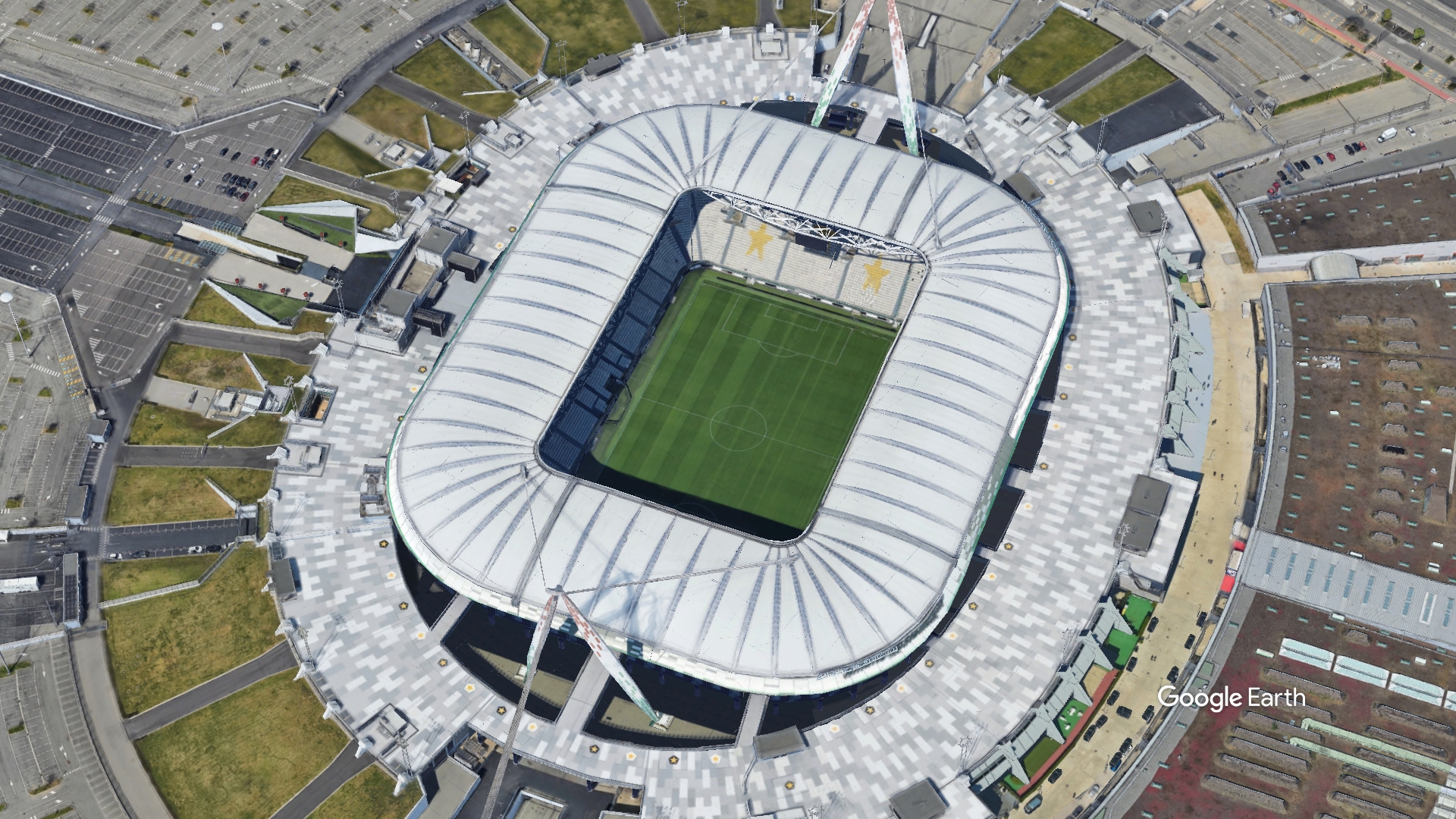
The Juventus Stadium marked a paradigm shift in Serie A. It was the first modern major stadium in Italy to be privately owned by the club. Built on the site of the demolished Delle Alpi, it removed the track and reduced capacity to create a cauldron-like effect, crucial to Juventus’s nine consecutive Scudetti from 2012 to 2020.
Early/Minor Turin Venues
-
Stadio di Corso Marsiglia: Juventus (1922–1933). The home of the “Quinquennio d’oro” (five consecutive titles in the 1930s) before the move to the Comunale.
The Quadrilateral of Piedmont: The Early Giants
Piedmont was the cradle of early Italian football, and its provincial capitals boast stadiums that hosted some of the league’s first dynasties.
-
Stadio Silvio Piola (Vercelli): Originally the Stadio Leonida Robbiano, this ground hosted Pro Vercelli during their final Serie A years (1932–1935). Pro Vercelli was a titan of early Calcio, but their stadium remains a small, historic monument to a faded empire. Their first stadium until 1932 was the Campo Piazza Conte in Turin.
-
Stadio Natale Palli (Casale Monferrato): Hosted Casale during their Serie A campaigns (1930–1934). Casale is one of the few clubs to have won a Scudetto (1914) but has largely disappeared from the top flight since the 1930s.
-
Stadio Giuseppe Moccagatta (Alessandria): Home to the Alessandria “Grigi” (Greys). Opened in 1929, it hosted the club during their consistent Serie A presence from 1929 to 1960. It is defined by its distinctive neoclassical entrance and intimate stands.
-
Stadio Enrico Patti (Novara): Hosted Novara during their Serie A stints in the 1930s, 40s and 50s. Stadio Silvio Piola was their stadium in their brief return to Serie A in 2011–12.
The Ligurian Cauldrons: Genoa and La Spezia
Stadio Luigi Ferraris (Marassi)
-
Tenant Clubs: Genoa (1911–Present), Sampdoria (1946–Present), Sampierdarenese/Liguria (1929–1958)
-
City: Genoa
-
Serie A Years: 1929–Present
-
Opened: 1911 | Renovated: 1989
-
Capacity: 33,205
The Stadio Luigi Ferraris, located in the Marassi district, is the oldest stadium still in use in Serie A. It is arguably the most “English” of Italian grounds, with its steep rectangular stands bordering the pitch. It was completely rebuilt for the 1990 World Cup, retaining its layout but adding distinct red corner towers. It has hosted every Serie A season for Genoa CFC and, following the club’s formation in 1946, UC Sampdoria.
Significantly, it also hosted the Sampierdarenese (later Liguria) during their Serie A stints in the 1930s and 40s. While Sampierdarenese originally played at the Stadio del Littorio (later Valerio Bacigalupo) in the Cornigliano district, that ground was damaged in the war and eventually demolished, forcing the club to move to Marassi before merging to form Sampdoria.
Stadio Alberto Picco
-
Tenant Clubs: Spezia (1919–Present)
-
City: La Spezia
-
Serie A Years: 2020–2023
A historic venue inaugurated in 1919, the Alberto Picco finally saw Serie A action in the 2020s following Spezia’s historic promotion. Famous for its “Curva Piscina” (Pool Stand), it is a compact, hostile ground. During renovations in their debut Serie A season (2020–21), Spezia was forced to play initial home matches at the Stadio Dino Manuzzi in Cesena.
Part III: The North-East (Veneto, Friuli, Emilia-Romagna)
Emilia-Romagna: The Land of Motors and Calcio
Stadio Renato Dall’Ara (Stadio Littoriale)
-
Tenant Clubs: Bologna (1927–Present)
-
City: Bologna
-
Serie A Years: 1929–Present
-
Capacity: 38,279
Originally the Stadio Littoriale, this brick colossus is a masterpiece of Fascist architecture. It hosted Italy’s 1934 World Cup matches and has been the home of Bologna FC for their entire Serie A history since 1929. The stadium is iconic for the Marathon Tower looming over the stands. It hosted the unique 1964 Scudetto playoff between Bologna and Inter (though the match itself was played in Rome, the team was forged here).
Stadio Ennio Tardini
-
Tenant Clubs: Parma (1923–Present)
-
City: Parma
-
Serie A Years: 1990–2008, 2009–2015, 2018–2021, 2024–Present
-
Capacity: 22,352
The Tardini is one of the oldest grounds in Italy but entered Serie A consciousness significantly only during Parma’s meteoric rise in the 1990s. Its ornamental entrance gate is a city landmark. It hosted the golden era of Parma (Buffon, Cannavaro, Thuram) when they challenged the “Seven Sisters” of Italian football.
The Mapei Stadium Phenomenon
-
Tenant Clubs: Reggiana (1995–1997), Sassuolo (2013–Present)
-
City: Reggio Emilia
Originally built as the Stadio Giglio, this was the first club-owned stadium in Italy, built by Reggiana in 1995. Following Reggiana’s bankruptcy, the stadium was auctioned and eventually bought by Mapei, the owners of Sassuolo. Since Sassuolo’s promotion to Serie A in 2013, they have played here, as their home town’s ground (Stadio Enzo Ricci) is too small. It serves as a rare example of a ground hosting a Serie A team from a different city permanently. It also hosted Atalanta for Europa League matches when Bergamo was under renovation.
Other Emilian Venues
-
Stadio Alberto Braglia (Modena): Hosted Modena FC (1929–1964 intermittently, 2002–2004) and served as the temporary home for Carpi during their Serie A debut (2015–16) because Carpi’s Stadio Cabassi was inadequate.
-
Stadio Dino Manuzzi (Cesena): A fully covered, two-tier English-style stadium. Hosted Cesena‘s numerous Serie A campaigns (1973–2015 intermittently) and Spezia’s neutral matches.
-
Stadio Paolo Mazza (Ferrara): Home of SPAL. Originally built in 1928, it was expanded for SPAL’s return to Serie A in 2017 after a 49-year absence (previously hosted 1951–1968).
-
Stadio Leonardo Garilli (Piacenza): Hosted Piacenza Calcio‘s “all-Italian” team in the 1990s and early 2000s (1993–2003).
- Stadio Mirabello (Reggiana): Was the home of Reggiana until they moved to the Stadio Giglio in 1995. It hosted the club in their Serie A debut in 1993. In 2001 all but the main stands were dismantled.
The Triveneto: Verona, Udine, and the Adriatic
Stadio Marcantonio Bentegodi
-
Tenant Clubs: Hellas Verona (1963–Present), Chievo Verona (2001–2019)
-
City: Verona
-
Capacity: 39,371
A massive concrete bowl built in 1963, the Bentegodi is famous for hosting Hellas Verona’s miraculous Scudetto in 1985. Uniquely, it hosted the “Derby della Scala” in Serie A when Chievo Verona climbed the pyramid, making Verona the fifth city in Italy to host a top-flight derby. Prior to 1963, Hellas Verona played at the old stadium also named Bentegodi (1906–1963).
Stadio Friuli (Dacia Arena)
-
Tenant Clubs: Udinese (1976–Present)
-
City: Udine
-
Capacity: 25,144
Originally a cavernous bowl with a track (opened 1976), the Friuli underwent a radical transformation in the 2010s. Udinese acquired the surface rights and rebuilt three of the four stands right up to the pitch, keeping only the iconic arched main stand. It is now one of the most modern facilities in Serie A. Before 1976, Udinese played at the Stadio Moretti.
The Lagunari and Others
-
Stadio Pier Luigi Penzo (Venice): Located on the island of Sant’Elena, accessible primarily by boat. It is the second-oldest stadium in Italy (1913) and hosted Venezia in the pre-war era, the 1990s (Recoba era), and their recent return in 2021.
-
Stadio Romeo Menti (Vicenza): Home to Lanerossi Vicenza. Named after a member of the Grande Torino who died at Superga. Hosted Vicenza’s 30 Serie A seasons, including the “Real Vicenza” era of 1977–78.
-
Stadio Nereo Rocco (Trieste): A monolithic structure opened in 1992. While Triestina has not played in Serie A since the 1950s, the Rocco has been a critical “neutral” venue, hosting Cagliari during their stadium crisis (2012) and Udinese during renovations.
-
Stadio Omobono Tenni (Treviso): Hosted Treviso‘s solitary Serie A campaign in 2005–06.
-
Stadio Euganeo (Padova): Hosted Padova‘s mid-90s Serie A seasons (1994–1996). Prior to that (1929–1962), Padova played at the historic Stadio Silvio Appiani, known as the “Lion’s Den” for its hostile atmosphere.
Part IV: The Center (Tuscany, Lazio, Umbria, Marche)
The Roman Empire: Olimpico, Flaminio, and Testaccio
City: Rome | Region: Lazio
Stadio Olimpico
-
Tenant Clubs: Roma (1953–Present), Lazio (1953–Present)
-
Opened: 1937 (as Stadio dei Cipressi), 1953 (Olimpico)
-
Capacity: 70,634
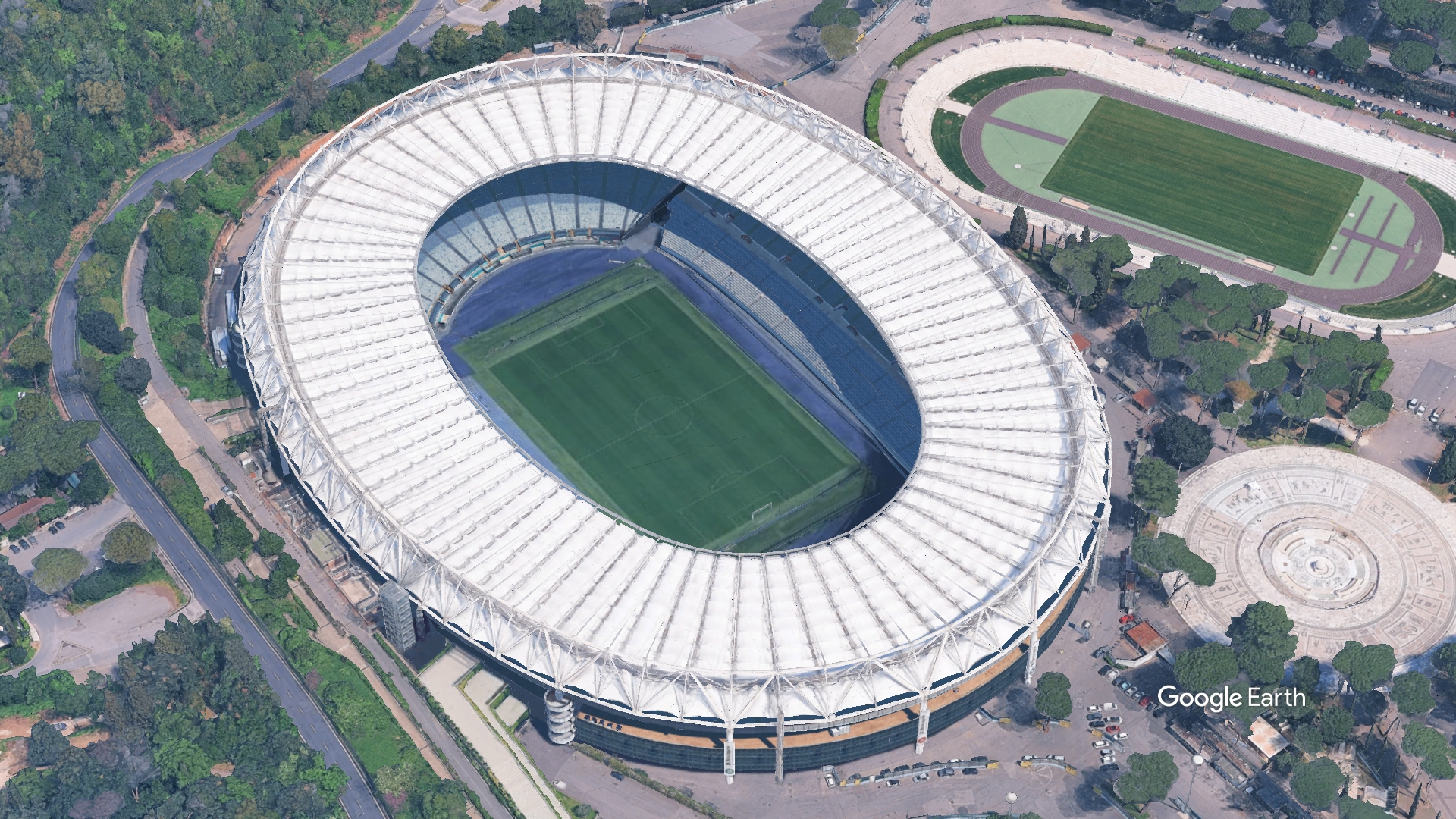
The Stadio Olimpico is the shared home of Roma and Lazio and the centerpiece of the Foro Italico complex. It has hosted the 1960 Olympics, the 1990 World Cup Final, and countless Derby della Capitale clashes. Originally an open-air bowl, it was roofed in 1990. It remains a venue of immense grandeur but poor sightlines due to the running track.
Historical Roman Venues
-
Campo Testaccio: AS Roma’s spiritual home (1929–1940). A wooden stadium in a working-class district, remembered with immense nostalgia by Giallorossi fans for its intimidating atmosphere.
-
Stadio Rondinella: Was the home of Lazio for two seasons before moving to Stadio Nazionale PNF.
-
Stadio Nazionale PNF: Built in 1911, it hosted the 1934 World Cup Final. It was the home of Lazio (1931–1953) and Roma (1940–1953) until the Olimpico opened. It was demolished to build the Stadio Flaminio.
- Stadio Flaminio: Built on the site of the Nazionale. It hosted Roma and Lazio during the 1989–90 season while the Olimpico was being renovated for Italia ’90. It is currently abandoned but remains a topic of renovation debates.
Other stadiums in the Lazio and Abruzzo Provinces
- Stadio Matusa (Frosinone) – The historic former home, used during their first Serie A season (2015–16). The club’s current home, Stadio Benito Stripe, opened in 2017.
- Stadio Adriatico (Pescara) – Opened in 1955 and later renovated for the 2009 Mediterranean Games, the stadium holds around 20,000 spectators. It hosted Pescara’s Serie A seasons in 1977–78, 1979–80, 1987–88, 1988–89, and 2012–13.
The Tuscan Art: Florence and Neighbors
Stadio Artemio Franchi
-
Tenant Clubs: Fiorentina (1931–Present)
-
City: Florence
-
Opened: 1931
-
Capacity: 43,147
Designed by Pier Luigi Nervi, the Artemio Franchi (formerly Stadio Comunale/Giovanni Berta) is a masterpiece of rationalist architecture, famous for its D-shaped towers and spiral stairs. It has hosted Fiorentina’s two Scudetti (1956, 1969). Despite its beauty, it is aging, and debates over its renovation are perpetual.
Other Central Venues
-
Arena Garibaldi – Romeo Anconetani (Pisa): Home to Pisa Calcio during their Serie A years in the 1960s, 80s, and early 90s (1968–1969, 1982–1984, 1985–1986, 1987–1989, 1990–1991). Located just meters from the Leaning Tower.
-
Stadio Armando Picchi (Livorno): Hosted Livorno‘s returns to Serie A in the 2000s (Lucarelli era) (2004–2008, 2009–10, 2013–14). Prior to that, they played there in the 1930s and 40s (1933–1949).
-
Stadio Carlo Castellani (Empoli): A multi-purpose stadium hosting Empoli‘s frequent over-achievements in Serie A since their debut in 1986 (1986–88, 1997–99, 2002–04, 2005–08, 2014–19, 2021–Present).
-
Stadio Artemio Franchi – Montepaschi Arena (Siena): Hosted Siena‘s decade in Serie A (2003–2010, 2011–2013).
-
Stadio Renato Curi (Perugia): Famous for the rain-soaked match in 2000 that cost Juventus the title. Home of the “Perugia of Miracles” (unbeaten season 1978–79). Hosted Serie A in 1975–77, 1978–81, 1996–2004.
-
Stadio Libero Liberati (Terni): Hosted Ternana‘s brief Serie A spells (1972–73, 1974–75). Known for its distinct three-tiered layout.
-
Stadio Cino e Lillo Del Duca (Ascoli): A fortress for Ascoli during their strong Serie A run in the 1970s and 80s (1974–1976, 1978–1985, 1986–1990, 1991–1992, 2005–2007).
-
Stadio del Conero (Ancona): Hosted Ancona‘s isolated Serie A seasons (1992–93, 2003–04). The 1992 season was played partly at the Stadio Dorico before the Conero opened.
-
Stadio Marcello Melani (Pistoiese): Hosted Pistoiese’s matches in their only Serie A season in 1980–81.
- Stadio Porta Elisa (Lucchese): Opened in 1935, it is the long-time home of Lucchese. The stadium hosted the club’s Serie A matches in the 1930s and early 1950s.
Part V: The South and Islands (Mezzogiorno)
Football in the South is defined by intense passion and massive, often uncovered, concrete bowls built or expanded in the post-war boom, many of which were supersized for Italia ’90.
Naples: The Temple of Maradona
Stadio Diego Armando Maradona (San Paolo)
-
Tenant Clubs: Napoli (1959–Present)
-
City: Naples
-
Serie A Years: 1959–Present
-
Capacity: 54,726
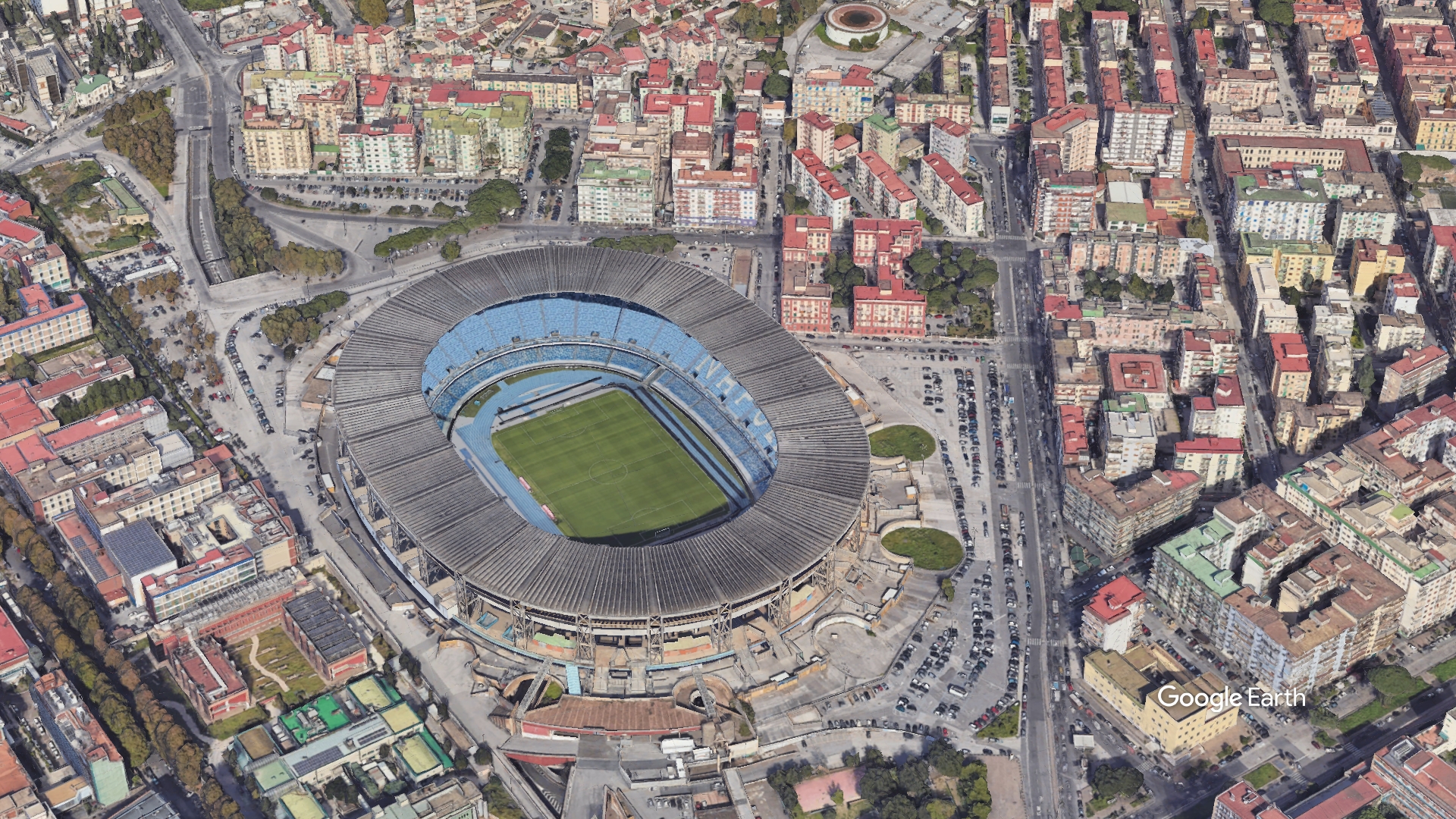
Originally the Stadio San Paolo, this cavernous arena is the third-largest in Italy. It is legendary for the “roar of the San Paolo,” which has registered on seismographs. It was the stage for Diego Maradona’s two Scudetti (1987, 1990) and the 1989 UEFA Cup. Renamed in 2020 following the Argentine’s death, it remains one of the most hostile environments for visiting teams in Europe.
Prior to 1959:
- Stadio Militare dell’Arenaccia: This stadium was used by the team from its founding in 1926 until 1930. The property is owned by the Italian Army and is currently vacant.
-
Stadio Giorgio Ascarelli (Partenopeo): Hosted Napoli from 1930 to 1934 (Ascarelli) and 1934 to 1942 (Partenopeo). Destroyed by Allied bombing in WWII.
-
Stadio Arturo Collana (Vomero): Hosted Napoli in the post-war period (1946–1959) and briefly in the 1929–30 season. A smaller, neighborhood stadium.
Puglia: The Spaceship and the Victory
Stadio San Nicola
-
Tenant Clubs: Bari (1990–2001, 2009–2011)
-
City: Bari
-
Capacity: 58,270
Designed by Renzo Piano for Italia ’90, the San Nicola is nicknamed “The Spaceship” for its segmented upper tier that resembles a blooming flower. It replaced the Stadio della Vittoria, which had hosted Bari’s Serie A matches from 1934 to 1990. The Campo degli Sports was the home of Bari for two seasons from 1931 to 1933.
Stadio Via del Mare
-
Tenant Clubs: Lecce (1966–Present)
-
City: Lecce
-
Serie A Years: 1985–86, 1988–91, 1993–94, 1997–98, 1999–02, 2003–06, 2008–09, 2010–12, 2019–20, 2022–Present
A massive, open bowl that was expanded to over 40,000 for Italia ’90 (despite not hosting matches), it accommodates the huge catchment area of the Salento region.
Other Southern Venues
-
Stadio Pino Zaccheria (Foggia): The theater of Zemanlandia in the early 1990s (1991–1995), when Foggia dazzled Serie A with all-out attack. Also hosted in 1964–67, 1970–71, 1973–74, 1976–78.
-
Stadio Partenio (Avellino): Hosted Avellino‘s impressive 10-year consecutive run in Serie A (1978–1988). Known as the “Wolf’s Den” due to its synthetic track (green) and hostile crowd.
-
Stadio Ciro Vigorito (Benevento): Hosted Benevento‘s recent Serie A campaigns (2017–18, 2020–21). Originally called Santa Colomba.
-
Stadio Ezio Scida (Crotone): A small venue for Crotone‘s miracle promotions (2016–18, 2020–21).
-
Stadio Nicola Ceravolo (Catanzaro): Hosted Catanzaro in the 1970s and 80s (1971–72, 1976–77, 1978–83). Famous for being extremely windy.
-
Stadio Oreste Granillo (Reggio Calabria): Hosted Reggina‘s extended Serie A stay in the 2000s (1999–2001, 2002–2009). A uniquely rectangular stadium in the south.
-
Stadio Donato Vestuti (Salerno): Hosted Salernitana in 1947–48. When the club returned in 1998–99 and 2021–Present, they played at the much larger Stadio Arechi.
The Islands: Sicily and Sardinia
Stadio Renzo Barbera (La Favorita)
-
Tenant Clubs: Palermo (1932–Present)
-
City: Palermo
-
Serie A Years: 1932–36, 1948–54, 1956–57, 1959–60, 1961–63, 1968–70, 1972–73, 2004–2013, 2014–2017
Originally built for the 1934 World Cup, La Favorita is a historic venue that has seen Palermo’s golden eras in the 2000s (Toni, Cavani, Pastore).
Stadio Angelo Massimino (Cibali)
-
Tenant Clubs: Catania (1937–Present)
-
City: Catania
-
Serie A Years: 1954–55, 1960–66, 1970–71, 1983–84, 2006–2014
Famous for the phrase “Clamoroso al Cibali!” (coined when Catania beat Inter in 1961), this stadium has hosted Catania’s various spells in the top flight.
Stadio San Filippo (Messina)
-
Tenant Clubs: Messina (2004–2007)
-
City: Messina
Replaced the historic Stadio Giovanni Celeste (which hosted Messina in 1963–65 and 2004). The San Filippo is a large 38,000-seater built for Messina’s mid-2000s Serie A run.
The Cagliari Odyssey
City: Cagliari | Region: Sardinia
Cagliari Calcio’s stadium history is a saga of nomadism:
-
Stadio Amsicora: The site of the historic 1970 Scudetto triumph. A classic multi-sport ground.
-
Stadio Sant’Elia: Built for the Champions Cup following the title. Hosted the team from 1970 to 2012. It fell into severe disrepair, leading to the club’s exile.
-
The Exile (2012–2017): Due to safety failures at Sant’Elia, Cagliari played home matches in Trieste (Stadio Nereo Rocco) and the temporary Stadio Is Arenas in Quartu Sant’Elena for one season in 2012-2023 (which was eventually deemed illegal).
-
Unipol Domus (Sardegna Arena): A temporary stadium built next to the Sant’Elia in 2017, serving as home while a new permanent stadium is planned.
https://youtu.be/YyIQKaoDbF0