
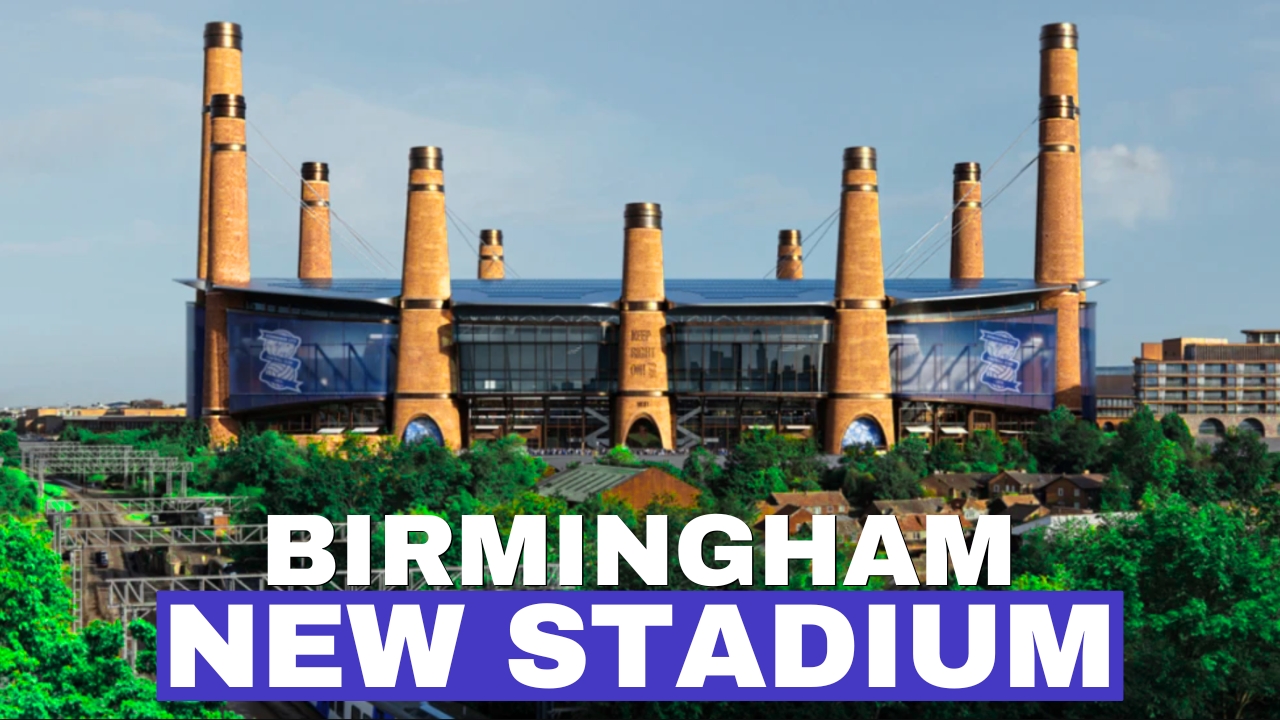
On November 20th, 2025, Birmingham City used their 150th anniversary to unveil one of the boldest football stadium projects in modern English history. The reveal took place at Digbeth Loc, the studio famously associated with Peaky Blinders, giving the event a symbolic industrial tone that matched the design.
 Source: https://www.bcfc.com/
More than 15,000 fans joined the livestream as chairman Tom Wagner appeared alongside architects Thomas Heatherwick and David Manica to present a vision he described as a modern-day coliseum. Wagner said the project would “claim the sky” and “change the city forever,” making it clear that this wasn’t just a stadium but a cultural and economic transformation for Birmingham.
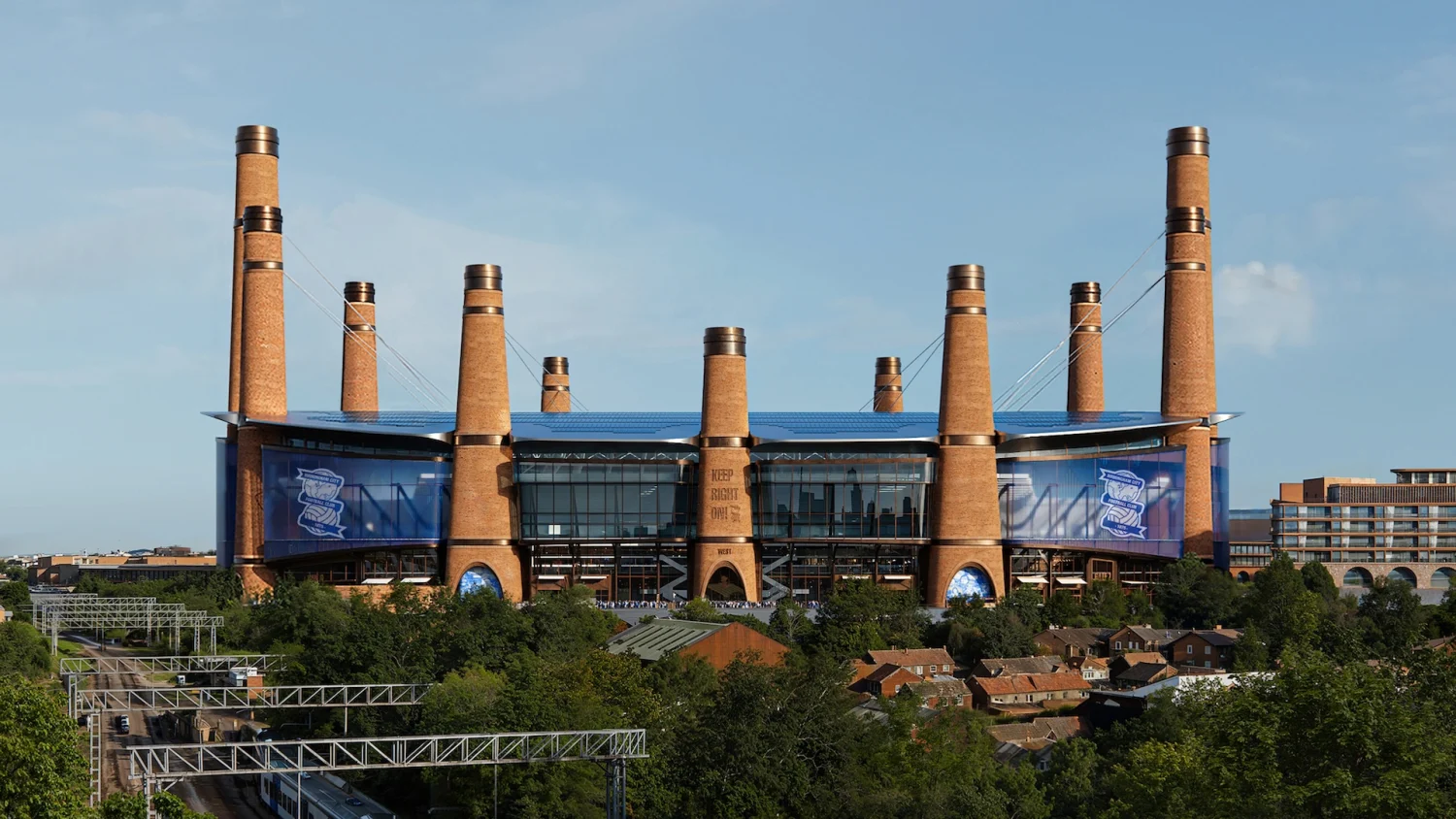
The announcement confirmed a 62,000-seat stadium designed to become the second-largest club venue in England outside London. The scale alone generated headlines, but it was the industrial-inspired architecture that instantly defined the project. Heatherwick Studio emphasized that the design was intentionally rooted in Birmingham’s working-class identity—brickworks, factories, and the thousand trades that shaped the city. This approach rejected the trend of glass-and-steel stadiums that look the same anywhere in the world. Instead, the aim was to create a structure that could exist only in Birmingham.
The Iconic Chimney Design and Engineering
 Source: https://www.bcfc.com/
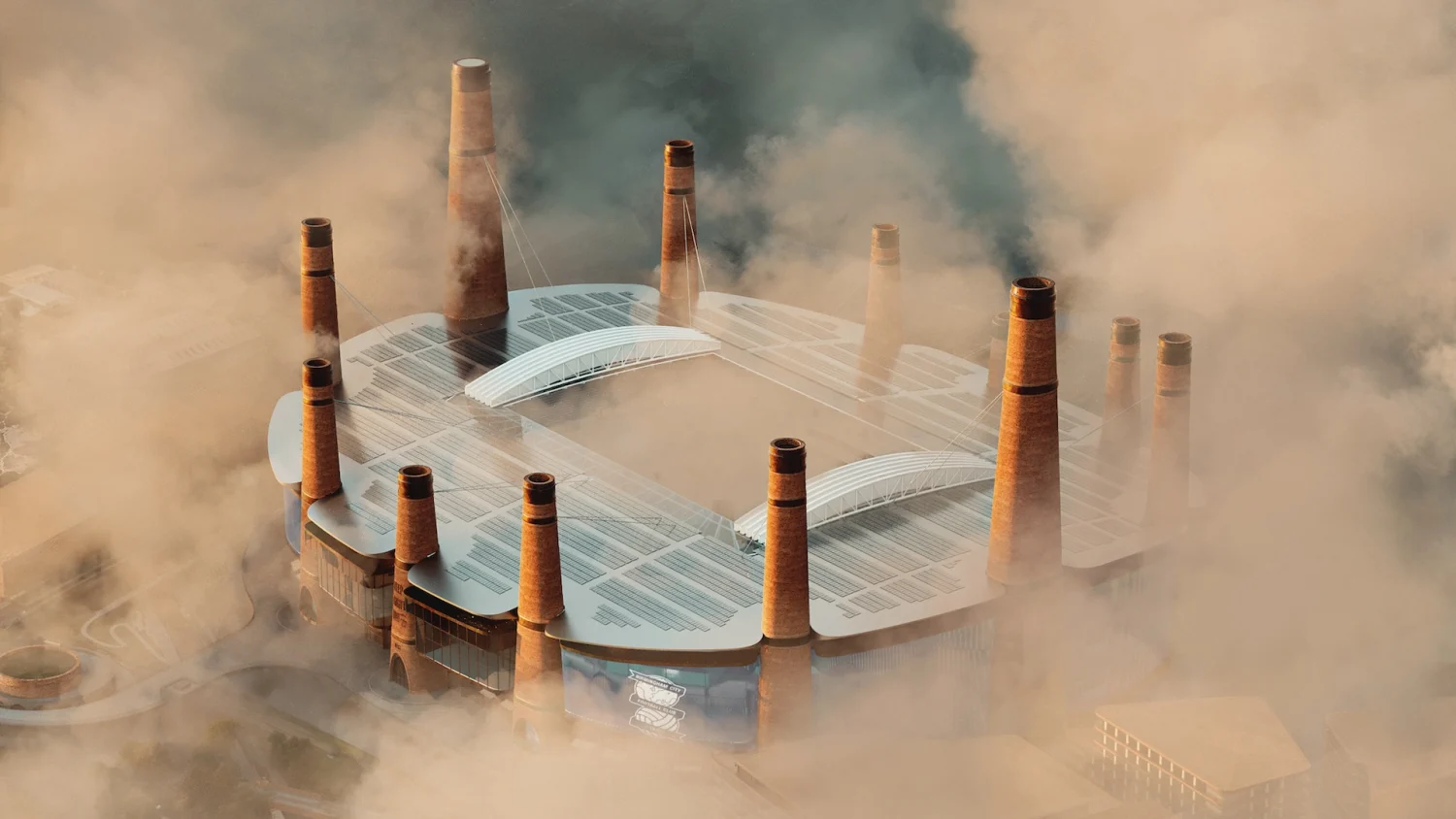
The most striking element of the Powerhouse Stadium is the set of twelve huge brick chimneys rising from its structure. These towers sparked immediate conversation across the football world, becoming the defining symbol of the project. But beyond aesthetics, the chimneys serve multiple essential functions. Heatherwick Studio confirmed that each chimney acts as a load-bearing element supporting the stadium’s roof. They also contain lifts and staircases, improving vertical circulation throughout the venue, and play a role in passive ventilation by moving warm air upward and away from the bowl.
The chimneys also form part of the stadium’s acoustic strategy. Their shape helps channel fan noise upward while reducing the impact on surrounding neighborhoods. Inside the bowl, sound is engineered to amplify inward, creating an intense matchday environment that gives Birmingham City a powerful home advantage. One chimney will include a lift leading to Birmingham’s highest public bar, offering sweeping views of the city and creating a new landmark experience for supporters and tourists.
The stadium will be built at the former Birmingham Wheels site in Bordesley Green, an area historically tied to industrial production. To honor that legacy, reclaimed bricks will be used throughout the structure. Heatherwick explained that the goal was not to create a nostalgic replica, but to build something bold and modern that still feels like a natural extension of Birmingham’s industrial DNA.
Inside the Stadium
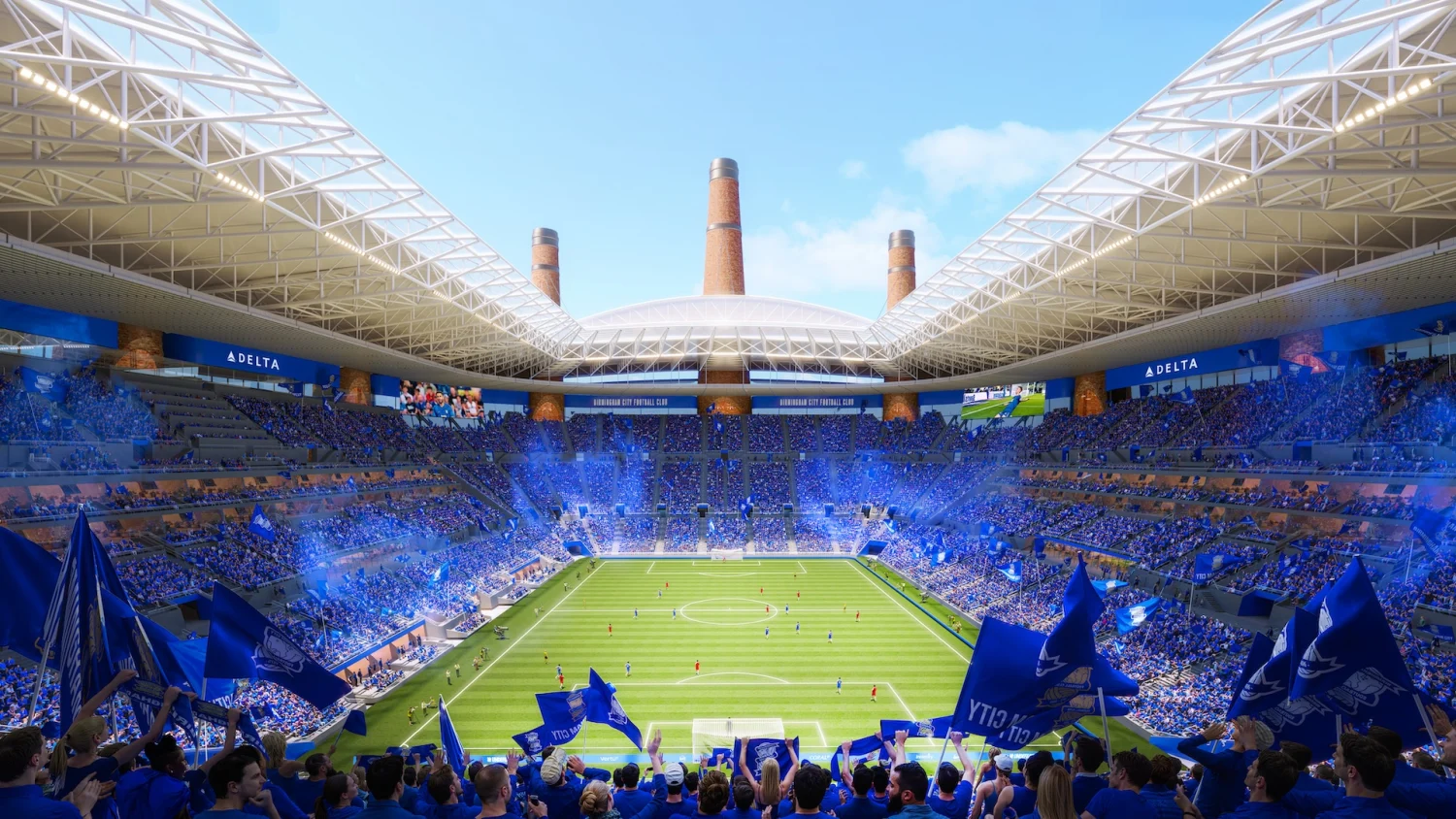
Inside the Powerhouse Stadium, the design prioritizes intensity and atmosphere. The seating bowl is shaped to be as steep and close to the pitch as regulations allow, creating what the architects describe as a 360-degree wall of supporters. This steepness, combined with engineered acoustics, aims to give the club one of the most intimidating home environments in English football. Nighthead Capital claimed the stadium’s acoustic performance will rank among the best in the world for football, with targeted sound dampening in the away end and maximum amplification for home supporters.
Two major technological innovations set the Powerhouse Stadium apart: a fully retractable roof that can close in about 20 minutes and a movable pitch system similar to those used in major American sports venues. This allows the field to slide away, making space for concerts, boxing events, NFL games, rugby, and other large-scale productions without damaging the pitch. The goal is to create a year-round, multi-format venue that can generate continuous revenue and international visibility.
But the stadium is only the centerpiece. Surrounding it is the Birmingham Sports Quarter, an ambitious 135-acre development that includes an elite training and performance center for the men’s, women’s, and academy teams. A 10,000-seat secondary stadium will host women’s and youth matches, while an 18,000-seat indoor arena is being planned for concerts and multi-sport events. The district will also feature hotels, restaurants, retail spaces, landscaped plazas, community football pitches, office blocks, and thousands of residential units. This design ensures the area becomes a full-time urban destination, not just a matchday zone.
Nighthead Capital projects that the Sports Quarter will contribute approximately £760 million annually to Birmingham’s economy by 2035, generating more than 14,000 jobs across construction, hospitality, retail, entertainment, sports science, and venue operations. For a city facing economic challenges in recent years, this represents a major opportunity for regeneration and long-term growth.
 Source: https://www.bcfc.com/
Timeline, Cost, and Public Reaction
The development timeline is ambitious but clearly established. Public consultation began in late 2025, with supporters, residents, planners, and community leaders involved in early discussions. Formal planning applications are expected in 2026. If approvals move forward without major delays, construction could begin in 2027 or early 2028. Structural work, roof installation, and major district development will continue through 2028 and 2029. Interior finishing—including hospitality lounges, seating installation, safety systems, media areas, and retail zones—is expected to run into early 2030. The target opening is the start of the 2030–2031 football season.
The stadium alone carries an estimated cost of £1.2 billion, while the full Sports Quarter is projected between £2.5 billion and £3.5 billion. All funding is private, financed by Nighthead Capital and its partners. This financing structure avoids reliance on public money and allows the project to move forward more aggressively.
Public reaction has been intense. Birmingham City supporters have overwhelmingly embraced the design as bold, culturally grounded, and long overdue. Many fans see the project as a symbol of ambition after years of stagnation.
Nationally, however, opinions are sharply divided. The chimney-heavy design has been both praised as groundbreaking and mocked online as resembling Victorian factories or movie sets.
Regardless of opinions, the project has captured the attention of the entire football world, which is especially significant for a Championship club.
The Powerhouse Stadium signals a new era for Birmingham City. Its scale, technology, architecture, and economic potential position the club and the city for a dramatically different future, reshaping how Birmingham is viewed both nationally and internationally.