
In the early hours of Friday October 2, 2026, a private jet arrived in Rosario, Argentina. Aboard were Lionel Messi, his wife, their three sons and his mother. For the global football icon, this was not merely a routine visit to his hometown; it was the emotional prologue to an ultimate farewell. Just four days later, on October 6, Messi would step onto the pitch at the Estadio Monumental in Buenos Aires in front of 85,000 adoring fans for a match against Benin, marking his definitive and final appearance for the Argentine national team.
But as Lionel Messi’s extraordinary playing career approaches its final chapter, the Messi family is laying the foundations for a very different kind of legacy in Argentina. In Alvear, around 15 kilometers south of central Rosario, a vast 52-hectare development known as Estación Leones is taking shape.
A stadium at the center of a new urban district
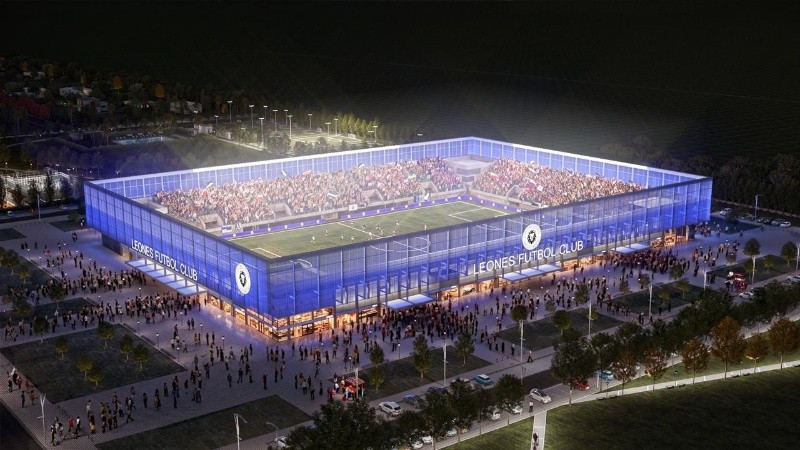 Source: https://www.rosario3.com
At the center of the project is Leones de Rosario Fútbol Club, a team closely controlled by the Messi family.
The club, founded in 2015, has spent much of its existence focused on youth development and regional football. Now, following its entry into the professional structure of the Argentine Football Association, its ambitions have expanded dramatically.
At the heart of Estación Leones is a planned 15,000-seat multi-purpose stadium, with the possibility of expanding to around 30,000, giving Leones FC room to grow should the club eventually rise through Argentina’s football divisions.
The venue is designed not only for Leones FC matches but also for concerts, festivals, exhibitions and other events, helping generate activity throughout the year.
The wider 52-hectare project also includes 510 residential lots, divided between an open neighborhood and a gated community, as well as eight large commercial plots. Around nine hectares are expected to be dedicated specifically to Leones FC for its future headquarters, training facilities and stadium.
By combining sport, housing and business, Estación Leones aims to create a new urban and entertainment hub in Alvear rather than simply building a football stadium.
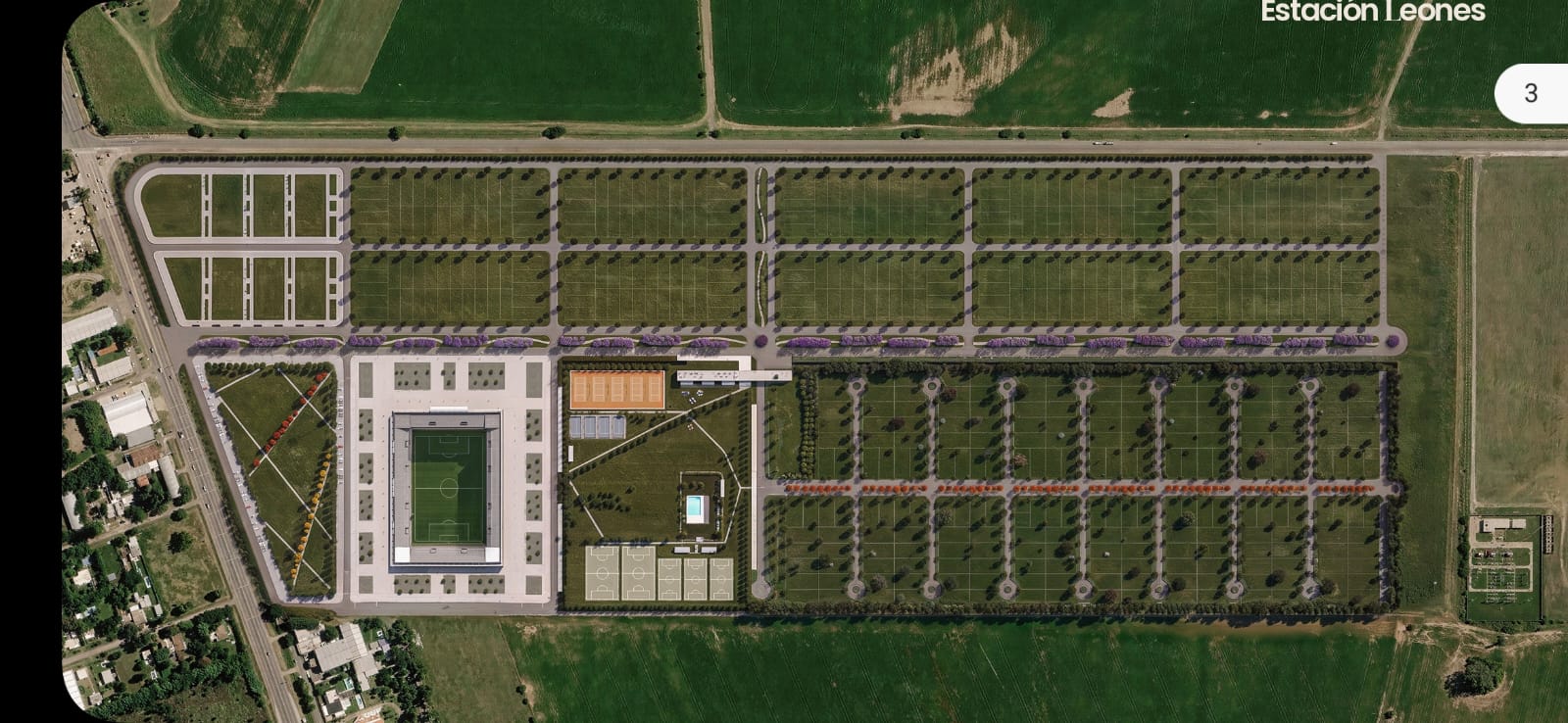 Source: https://eloccidental.com.ar
From a Nomadic Club to Professional Ambitions
Leones FC began in 2015 as a youth-focused club. It reportedly built a base of more than 350 male and female players and attracted hundreds of young prospects to its recruitment programs.
Led by Lionel’s brother, Matías Messi, the club spent years using different training grounds and rented stadiums because it lacked a permanent professional venue.
Its move into professional football made better infrastructure essential. Estación Leones will provide the club with its own stadium and facilities, allowing it to establish a permanent home, generate matchday revenue, and build a stronger identity in a region traditionally dominated by Rosario Central and Newell’s Old Boys.
However, Leones FC’s entry into professional Argentine football has generated controversy because the club was admitted directly into the Primera C, fourth level of the Argentine football league system, instead of beginning in the lower Torneo Promocional Amateur.
Critics argue that the club benefited from the Messi family’s financial power and influence, giving it advantages unavailable to many traditional lower-division teams.
Timeline and cost of Estación Leones
The timeline and cost of Estación Leones are still uncertain. Reports have suggested an approximate four-year development period, but the final schedule will depend on construction progress, permits, road access and the installation of essential infrastructure such as water, electricity and drainage.
Because the stadium is planned for around 15,000 spectators and is located along Provincial Route 21, transport access, parking and coordination with public authorities will be major challenges.
The total budget has also not been publicly confirmed. Since Estación Leones includes much more than the stadium itself — with housing, commercial areas, roads, utilities and sports facilities also planned — the overall investment could be considerably higher than the cost of the venue alone.
Current reports describe the project as mainly privately financed, with no confirmed announcement that public money will directly fund the stadium.
Conclusion
For now, Estación Leones is still a project in development. The stadium is not finished, the final cost is unknown, and important approvals are still being worked out.
But if the plan becomes reality, the Messi family could leave a permanent physical mark on Rosario’s football landscape — long after Lionel Messi’s playing career is over.
And that could make Estación Leones one of the most interesting football projects in Argentina over the next few years.