
For decades, the dream of a new home for Panathinaikos has felt like a mirage—always discussed, often promised, but forever just out of reach. For the millions of fans of the Trifylli, the historic Leoforos Alexandras stadium is sacred ground, but it is also a venue from a bygone era.
Now, as we move through 2026, the mirage has finally solidified into concrete and steel. The new Panathinaikos stadium in Votanikos is no longer just a rendering on an architect’s desk; it is a rapidly evolving reality that promises to change the landscape of Athens and the future of Greek sports.
A Century of Green History
To understand why this project matters, one must look back at the weight of history the club carries. Founded in 1908 by Giorgos Kalafatis, Panathinaikos was created to spread the footballing ideal throughout Athens and quickly became a pillar of Greek society.
For over a century, the club’s heart has beaten at the Apostolos Nikolaidis Stadium on Leoforos Alexandras. It was here that the team forged its identity as the aristocracy of Greek football, and it was from here that they launched the greatest campaign in Greek football history—the 1971 journey to Wembley under Ferenc Puskás, where they became the only Greek club to reach the European Cup Final.
Generations of fans grew up on the concrete steps of Leoforos, celebrating championships and witnessing legendary teams. However, the historic ground, hemmed in by the dense urban fabric of Ambelokipi, could no longer contain the club’s ambitions. The move to Votanikos is not just a relocation; it is the necessary next chapter to honor that glorious history with a facility that ensures the club’s future competitiveness.
The Vision: Double Regeneration
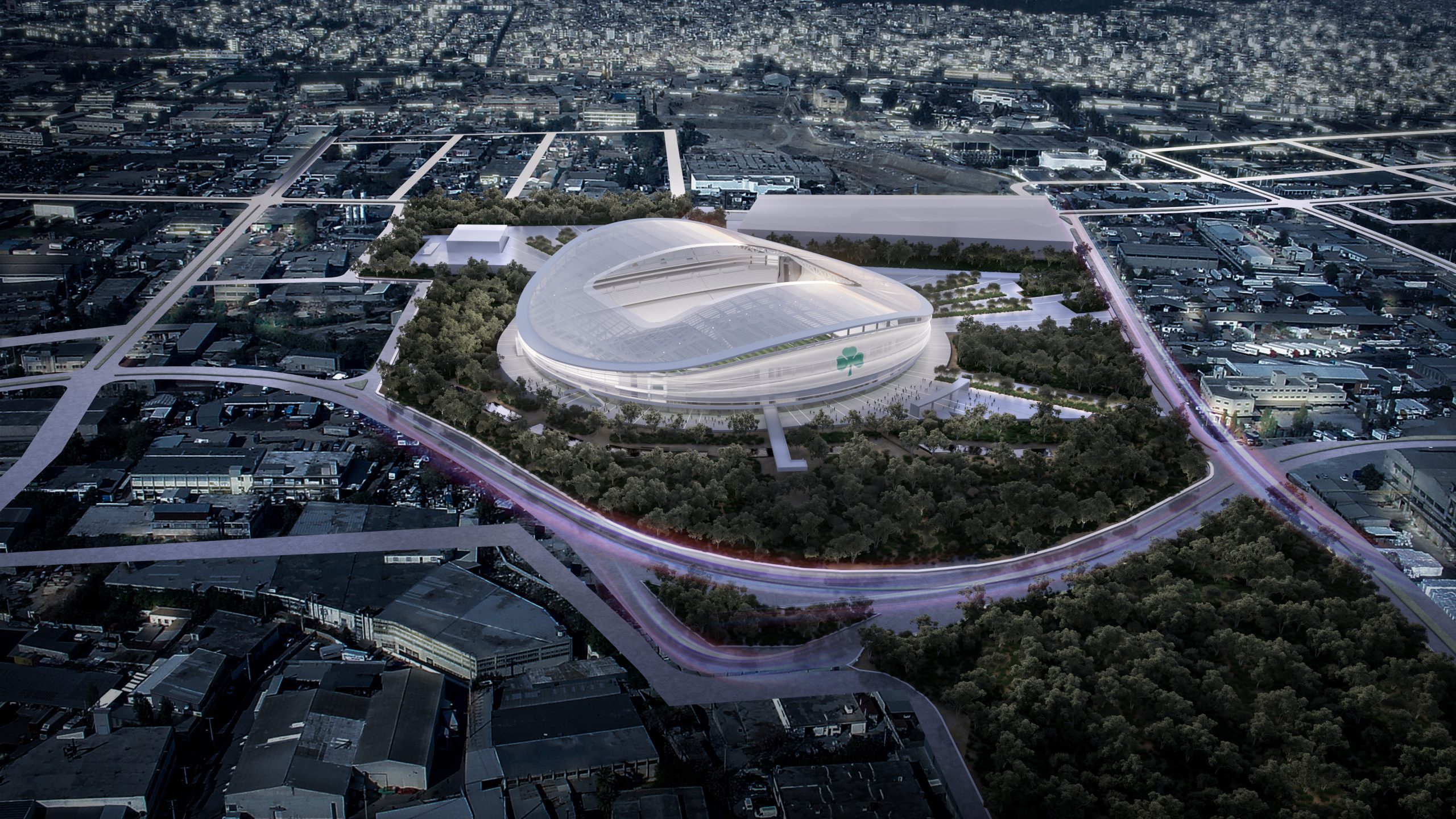 Source: A&S Architects
The Votanikos project is the centerpiece of the “Double Regeneration” program, arguably the most ambitious urban planning intervention in Athens since the 2004 Olympics.
The deal represents a historic trade-off where Panathinaikos leaves its spiritual home at Leoforos Alexandras—which will eventually become a massive green park for the city—to move to a state-of-the-art complex in Votanikos. This transition revitalizes a previously neglected industrial district, turning a “grey” zone into a vibrant hub of sports.
Architectural Marvel: The Design
Designed by A&S Architects, the new stadium refuses to look like a traditional “box” stadium. The structure is a perfect circle with a diameter of 210 meters, a deliberate choice intended to resemble an abstract sculpture when viewed from the city’s skyline.
A complex steel roof covers all spectator seats, a feature that is critical not only for fan comfort but for acoustic entrapment, keeping the noise inside to create a formidable atmosphere.
The football arena is set to hold roughly 40,000 spectators. While some debated the need for a larger capacity, this size is considered the ideal balance for maintaining high demand and intensity. Despite the modern exterior, the interior bowl is designed to be steep and tight to the pitch, preserving the hostile atmosphere that opponents have always feared when playing against Panathinaikos.
A Citadel for All Sports
The Votanikos project is a comprehensive multi-sport complex rather than just a football ground.
Adjacent to the main arena, the site will house facilities for the Amateur Panathinaikos. This includes a dedicated indoor arena for volleyball, handball, and basketball, alongside an Olympic-standard swimming pool and state-of-the-art training gyms.
This consolidation is vital, as it brings the disparate arms of the club back together in a single neighborhood, fostering a unified club culture that has been physically fragmented for years.
Construction Status: Where Are We Now?
As of early 2026, the project has moved well past the planning phase into full-blown construction. The heavy excavation and earthworks, which required clearing massive amounts of industrial debris, are complete. The concrete skeleton of the main stands is currently rising, with the distinctive circular footprint clearly visible.
Current updates from the construction consortium and the Greek government place the completion date in 2027. Once the concrete structural works are finalized in 2026, the focus will shift to the technically demanding installation of the steel roof and the interior fit-out.
The Emotional Trade-Off
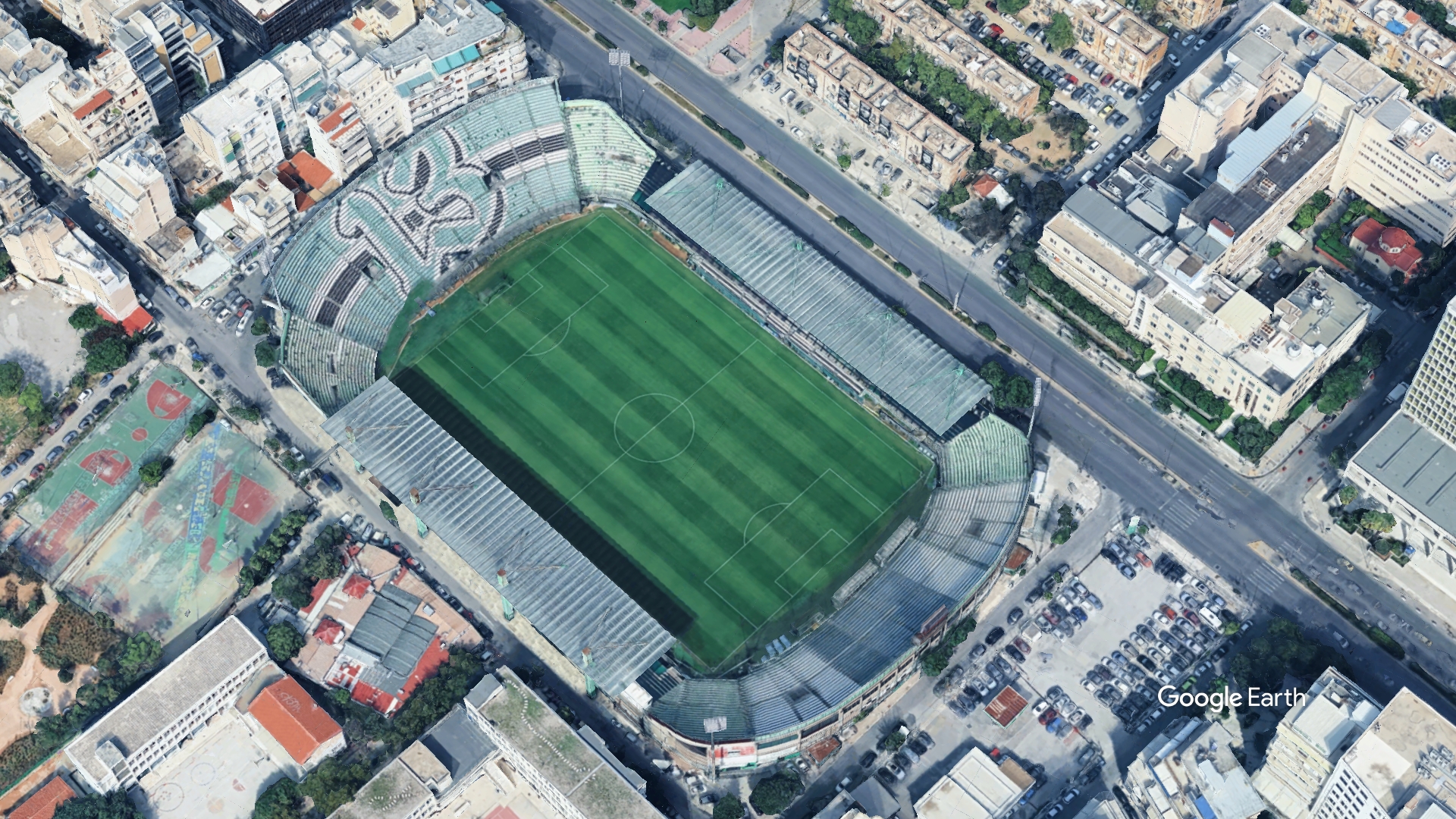
Leaving Apostolos Nikolaidis Stadium is admittedly painful. Leoforos is the soul of the club, a tight cage that has intimidated Europe’s giants.
But the reality of modern football economics made staying impossible. Leoforos lacked the luxury boxes, retail space, and modern amenities required to compete with domestic rivals like Olympiacos and AEK.
Votanikos offers the financial tools to change that. The revenue generated from a modern venue will provide the budget necessary to consistently challenge for the league title and return to European prominence.
The Green Transformation
Beyond football, the project is a massive environmental win for Athens. It involves the creation of a large park surrounding the stadium, new roads, pedestrian walkways, and improved access via the Metro at Eleonas station.
For the fans, the next year will be a period of anticipation as they watch the roof rise and the green seats be installed. The 2027-2028 season will likely mark the beginning of a new era. And if the renderings and the construction progress are any indication, Panathinaikos is not just building a stadium; it is building a fortress worthy of its name.